
Near East Wenatchee, a proposed 500-MW water battery would use treated wastewater and two underground reversible turbines
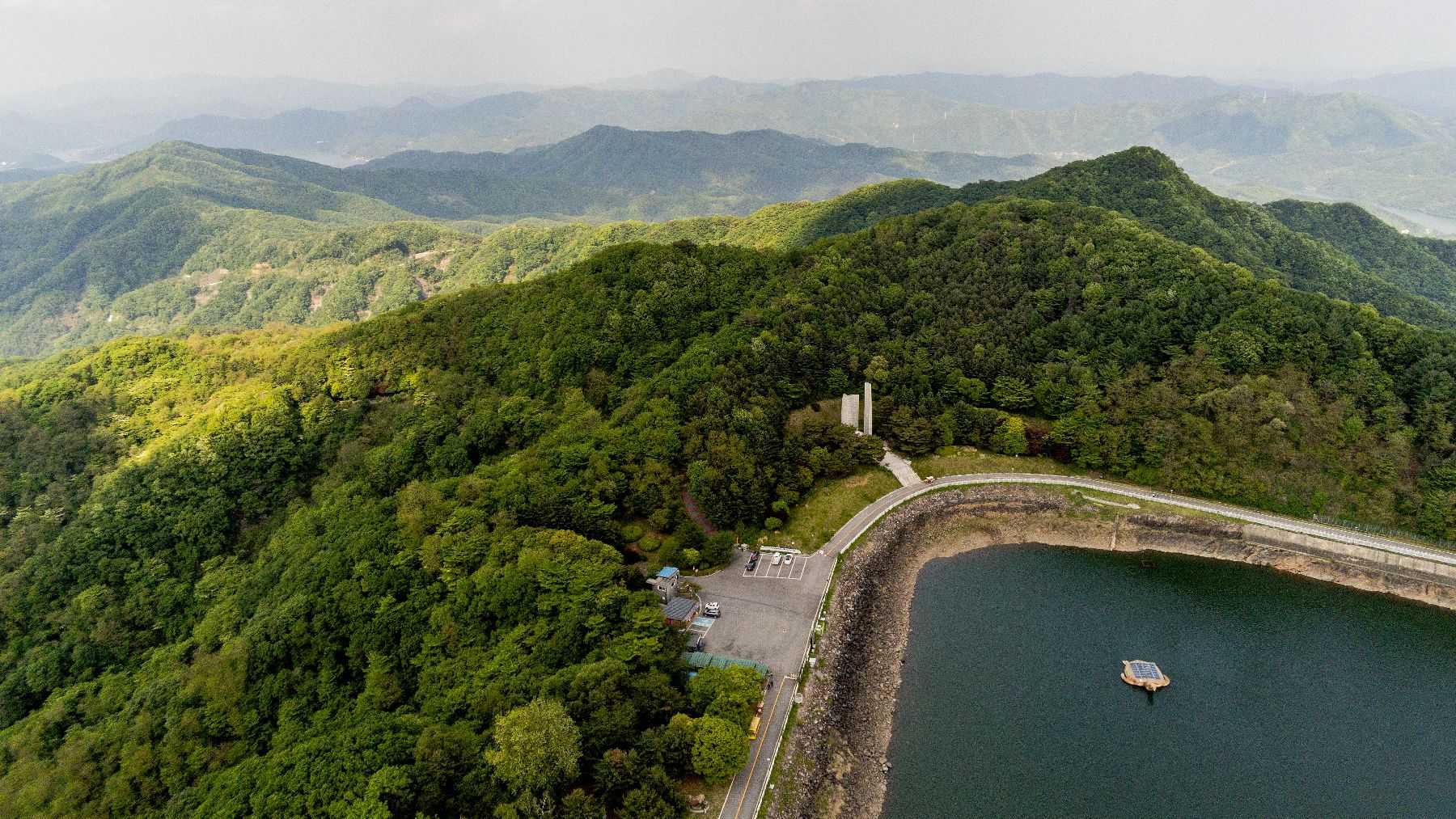 File image
Tucked into the high desert ridgelines above the Columbia River basin, East Wenatchee sits at the edge of Washington’s apple country — an unlikely setting for what could become one of the region’s most unusual power plants. In October 2026, a notice appeared in the Federal Register that drew little public attention: a company called Badger Mountain Hydro, LLC had asked federal regulators to weigh a proposal to bury a 500-megawatt power plant inside a mountain and fill its reservoirs with treated wastewater piped from a nearby county sewer district.
The project, if built, would store and generate grid-scale electricity entirely underground.
What a ‘water battery’ actually is
Pumped storage hydropower works on a simple principle: move water uphill when electricity is cheap and abundant, then release it downhill through turbines when demand peaks. The system stores energy not in a chemical cell but as gravitational potential — water sitting at elevation, ready to fall. That’s why engineers sometimes call it a “water battery.”
Because the system recirculates the same water rather than continuously drawing from a natural source, treated wastewater can stand in for a freshwater withdrawal.
The closed-loop distinction matters here. Unlike conventional hydropower, a closed-loop system doesn’t draw continuously from a river or stream — the same water circulates between two reservoirs. That significantly reduces disruption to aquatic ecosystems and sidesteps many of the environmental conflicts that have historically complicated dam projects.
At the heart of the Badger Mountain proposal are two 250-MW reversible pump-turbines. These machines run in either direction: consuming electricity to pump water uphill, or generating it as water flows back down. That dual identity makes the plant both a load on the grid and a source of power, depending on what the moment demands. The project’s estimated annual output of 832,200 MWh gives a sense of the scale involved.
The engineering hidden inside Badger Mountain
The upper reservoir would sit behind an earthen embankment stretching 8,000 feet — ranging from 15 to 75 feet high — impounding a 78-acre surface area with up to 3,090 acre-feet of storage capacity. Below it, a 40-foot-high, 650-foot-long earthen dam would form the lower reservoir, holding 3,380 acre-feet. A potential secondary embankment, 15 feet high and 900 feet long, could close off the eastern end of that lower basin.
Connecting the two reservoirs is an underground tunnel system built for pressure and precision. A 17-foot-diameter vertical shaft rises 200 feet, feeding into a concrete- and steel-lined headrace tunnel running 5,600 feet, with a shorter tailrace tunnel completing the circuit. Every section is engineered to handle the repeated cycling of millions of gallons under significant hydraulic pressure.
The powerhouse itself is buried in a vertical shaft 220 feet deep and 100 feet wide. Above the shaft opening sits a surface building — roughly 120 feet long, 90 feet wide, and 40 feet high. The two reversible turbines live below grade, largely invisible from the surrounding landscape.
Why treated wastewater — and why it matters
The project’s most unusual feature may be its water source. Both the initial fill and any ongoing makeup water would come from Douglas County Sewer District No. 1’s Wastewater Treatment Plant — treated effluent, not river water or groundwater drawn from an aquifer.
The closed-loop design makes this substitution possible. Because the system recirculates the same water rather than continuously drawing from a natural source, treated wastewater can stand in for a freshwater withdrawal. The environmental implications are real: no fish passage requirements, no navigable waterway entanglements, fewer of the permitting hurdles that have stalled or killed other hydropower proposals.
This approach also reflects a broader federal interest in creative hydropower solutions. The Department of Energy’s Hydropower Testing Network (HyTN) program is actively funding projects that push beyond conventional development — a signal that regulators and researchers see genuine room for unconventional approaches in the sector.

Where this project fits in Washington’s energy pipeline
Washington State currently has seven battery storage projects in development, with a combined planned capacity of 1,655 MW. At 500 MW, Badger Mountain is the largest single project in that pipeline — more than 60% larger than the next biggest proposal.
The developer is rPlus Energies, a Salt Lake City-based firm operating through its subsidiary Badger Mountain Hydro, LLC. An online date of September 2031 is projected, assuming the project clears the full regulatory process — a timeline that reflects the complexity ahead, not just the construction schedule. The formal regulatory journey began with a Declaration of Intention filed with FERC on July 31, 2026, published in the Federal Register on October 13, 2026. A public comment window closed November 6, 2026, meaning community voices and agency feedback are already part of the early record, before any license application has been submitted.
The road ahead: From federal filing to mountain reservoir
A Declaration of Intention isn’t a construction permit. It’s an early-stage filing that triggers a federal investigation into whether the project would affect interstate commerce — a threshold question under the Federal Power Act. Full FERC licensing, environmental review, and state permitting all lie ahead, and those processes will typically take years under the Federal Register – Badger Mountain proposal.
The project’s transmission footprint is relatively modest for its size: a 0.25-mile line interconnecting with several existing transmission lines in the region. For a 500-MW facility, that’s a small grid-connection burden — one that could simplify at least one piece of an otherwise complex approval process.
If Badger Mountain eventually gets built, it would join a national push to pair intermittent renewables with long-duration storage. Pumped hydro currently accounts for the vast majority of grid-scale storage capacity in the United States, and projects like this one represent the next wave of proposals looking to expand that base. Whether this particular project reaches that point depends on regulatory decisions, environmental assessments, and community input that remain unresolved. The mountain is there. The water source is identified. What comes next is the long work of turning a Federal Register notice into a functioning power plant.
Kelly is an experienced writer with 15 years of experience exploring the big stories that shape our world, from tech breakthroughs and space exploration to climate, energy, and the fascinating quirks of science. She has a talent for turning complex ideas into sharp, memorable insights that stay with readers long after they’ve finished reading.
