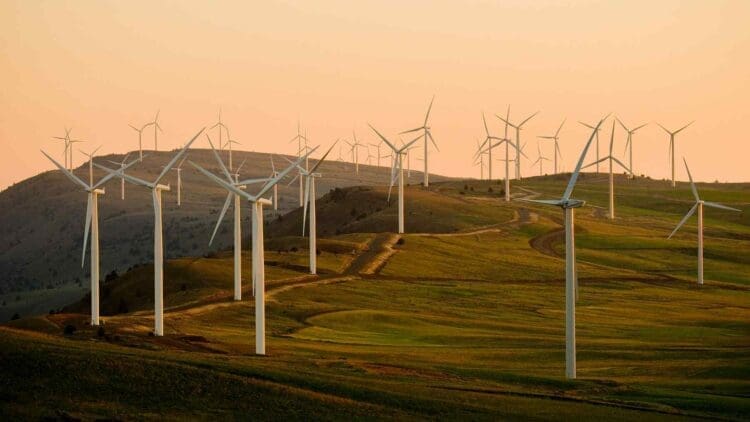

The United States remains the second-largest wind energy-producing country in the world. Companies are continuously pursuing initiatives that will allow the nation to further enhance its portfolio and get much closer to the leading nation, China. It is not a surprise that the powerhouse nation is willing to allow foreign companies to implement large-scale energy initiatives. For instance, EDF Renewables has expanded its wind project development pipeline across North America.
EDF Renewables continues to establish its presence in America
EDF Renewables is a well-respected energy company that is headquartered in Nanterre, France, but has regional hubs in North America as well as South Africa. The firm is clearly on a mission to establish itself as a global powerhouse, but the American market is particularly important for it, considering how resourceful countries like the United States are.
EDF Renewables North America is quickening its expansion across the North American wind energy sector by enhancing its development pipeline through strategic partnerships and large-scale projects.
As demand for clean electricity continues to increase, the company is strategically positioning itself as a key player in delivering utility-scale renewable solutions. One of the most notable aspects of the project is that EDF is not pursuing it on its own but rather in collaboration with another entity.
Reviewing the strategic partnership between EDF Renewables and Tucson Electric Power
The increased collaboration within the energy industry is not a coincidence but rather represents the willingness of companies to share the risks and the expenses associated with a large-scale initiative. In this instance, EDF Renewables has collaborated with Tucson Electric Power on major wind developments.
One of the key elements to a successful partnership is that companies are compatible and complement each other to a T. EDF Renewables’ growth strategy is centered around long-term agreements with utilities seeking reliable and cost-effective renewable energy.
For example, consider the Oso Grande Wind Project, developed under a Build and Transfer Agreement with Tucson Electric Power.
The company’s reliance on this model is because it allows it to supervise development and construction before transferring ownership to the utility. Importantly, EDF is not the only company intent on this, as such partnerships are increasingly becoming attractive.
Energy firms are enduring regulatory pressure and consumer demand to transition toward cleaner energy sources, which makes it beneficial for them to enter such collaborations.
Unpacking the build-to-transfer model and its growing significance
In the energy industry, companies learn from each other’s mistakes and successes to decide how their future initiatives will progress. As such, it is not surprising to see that the build-to-transfer model is gaining relevance. Ryan Pfaff, who is the Executive Vice President of Grid-Scale Power, EDF Renewables, stated the following:
“EDF Renewables is pleased to partner with TEP to supply cost-competitive, renewable energy to its customers from the Oso Grande Wind Project.” “We look forward to assisting TEP in meeting its clean energy goals.”
Clearly, there is a good understanding between the entities as they collectively pursue the same objective.
Why is Oso Grande predicted to transform the North American wind landscape?
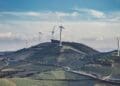
The Oso Grande Wind Project is located in southeastern New Mexico and is recognized as a flagship example of EDF Renewables’ overall ability to deliver. According to reports, the project, which was built by EDF but is owned and operated by Tucson Electric Power (TEP), has a capacity of roughly 250 MW and consists of more than 60 wind turbines spread across thousands of acres.
The facility generates enough electricity to power 100,000 homes and significantly reduce carbon emissions. While there was some controversy in the U.S. wind energy landscape, the initiatives are undoubtedly among the most important carbon emissions eliminators.
Although EDF Renewables is at the forefront of the initiative, its collaborators deserve a tremendous amount of credit as well. North America gets to gain another large-scale facility courtesy of a partnership.