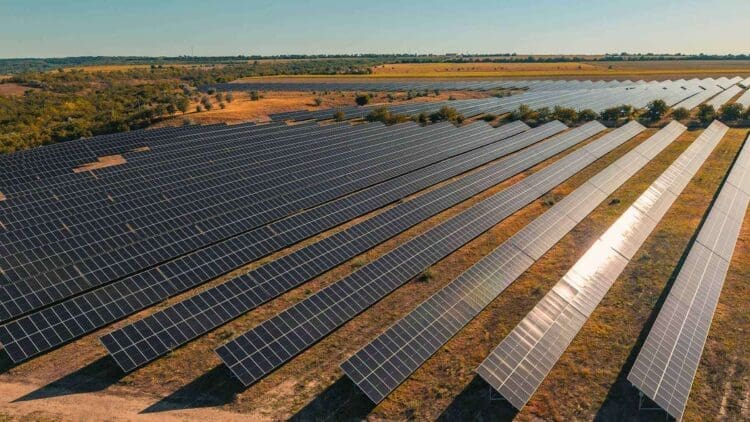

EDP Renewables North America, a veteran entity, has made the decision to bring the 150 MW Pleasantville solar facility in Illinois into completion. The United States has not looked back ever since incorporating technological innovation into its energy industry, and this has resulted in a greater frequency of energy initiatives. The energy sector is heavily saturated at the moment, with new companies emerging as they hope to take advantage of the growing demand for clean energy. This should make it more challenging for older companies to be selected in large-scale initiatives, but in the energy industry, reputation is imperative.
EDP Renewable continues to push boundaries in solar energy initiatives
EDP Renewables is a global leader in renewable energy and the fourth largest wind energy producer. However, it is not only focused on wind generation, especially because the solar industry is lucrative at the moment. The company was founded in 2007 in Madrid, Spain, as a subsidiary of Energias de Portugal that develops wind and solar facilities across Europe, North America, and other continents.
The entity manages to remain at the center of groundbreaking initiatives each year, and now, EDP Renewables North America (EDPR NA) has announced the completion of its 150 MW Pleasantville Solar Park in Illinois. This is tremendous, particularly for the company, considering that the U.S. has an abundance of firms and resources to build facilities. For Illinois, the initiative reflects a significant milestone in its clean energy expansion.

The project emphasizes the company’s growing solar portfolio in the United States while supporting decarbonization goals. Its specific location is Fulton County, and the facility is expected to supply reliable, emissions-free electricity to the regional grid.
A general analysis of the EDP Renewables Pleasantville solar facility in Illinois
The Pleasantville Solar Park is a utility-scale photovoltaic (PV) installation built to generate up to 150 megawatts (MW) of electricity. It is conjoined with the Midcontinent Independent System Operator (MISO), which is an element that guarantees energy generated is distributed responsibly across the regional transmission network.
The construction of the facility commenced after regulatory approvals and local engagement processes. There has been a tremendous amount of excitement surrounding the exact features of the facility whenever it becomes fully operational.
For instance, the solar park depends on advanced PV panel technology, which changes sunlight directly into electricity without producing emissions.
Upon recognizing the ability of the facility to produce electricity in this manner, there is no question that many developers and countries will adopt similar strategies or call upon EDP Renewables to build their developments in a similar manner.
The project also plays a crucial role in resource efficiency, with predictions stating that it can save more than 190 million gallons of water per year compared to traditional power generation methods.
Looking at the overall impacts of the Pleasantville solar facility in Illinois
It is always exciting to hear from developers as to what their intention was when working on a project. In this instance, Sandhya Ganapathy, who is the CEO of EDP Renewables North America, stated:
“Projects like Pleasantville Solar ensure that local families and businesses reap the benefits of long-term revenue, job creation, and resilient energy infrastructure—all while supporting statewide economic development goals and rising power needs.”
The Pleasantville project reflects a massive investment in the local economy, with total capital expenditure estimated at roughly $234 million. In the construction phase, the project generated around 300 jobs, but this number will increase once it is fully operational.
Unpacking the strategic importance of the Pleasantville solar facility
One of the most vital components of the solar park is that it has been designed to complement and be complemented by agricultural land use. This permits landowners to continue certain farming activities while benefiting from stable lease income. The main objective of this approach is to balance environmental and economic priorities.
Illinois is quickly becoming one of the fastest-growing solar hubs in the U.S. The nation deserves credit for its full commitment to clean energy generation.