
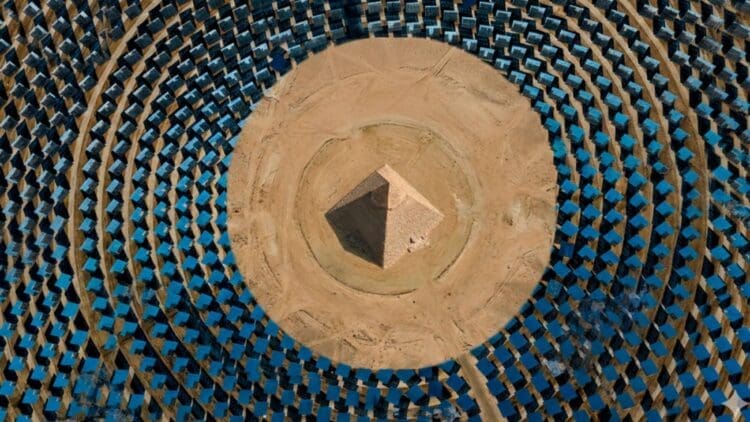
For centuries, the Egyptian sun was something you endured, respected, and planned your life around. It was powerful, relentless, and impossible to escape. Turning that same sun into a massive source of electricity once felt “unthinkable.” Today, Egypt is doing exactly that — on a scale few imagined possible.
Exploiting solar energy since ancient times
If anyone understands the value and importance of solar energy, then it is the Egyptians. The nation has been exploiting solar energy since ancient times. However, the practical use of solar energy back then differed compared to modern times. According to reports by Solar Me and Helix 50, back then, solar energy was used in line with architecture and served the following purposes:
- Specific alignment of temples to allow sunlight to light up sacred areas
- Solar mirrors were used to provide lighting and heating
- Buildings were constructed in such a way as to store heat from sunlight during the day and release it at night
- The solar calendar was utilized to pinpoint agricultural cycles
In modern days, Egypt is going solar again, but this time as part of its active efforts to decrease its carbon footprint, which has substantially grown with almost 44% between 2005 and 2019. The nation’s carbon emissions from burning fossil fuels were approximately 266 million tons in 2022, and its high energy demand can be attributed to this significant carbon footprint. Now, the “Obelisk Project” could be a step in the right direction.
Egypt goes solar (again): Announces “Obelisk Project”
In the Middle East and Northern Africa (MENA) region, Egypt’s carbon footprint presently ranks second highest. This highlights the importance of the nation’s climate target, which is to substantially lower its greenhouse gas emissions and achieve 42% installed renewable power by 2030. One of the top contenders to achieve this target is wind, which is why Egypt is preparing to commission a 2 GW wind project this year.
The other top contender is solar energy, and the country has announced the “Obelisk Project,” a mega hybrid solar project developed by Scatec in Qena Governorate. The project also forms part of Egypt’s Ministry of Electricity and Renewable Energy’s NWFE program, which is designed to help achieve Egypt’s 2030 climate target. Thanks to the Climate Investment Fund, the project received 400 million kroner (nearly $40 million) in funding.
Up to 1.1 GW to power 1.6 M homes in the land of the pharaohs
Norfund is among the key stakeholders in Scatec’s biggest project to date, and will own 25% of the Obelisk company, while Scatec will own the majority share of 75%. EDF, a French global energy company, is another stakeholder, owning 20% of SPV (the operating company), and Norfund and Scatec will own 20% and 60% respectively.
The Minister of International Development, Åsmund Aukrust, had this to say about the Obelisk Project:
“This project is an example of what we need more of in development policy. By combining private and public capital, we help deliver high-tech solutions that create jobs and cut greenhouse gases in developing countries.”
The first phase of the 1.1 GW solar project has already been completed, and the second phase completion is scheduled for later this year. It will also feature a 100 MW battery storage at completion. The Obelisk Project will reportedly generate enough solar energy to power 1.65 million homes, as well as to decrease carbon dioxide emissions by 1.5 million tons per year. In conclusion, this project is certainly a step in the right direction for Egypt to achieve its climate target. UAE and Oman are now also leading the Middle East shift toward hybrid wind-solar-storage with mega projects.

