
Elenger schedules three additional US LNG cargoes for Finland’s Port of Inkoo in late 2026
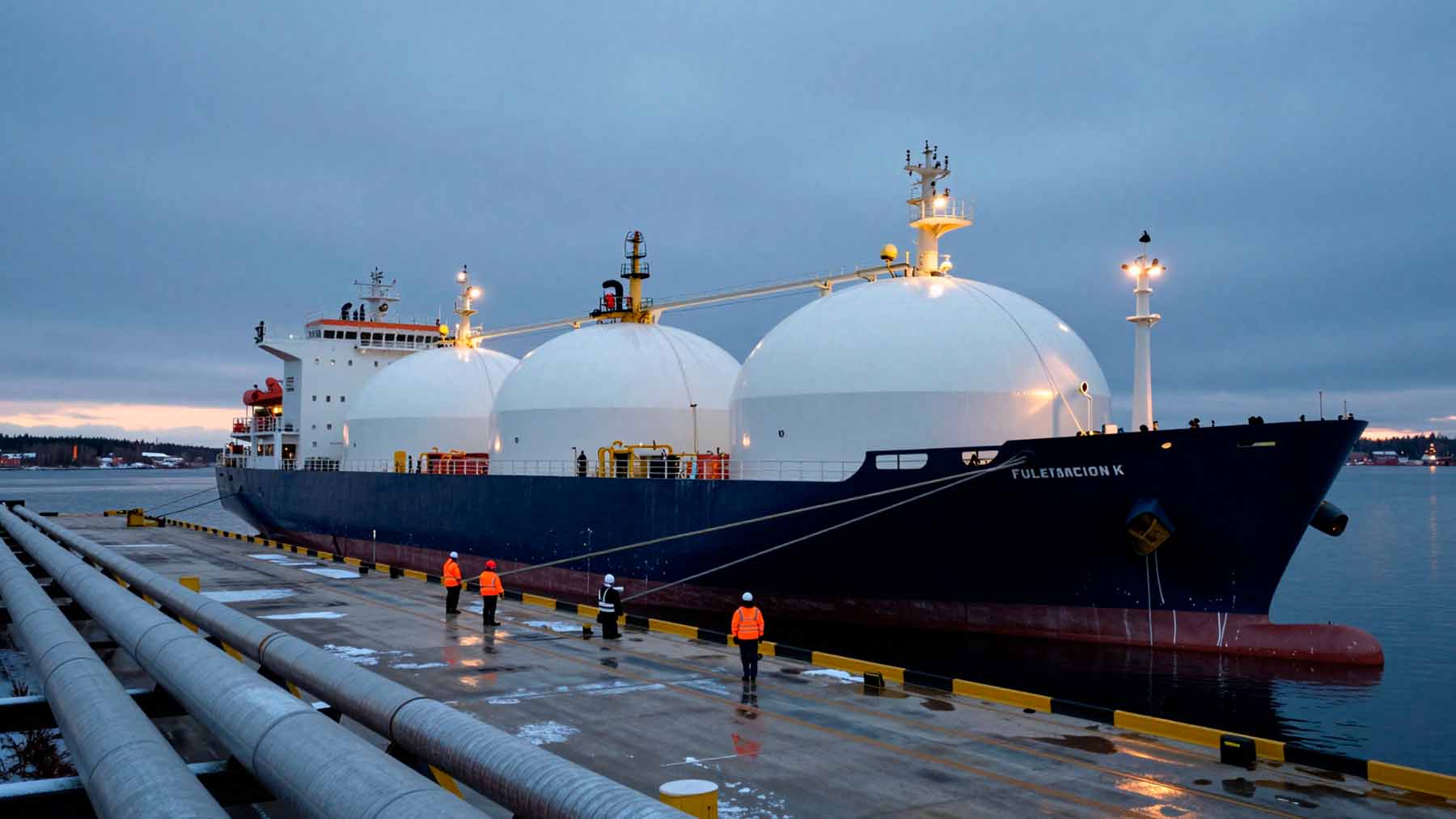 Image generated with artificial intelligence
Elenger has announced three additional US-sourced LNG cargoes bound for Finland’s Port of Inkoo, scheduled for delivery in November and December 2026. The company, the largest privately-owned energy firm in Finland and the Baltic States, made the announcement on August 13, 2026.
Elenger adds three US LNG cargoes to Finland delivery schedule
The announcement came from Margus Kaasik, Chairman of the Management Board of Elenger Group. Three additional US-sourced cargoes will arrive at the Port of Inkoo across November and December 2026. For a company that already holds a dominant position in the regional energy market, the move signals a deliberate effort to lock in supply well ahead of peak winter demand.
Elenger’s standing as the largest privately owned energy company in Finland and the Baltic States gives it real purchasing leverage—and that scale matters in a global LNG market where competition for cargoes can get intense. European buyers have increasingly turned to US suppliers following the continent’s shift away from Russian pipeline gas, making early procurement decisions like this one more consequential than they might have been a few years ago.
Elenger will deliver a total of 11 LNG cargoes to the Finland-Baltic region across 2026—a substantial volume flowing through two separate terminal entry points.
The Port of Inkoo, on Finland’s southern coast, has become a key entry point for LNG serving the Finnish market. Adding three more deliveries there before year-end rounds out what’s shaping up to be a busy procurement calendar for Elenger in 2026.
Heating season supply agreements already secured for customers
Kaasik was clear that the additional cargoes aren’t a reaction to any supply emergency. Most of the natural gas needed for the upcoming heating season was already delivered through Finnish and Lithuanian ports during spring and summer 2026. That front-loaded approach is common among energy companies in northern climates, where demand spikes sharply once temperatures drop.
“Agreements have also been secured for the remaining volumes, meaning our customers’ gas supply is fully ensured,” Kaasik said. The phrasing is deliberate—it frames the November and December deliveries as the final piece of a pre-planned puzzle, not a scramble to cover gaps.
That distinction matters to customers and market observers alike. The three additional cargoes fit within a broader procurement framework Elenger had already built around anticipated seasonal demand, which means the supply chain is working as intended rather than catching up.
Eleven total LNG cargoes planned for Finland-Baltic region in 2026
Step back from the three new deliveries and the full picture comes into focus. Elenger will deliver a total of 11 LNG cargoes to the Finland-Baltic region across 2026—a substantial volume flowing through two separate terminal entry points.
Seven of those cargoes are headed for the Port of Inkoo in Finland, with the remaining four going to the Klaipeda LNG terminal in Lithuania, which has been a critical piece of Baltic energy infrastructure since it began operations. Together, these two terminals form the backbone of Elenger’s regional import strategy.
Storage is another key piece. Elenger keeps gas in the underground storage facility at Inčukalns in Latvia and in Poland. Underground storage lets the company absorb supply during warmer months and draw it down when heating demand peaks—a flexibility that pipeline-dependent systems can’t always offer.
On the supply side, Elenger draws from Norway and the United States. Of this year’s 11 cargoes, five originated from Norway; the rest, including the three newly announced deliveries, are planned to come from the US. That split reflects both the geographic diversity Elenger seeks in its sourcing and the growing role of American LNG in European energy markets.
European gas storage below average but regional supply considered adequate
The broader European context is worth noting. Kaasik acknowledged that gas storage facilities across Europe are less full than in previous years—a detail energy analysts and policymakers have been watching closely as the continent prepares for winter.
He pushed back against reading that as cause for alarm, though. “There is still sufficient gas available both in Europe and in the Finland-Baltic region,” he said. It’s a measured stance, acknowledging the data without catastrophizing it.
Part of that confidence rests on infrastructure. Kaasik pointed out that increasing volumes of US LNG are arriving in Europe and that the continent has ample terminal capacity to receive them. Europe has invested heavily in regasification infrastructure since 2022, and that capacity is now available to absorb higher import volumes when needed.
For the Baltic region specifically, the Inčukalns underground storage facility in Latvia plays an outsized role. Kaasik described it as providing “a significant buffer for Baltic gas demand.” Alongside active shipments flowing into Inkoo and Klaipeda, Inčukalns gives the region a meaningful cushion against demand spikes or unexpected supply disruptions.
A combination of spring and summer deliveries
Elenger‘s announcement adds three US-sourced LNG cargoes to its 2026 delivery schedule at Finland’s Port of Inkoo, bringing its total planned deliveries to the Finland-Baltic region to 11 cargoes for the year. Seven of those go to Inkoo; four to the Klaipeda terminal in Lithuania. Five cargoes originate from Norway, with the remainder sourced from the US. Customer supply for the heating season is fully covered through a combination of spring and summer deliveries and secured agreements. While European storage levels are below historical averages, Elenger and its chairman say sufficient gas is available regionally, supported by rising US LNG imports and the underground storage buffer in Latvia.
Kelly is an experienced writer with 15 years of experience exploring the big stories that shape our world, from tech breakthroughs and space exploration to climate, energy, and the fascinating quirks of science. She has a talent for turning complex ideas into sharp, memorable insights that stay with readers long after they’ve finished reading.
