
Eni and PETRONAS launch Searah, a $20 billion 50:50 upstream joint venture covering 19 assets across Indonesia and Malaysia
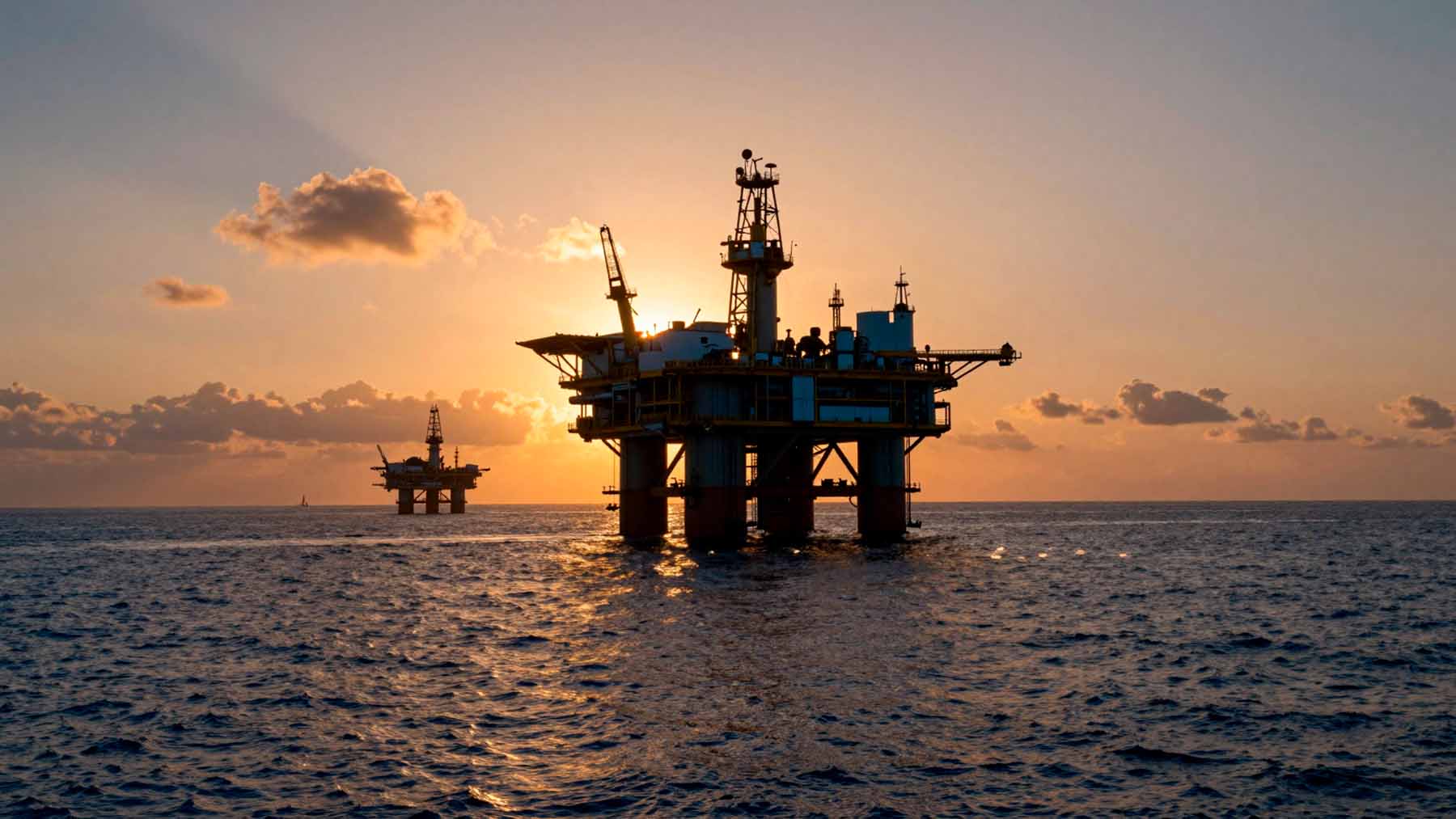 AI-made
Eni and PETRONAS have formally launched Searah, a 50:50 joint venture combining 19 upstream oil and gas assets across Indonesia and Malaysia. The new company starts operations producing more than 300,000 barrels of oil equivalent per day and plans to deploy $20 billion in capital over the next five years. According to Wood Mackenzie, Searah has the scale and resource base to become Southeast Asia’s largest upstream producer by 2030.
Searah launches with 19 assets and immediate production above 300,000 boe/d
Searah is structured as a true 50:50 partnership—neither side holds a controlling stake. The venture spans 19 upstream assets across two of Southeast Asia’s most active hydrocarbon basins, combining producing fields in Malaysia with Eni’s deepwater gas portfolio in Indonesia’s Kutei Basin.
From day one, Searah produces more than 300,000 boe/d. That’s not a forecast — it’s the baseline. The Malaysian producing assets generate immediate cash flow and borrowing capacity, so the venture doesn’t need funding from either parent to get started.
Headquartered in London, Searah runs as a standalone company making its own investment decisions, drawing on technical support from Eni through service agreements.
Headquartered in London, Searah runs as a standalone company making its own investment decisions, drawing on technical support from Eni through service agreements. That structure matters. This isn’t just a shared asset register—it’s designed to function as an independent operator.
Complementary portfolios drive the rationale behind the partnership
The 50:50 split reflects what each partner brings, not an equal division of reserves or cash flow. PETRONAS contributes near-term production, established infrastructure, and stable cash flows from its Malaysian assets—a financial base that supports the venture during its early years while longer-term projects get developed.
Eni’s contribution looks further out. Its deepwater Kutei Basin portfolio in Indonesia holds more than 12 trillion cubic feet of undeveloped gas across the Rapak, Ganal, and North Ganal production sharing contracts, representing a substantial pipeline of medium-term development opportunities.
The 2026 Geliga discovery sharpens things further. Estimated at 5 tcf, it adds roughly $2 billion in value and anchors what would become a third Kutei development hub—a meaningful addition to an already large undeveloped resource base.
Taken together, Searah will supply gas to three LNG facilities: Bontang and the proposed Abadi LNG project in Indonesia and MLNG in Malaysia. That gives the venture one of the largest and most diversified equity LNG positions in the region.
Production targets and financial projections through 2030
Searah’s growth trajectory is ambitious but built around a clear timeline. Production is expected to exceed 500,000 boe/d on an entitlement basis by 2029, with longer-term potential cited at over 800,000 boe/d — nearly three times the opening rate.
Wood Mackenzie’s modeling puts Searah on track to become Southeast Asia’s largest upstream producer by 2030, ahead of Pertamina, PETRONAS, PTTEP, Shell, and BP. That’s a significant claim, and it hinges on the successful execution of multiple large development projects running in parallel.
Annual cash flows are expected to exceed $2 billion from 2030, driven mainly by monetizing Kutei’s discovered resources. Capital expenditure is planned to peak in 2027, when several major projects will be advancing simultaneously. The producing Malaysian assets provide the financial runway to reach that peak without external support.
Key execution risks identified by Wood Mackenzie
Wood Mackenzie is direct about where the risks sit. Developing the North, South, and proposed Geliga development hubs—while simultaneously pushing Abadi LNG toward a final investment decision—means managing multiple billion-dollar projects at once. That’s operationally demanding for any company, let alone a newly formed one.
The Bontang LNG complex adds another layer of complexity. The facility is aging, and managing its capacity constraints as new Indonesian gas volumes come online will require careful coordination with little room for scheduling slippage.
Pressure on the global deepwater supply chain compounds the challenge. Executing large offshore projects in a tight market raises the risk of cost overruns and delays—not unique to Searah, but especially consequential given the scale of what it’s trying to build. Regulatory coordination across two countries adds further friction, since Indonesia and Malaysia operate under different frameworks. Aligning investment decisions across both, while integrating Eni’s exploration-led culture with PETRONAS’s national oil company approach, will take sustained effort on both sides.
As Wood Mackenzie’s Munish Kumar put it, the assets and capital are in place. Whether Searah can deliver without losing schedule or cost discipline is the real test.
Searah as part of Eni’s broader strategic venture model
Searah fits a pattern Eni has been building for years. Vår Energi in Norway, Azule Energy in Angola, Ithaca Energy in the UK — each venture combined complementary portfolios under a standalone structure. Searah follows that template, though with notable differences.
It’s Eni‘s first venture in Asia, according to its press release. It’s also the first built around a predominantly growth-oriented portfolio, and it was the first with a national oil company as a partner. Those distinctions shape how the venture is perceived—and potentially replicated elsewhere.
Wood Mackenzie analysts describe Searah as a potential blueprint for future IOC-NOC upstream partnerships across Asia. The key question, as analyst Farid Wajdi Mohamad Isa noted, is whether an international oil company and a national oil company can genuinely build a standalone regional champion—rather than simply pooling assets and calling it a partnership.
Searah launches with 19 assets, over 300,000 boe/d of production, and $20 billion in planned investment. It targets 500,000 boe/d by 2029 and cash flows above $2 billion annually from 2030. Its success depends on executing some of Southeast Asia’s most complex offshore developments on time and on budget—while navigating two regulatory environments and two very different corporate cultures.
Kelly is an experienced writer with 15 years of experience exploring the big stories that shape our world, from tech breakthroughs and space exploration to climate, energy, and the fascinating quirks of science. She has a talent for turning complex ideas into sharp, memorable insights that stay with readers long after they’ve finished reading.
