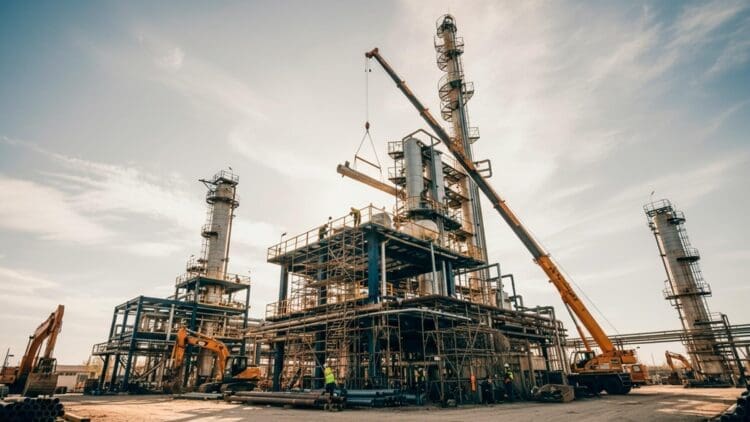
The African continent marked a major milestone in its energy independence ambitions recently when the Prime Minister of Ethiopia laid the foundation stone at the Gode Refinery. For far too long, the vast majority of nations in Africa have relied on imports of essential energy resources to meet demand; however, Ethiopia is taking its energy future by the hand and leading it into a new era of domestic production, thanks to the efforts of the partners of the Gode Refinery.
Africa: A new energy player or merely an afterthought for the global market?
Africa has long been overshadowed by the rest of the energy industry on the global stage. While the languishing of Africa’s energy industry can be attributed to several factors, such as corruption and a lack of sizable investments, the reality is that without increasing domestic refining capacity, the continent faces an energy future dominated by imports.
To alleviate concerns of the local populace over insufficient energy supply and to reduce the import volumes for Ethiopia, the nation has broken ground on the Gode oil refinery, along with the Dangote Gode Fertilizer Project.

During an official ceremony held in the town of Gode, in southeast Ethiopia, the Prime Minister of Ethiopia affirmed the strategic importance of the two projects. The ceremony also saw the inauguration of the first phase of the Ogaden Liquefied Natural Gas Project.
The ground-breaking ceremony was attended by the who’s who of the energy industry in Africa, including:
- Ethiopia’s Prime Minister Abiy Ahmed
- Ethiopia’s Deputy Prime Minister, Temesgen Tiruneh
- President of the Somali region, Mustafa Mohammed
- President of the Dangote Group, Aliko Dangote
- Chairman of Golden Concord Group Limited (GCL Group), Zhu Gongshan
- Senior government officials, regional leaders, and international delegates
Can Ethiopia transform its refining capacity in the new year?
The ground-breaking Gode Refinery project, which will be built by Golden Concord Group Limited, will process crude oil and significant volumes of condensate sourced from the Hilala oil field.
Once fully operational, the Gode Refinery will boast an annual capacity of approximately 3.5 million tons, contributing to Ethiopia’s ambitions to reduce imports of essential fuel products and, more crucially, support the government’s national energy security objectives.
The chairperson of the Golden Concord Group reaffirmed the Prime Minister’s statements that the refinery project in Gode forms part of a broader initiative to support Ethiopia’s industrial transformation in 2026. He also affirmed the company’s commitment to maintaining the highest standards during the entire construction phase.
“Today marks a historic occasion for all Ethiopians as we lay the foundation stone for two transformative projects. These projects represent more than industrial progress. They embody our shared responsibility to harness opportunities, strengthen cooperation, and promote peace.” said Ethiopia’s Prime Minister Abiy Ahmed
The PM went on to urge the local population to maintain a sense of unity and continue the mobilization efforts to support the nation’s development plans for 2026. With the African Energy Chamber forecasting a major uptick in upstream operations over the coming years, Ethiopia could become a major player in the African energy market.
“The African oil and gas sector is set for significant consolidation in 2026, particularly among midsize and African independent companies. This trend is driven by a desire for a more efficient and competitive environment, which is ultimately beneficial for both the continent and the industry in the long term,” – NJ Ayuk, Executive Chairman of the African Energy Chamber
Other milestone energy projects in Africa are slated for a 2026 commissioning
Building on the groundbreaking ceremony in Ethiopia, the East African Crude Oil Pipeline is heading towards a full-scale commissioning in July of this year. Africa’s role in the international energy sector is shifting from buyer to supplier if the significant Gode Refinery project can be completed on schedule and within the allocated budget.