
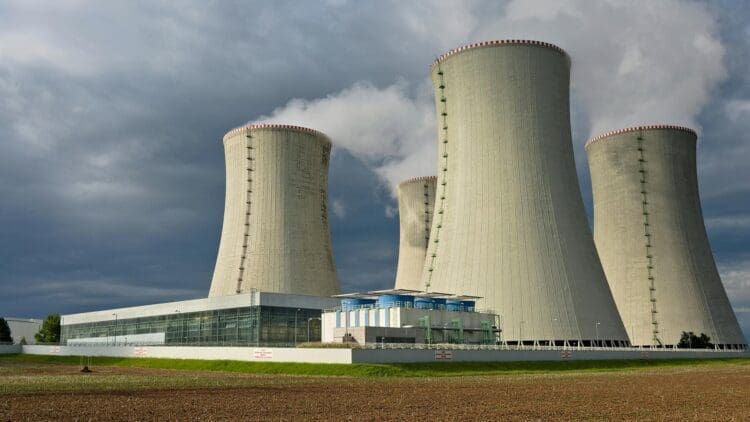
The primary challenge that African countries face is that they lack the resources to accelerate their projects or produce them as efficiently as wealthier nations. Ethiopia has set its sights on building its first nuclear power plant within ten years to diversify electricity sources. Interestingly, the power plant could be constructed even sooner if Ethiopia conjures up the resources and finances that economically developed countries have.
Changing gears: Analyzing the current energy landscape in Ethiopia
The central talking point behind Ethiopia’s upcoming nuclear power plant is that it indicates the East African country’s intention to change from its current strategy. At the moment, Ethiopia is heavily reliant on hydropower, which continues to grow as each year goes by. Statistically speaking, 90% of Ethiopia’s electricity emerges from hydropower, with key projects like the Grand Ethiopian Renaissance Dam (GERD) continuing to provide power for the citizens. The African nation is enjoying a lot of success in its energy generation, which has led to many people questioning the reasoning behind building the nuclear plant. Ethiopia recognizes the fragility of becoming overly reliant on a single energy source. It wants to prevent becoming stuck or stagnant, hence it has chosen to develop another project which can widen its portfolio.
Delving deeper: Ethiopia is a hydropower powerhouse, but at what cost?
Energy generation is an industry where corporations and countries take into account the opportunity cost of pursuing one energy source over the others. While it is a massive positive that Ethiopia greatly relies on clean energy or renewable energy, it has faced some obstacles that have forced its hand to develop a nuclear power plant.


GERD is one of the most significant hydropower sources in Africa, which is a massive achievement in general, but experts have uncovered that climate, and seasonal changes affect energy generation. Thus, the nuclear power plant will assist the country in handling the systematic challenges that arise in its hydropower station. Importantly, nuclear is not supposed to replace Ethiopia’s current method of generating electricity, but rather, it is meant to complement it and achieve a balance in how it produces energy. Nuclear is a good option because it provides consistent power throughout the year without any systematic challenges. Interestingly, the Ethiopian Nuclear Energy Commission (ENEC) is the nation’s new branch that is intent on adopting nuclear as the primary source of energy in Ethiopia, whilst all other energy sources revolve around it.
Is Ethiopia adept at managing the load of a large-scale energy development?
There have been some concerns from some people that Ethiopia had fallen into a sense of security or complacency with its abundant hydropower. Luckily, the government was able to reach an agreement in 2025 with Russia-based Rosatom, which has an extensive reputation in handling such projects. Ultimately, the East African nation is in good hands.
Reviewing the future of a ten-year nuclear power plant
The idea of a project that takes ten years to develop is very intriguing, to say the least. Ethiopia will have to answer multiple questions regarding the project. For instance, is this going to be the biggest and most sophisticated nuclear power plant in the world? Only time will tell. All in all, the nuclear plant has been received well among the public who view it as a sustainable way to meet the country’s energy demands. Additionally, the government has presented it as a low-carbon energy source that aligns with the country’s climate goals.
Ten years might feel like an extended period, but time does have the ability to travel sneakily fast. The most crucial aspect for Ethiopia is that it remains committed to executing the project and making steady progress each year, which will give the people hope of its imminent arrival. Ethiopia’s nuclear power plant is one of the many long-term energy developments to watch out for and assess over time.

