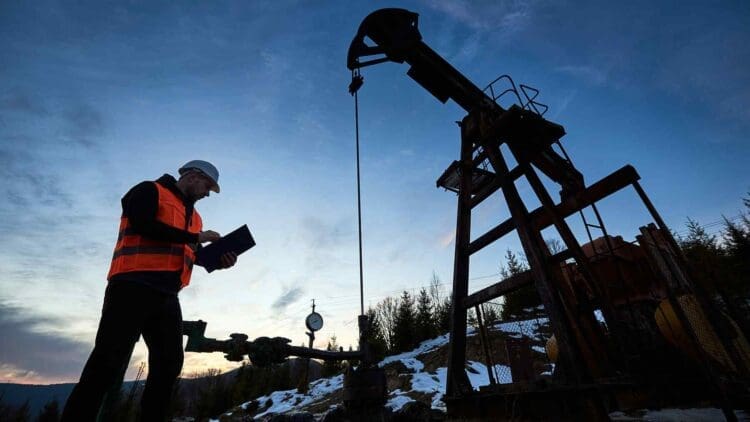

The news concerning U.S. Government land decision-making normally comes slowly to those who live in the Dakotas; however, in recent weeks, there has been a flurry of news relative to an anticipated Federal Auction in April, and though the announced auction appears to be normal in all respects, it creates the perception that something significant may be happening beneath the surface.
A Federal Auction that appears normal but is not
North Dakota’s Department of Mineral Resources has jurisdiction over drilling within the State of North Dakota; whereas, drilling on private property requiring a federal permit to access the federally owned minerals below requires a second layer of regulation by the BLM. Because the State and the BLM have overlapping jurisdictional responsibilities regarding the same land, a decision made by the BLM in Washington, D.C. does not remain abstract for long; rather, the decision impacts actual on-the-ground activities.
Additionally, the fact that the parcels included in the proposed auction occur in areas where multiple layers of federal, state, and local governmental authorities have some form of jurisdiction, the auction process appears more like a notice signaling possible changes in the region rather than simply another scheduled event.



In April 2026, the Bureau of Land Management (BLM), a federal agency, will hold a competitive bidding auction for 23 parcels of land totaling approximately 8,993 acres located in both North and South Dakota. Although the auction is a typical BLM process, it occurs at a time when regulatory functions in the region are intertwined.
Why does the auction have greater significance than would be expected based upon the acreage alone?
There is increasing interest in the region from industry participants, and the Dakotas have developed a network of institutions that serve to increase the significance of each BLM auction beyond a mere land listing. For example, although the North Dakota Pipeline Authority does not regulate drilling, it serves as an important resource in ensuring sufficient pipeline infrastructure and favorable market conditions exist to support oil production.
Additionally, although the Energy & Environmental Research Center (EERC) at the University of North Dakota provides research support to agencies and operating companies focused upon carbon capture, enhanced recovery, and other emerging technologies, such support often determines how development takes place years after lease sales are completed.
Finally, the Western Dakota Energy Association, representing local government entities impacted by the oil and gas industry, serves as a reminder that federal leasing always becomes local. The roads, schools, services, and tax flows associated with each new wave of development will follow the federal leases into the local area.
What does winning a parcel actually entitle the operator to, and what lies ahead?
Although winning a parcel entitles the operator to lease the parcel, it does not provide immediate authorization to begin drilling operations. In order to develop a parcel leased under this auction, operators must submit detailed plans outlining the intended development process, complete environmental reviews, and endure additional public scrutiny before any drilling can commence.
Additionally, the auction does not transfer control of the parcels from the federal government to the State of North Dakota. The BLM maintains jurisdiction over federal minerals located on the parcels, and State regulators continue to oversee their respective processes in tandem with the BLM.
As the month of April rapidly approaches, the upcoming lease sale stands out not because of the size of the parcels, but rather due to what the parcels suggest about the Dakotas’ next chapter in the energy industry. As each subsequent layer of policy, research, and local life develops, the auction will continue to influence the course of events — ultimately creating additional questions surrounding the future pace of federal leasing in the region.