
FERC approves natural gas introduction into Cheniere’s seventh and final Corpus Christi LNG train
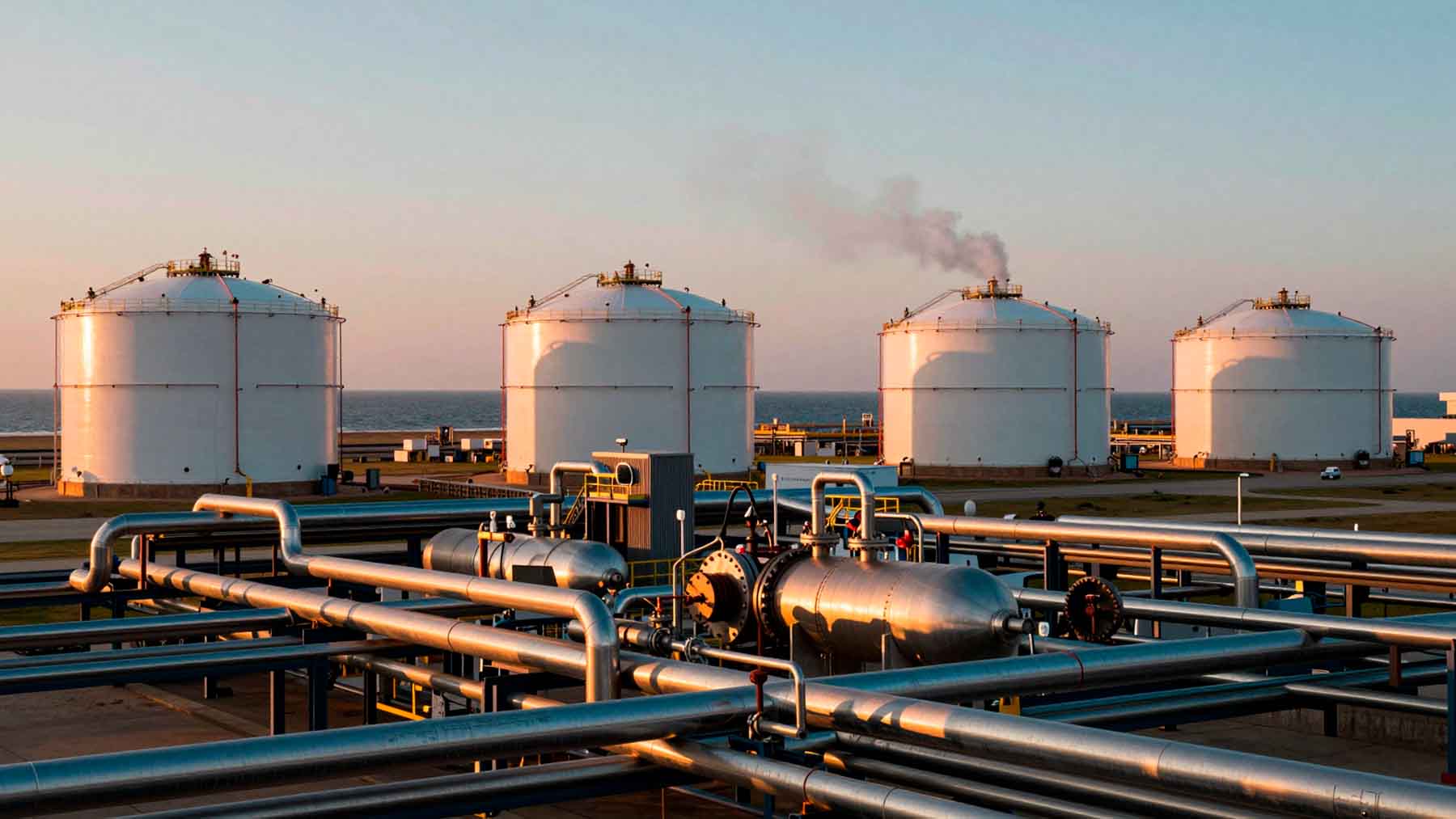 Image generated with artificial intelligence
The Federal Energy Regulatory Commission issued a letter Tuesday approving Cheniere Energy’s request to introduce natural gas into Train 7 at its Corpus Christi LNG export facility in South Texas—clearing a key regulatory hurdle for the company’s seventh and final expansion unit at the site.
FERC clears Cheniere to feed natural gas into Train 7
Tuesday’s FERC approval letter marks a concrete regulatory milestone for Cheniere Energy as it pushes toward full production at Corpus Christi. Train 7 is the seventh and final unit in the company’s midscale expansion project there, which means this approval brings the entire build-out one step closer to the finish line.
Cheniere isn’t a small player here. The Houston-based company is the second-largest LNG exporter in the world (and the largest LNG exporter in the United States). Getting Train 7 running would close out a major chapter in the company’s growth story.
is currently the world’s largest LNG exporter, and adding more export capacity from an already-operating facility like Corpus Christi reinforces that position.
The FERC approval specifically authorizes the introduction of natural gas into the train—a technical step that must happen before the unit can start producing liquefied natural gas. It’s a required checkpoint, not a formality.
Why regulatory approval is required before LNG production
FERC sits at the center of overseeing safety and operational readiness for natural gas infrastructure across the country. Before any new train can move toward producing LNG, the facility has to satisfy federal technical and safety standards, and that process runs through FERC.
Introducing natural gas into a train is one of the first live operational steps in the commissioning sequence. Federal authorization is required before a company can proceed on its own timeline. Getting it signals that Train 7 has cleared the bar regulators set for moving forward.
The sequence is staged by design. Natural gas introduction comes first, followed by commissioning — where the train gets tested and brought to operational readiness — and then commercial operations. Tuesday’s approval puts Train 7 firmly in the early part of that process.
The requirement reflects how seriously regulators treat LNG infrastructure. These are large, complex facilities handling highly pressurized and flammable materials. FERC’s oversight isn’t bureaucratic friction — it’s a structural safeguard built into the process.
What Train 7 adds to U.S. LNG export capacity
Corpus Christi Stage 3 is designed to add over 10 million tons per annum (MTPA) of LNG export capacity once it’s fully operational. That’s a significant volume in a global market where demand for the fuel has been climbing steadily.
Train 7 is the final piece of that expansion. The previous six trains in the Stage 3 project have been moving through their own commissioning and production timelines, and Train 7 is the last one in the sequence. When it reaches full commercial operations, the Stage 3 build-out will be complete.
That matters beyond Cheniere’s balance sheet. The U.S. is currently the world’s largest LNG exporter, and adding more export capacity from an already-operating facility like Corpus Christi reinforces that position. Train 7 doesn’t reshape the competitive landscape on its own, but it’s one more increment of supply in a market that’s been steadily absorbing new volumes. For Cheniere, finishing Stage 3 leaves the company with a fully built-out facility at Corpus Christi to operate going forward.
Global LNG demand and the U.S. export landscape
The broader context is a global LNG market that has grown substantially in recent years. Countries across Europe and Asia have been seeking alternatives to pipeline natural gas, and LNG—which can be shipped by tanker to virtually any coastline with a receiving terminal—has filled a lot of that gap.
The U.S. stepped into that demand in a big way. In recent years, the country surpassed Qatar and Australia to become the world’s top LNG exporter, a shift driven by a wave of new export capacity coming online along the Gulf Coast, with Cheniere’s facilities at the center of it.
Cheniere operates two LNG export facilities: Corpus Christi in Texas and Sabine Pass in Louisiana. Together, they give the company a substantial footprint in the U.S. export market. Train 7 adds to the Corpus Christi side of that equation. Across the industry, developers keep pushing forward with additional expansion projects to meet what many analysts expect to be sustained international demand—and Cheniere’s progress through Train 7’s regulatory steps fits squarely into that trend.
10 million metric tons of LNG export capacity
Here’s where things stand: FERC issued a letter Tuesday approving Cheniere Energy’s request to introduce natural gas into Train 7 at its Corpus Christi LNG export facility. Train 7 is the seventh and final unit in the company’s Corpus Christi midscale Stage 3 expansion, which is designed to add more than 10 million metric tons of LNG export capacity in total.
The approval is a required regulatory step that comes before commissioning and commercial operations. It signals that Train 7 has met federal technical and safety standards to move forward.
Cheniere is the second-largest LNG producer in the world, and the U.S. is the world’s largest LNG exporter. Completing Train 7 would finish the full Stage 3 build-out at Corpus Christi—adding one more increment of capacity to a U.S. export market that’s grown into a dominant position in global LNG supply.
Kelly is an experienced writer with 15 years of experience exploring the big stories that shape our world, from tech breakthroughs and space exploration to climate, energy, and the fascinating quirks of science. She has a talent for turning complex ideas into sharp, memorable insights that stay with readers long after they’ve finished reading.
