
FLOWRA is the latest firm to partner with Lloyd’s Register to advance floating offshore wind project development. Forming partnerships is one of the safest and most assured ways to ensure that a project materializes as planned on paper. This explains why there are so many companies entering partnerships when building energy facilities. When companies collaborate, they are able to share the risks and responsibilities of delivering an initiative that may be too much for a single entity to manage on its own. In the energy industry, countries are able to engage in intercountry partnerships where companies from a foreign nation pursue an initiative elsewhere.
A major partnership is expected to elevate the wind energy landscape
Lloyd’s Register is a leading global professional service organization specializing in maritime classification. The entity originated from Edward Lloyd’s Coffee House in London, but is now involved in a partnership with FLOWRA, a Japanese-based entity.
FLOWRA stands for The Floating Offshore Wind Power Technology Research Association and is specifically concerned with research to develop wind technologies. In knowing the two entities’ background information, it is clear that their partnership is one that can completely transform the energy industry.



The collaboration was made official through a memorandum of understanding and indicates growing international momentum behind next-generation offshore energy technologies. As demand for clean energy is increasing and countries seek scalable renewable solutions, floating wind is becoming a critical pathway to unlock deep-water resources.
Delving deeper into the FLOWRA and Lloyd’s Register partnership in wind development
One of the most important aspects of a successful partnership is that both parties are able to complement each other and play their part in ensuring the project materializes as planned. In this instance, FLOWRA has a lengthy reputation of working with international partners to develop foundational technologies for floating offshore wind.
As such, the entity is aware of its role and will be able to seamlessly execute it. One of FLOWRA’s main objectives is to lessen project risks and lower costs to make the technology commercially viable at scale. Its collaboration with Lloyd’s Register, another globally respected and reputable firm, gives FLOWRA access to in-depth knowledge and experience in offshore engineering and asset assurance.
The two collaborators mustn’t just rely on their past achievements and focus on bringing this particular initiative to life. The initiative is centered around aligning research and development with internationally recognized standards in design, construction, and operations.
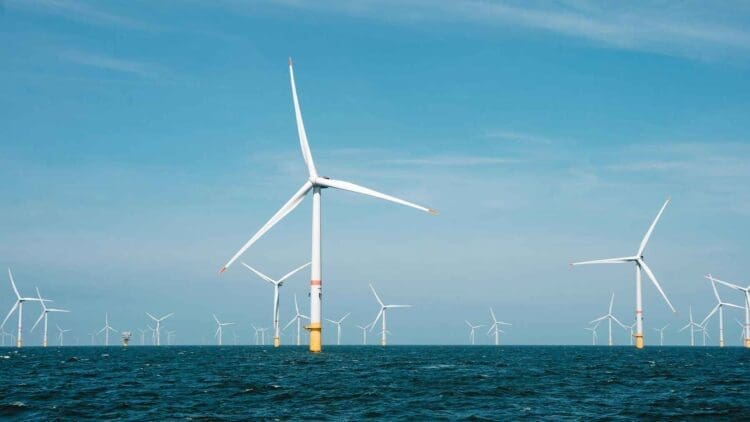
The growing relevance of floating offshore wind is because it allows energy generation in deeper waters where fixed-bottom turbines are not practical.
The mission is to maximize the potential of wind energy projects
The ability of floating offshore wind developments to generate electricity in deeper waters is something that amplifies the geographic potential of offshore wind, especially for countries with minimal shallow coastal areas. The partnership is expected to enhance Japan’s position in this upcoming industry.
Since the sector is still emerging, there is still a major obstacle affecting its full effectiveness, and that is uncertainty in technology performance and project economics. This is where Lloyd’s Register will come in with its certification and energy asset assurance experience to assist in combating technical risks.
The partnership also reinforces the significance of safety and reliability in offshore environments. Floating wind projects operate under sophisticated marine conditions that demand resilient engineering solutions and precise validation.
FLOWRA and Lloyd’s Energy’s role in supporting the clean energy transition
The two entities will be looking forward to creating a blueprint that many countries and companies can apply in the future. Their main objective is to reduce development timelines and quicken the commercialization of floating offshore wind technologies globally. Currently, governments and firms are aggressively pursuing a transition toward low-carbon energy systems, so the initiative is appropriate.
Floating offshore wind will undoubtedly play a major role in assisting nations in meeting clean energy objectives because of its scalability and minimal environmental footprint. This initiative exemplifies the effectiveness of collaborations.