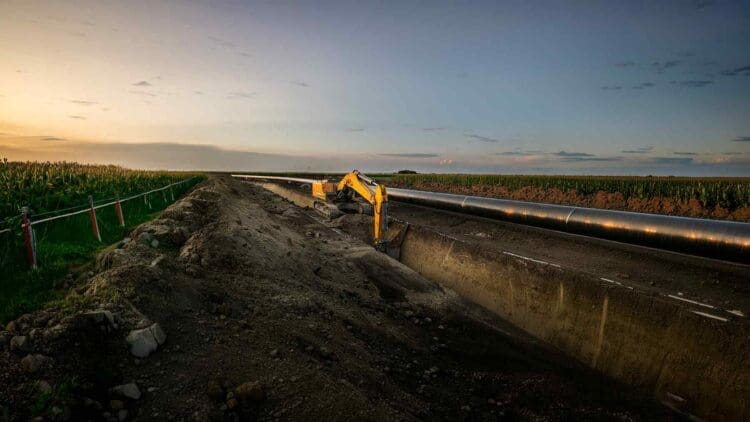
Hydrogen production has been able to relentlessly elevate in the most recent years because technological innovation allows companies and countries to pursue ambitious projects which they once upon a time could not. Asia is the outright leading continent in hydrogen production but it is not able to rest on its laurels because Europe and America are chasing right behind them. In fact, Europe has shown a desire to occupy the leading position, evident from recent developments such as GASCADE, which has advanced initial start-up of a 400-kilometer (248.5-mile) hydrogen core network pipeline.
Reviewing GASCADE’s reputation and latest energy development
The European continent has enough resources at its disposal to where it is not forced to rely on external companies in its energy endeavours. GASCADE is a renowned company that operates an approximately 3,700-kilometer-long high-pressure pipeline in Germany functioning as a vital infrastructure provider for transporting natural gas and hydrogen. All in all, it transports over 100 billion cubic meters of natural gas per year meaning it is responsible for an estimated quarter of the European Union’s gas.
The company clearly has a good reputation and has been turned to by different nations as it is trusted to deliver when it comes to energy developments. Fortunately, it has received yet another boost to its reputation after its latest achievement involved converting 400 kilometers of high-pressure natural gas pipelines into lines capable of transporting hydrogen. This might seem like just another energy initiative but the most interesting aspect about it is that it was initially intended to carry fossil fuels before a change of plan was made. This signals that Europe is extremely dedicated to clean energy generation so much that it is willing to neglect plans for the sake of purifying the air and maintaining a cleaner environment.


The 400 kilometer core hydrogen pipeline: Delving deeper into the project details
The occurrence of this project is not a coincidence because Germany is recognized as the biggest hydrogen-producing country in the entirety of Europe with a production capacity of over 2.1 million tonnes per year. It has the highest number of active facilities compared to other nations and is the central hub for European hydrogen production. Its new project consists of a repurposed pipeline, with a diameter of 1.4 meters. All in all, the development is part of an initiative called “Flow-making hydrogen happen” which intends to build out Germany’s hydrogen core network, expected to span thousands of kilometers.
GASCADE advances a major hydrogen project but how far is it?
When humans hear about any upcoming facility, the instinctive reaction is to find out how far it has progressed. According to reports, the new hydrogen corridor runs from Lubmin on the Baltic Sea coast down to Bobbau in Saxony-Anhalt, officially making it one of the first large-scale north-south hydrogen transport axes in the country. In terms of the progress that the entire development has made so far, GASCADE reported that the infrastructure is now available to the market meaning energy companies can now access hydrogen supply routes.
Unpacking the impacts of the upcoming facility on Germany’s hydrogen economy
Although Germany is rightfully claiming the development as its own, it cannot be doubted that it is still benefitting the entirety of Europe. The 400 kilometer pipeline reveals the true aspirations that Germany and Europe have to create a low-carbon hydrogen ecosystem in. Experts have long established that hydrogen especially when produced from renewable energy is a crucial energy source in decarbonizing certain sectors that are not easily electrified such as the heavy industry.
Hydrogen is increasingly becoming appreciated in the contemporary era for its versatility as an energy source. Not only is it utilized to generate electricity but it can also be used in fuel cell Electric Vehicles. Every continent is positioning itself to profit whenever the demand for hydrogen amplifies with many energy experts predicting that this is an imminent reality.