
Wind 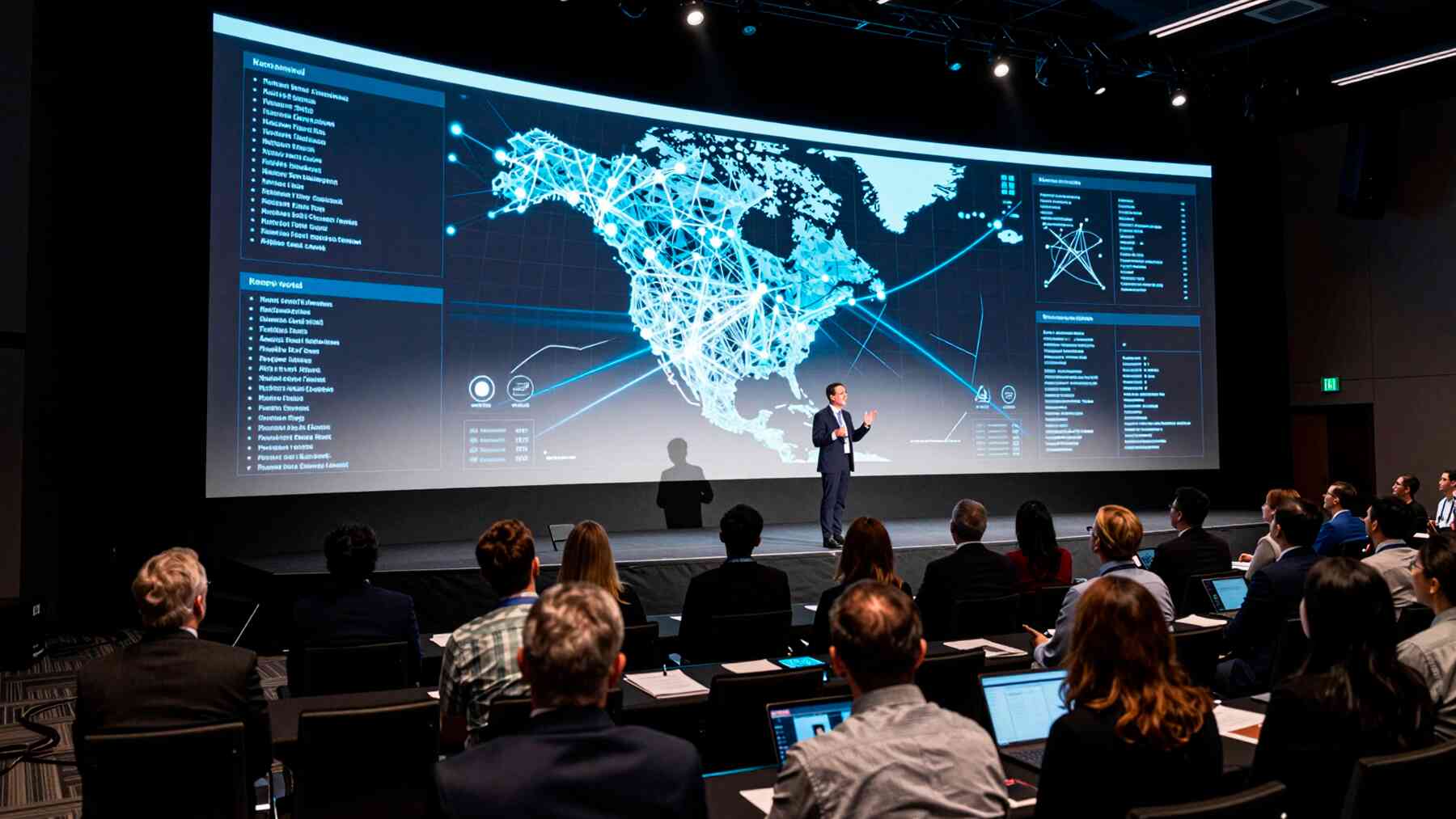 AI-made

GE Vernova launches GridOS for Transmission and releases two AI whitepapers at Orchestrate 2026 conference
AI-madeAt its annual Orchestrate 2026 conference in Atlanta on June 9, GE Vernova unveiled GridOS for Transmission — a unified, AI-powered software platform built to coordinate transmission network operations in near real time. The company also dropped two new whitepapers the same day, examining how AI can reshape grid planning and autonomous grid-edge operations.
GE Vernova unveils GridOS for Transmission at Orchestrate ’26
Orchestrate 2026 was the setting for what GE Vernova called a fundamental shift in how utilities should think about grid software. The June 9 event in Atlanta pulled together utility leaders, grid operators, and tech experts to dig into how software is changing grid modernization.
The timing wasn’t random. Electricity demand is climbing fast, renewable integration is getting deeper, and extreme weather is hitting grids harder than ever. GE Vernova used the conference to make one clear argument: software can’t be treated as an add-on anymore. GridOS for Transmission was its headline proof point.
The two AI whitepapers released the same day backed that message up, covering opposite ends of the grid lifecycle. Long-range planning on one side, real-time grid-edge autonomy on the other.
What GridOS for Transmission does and why it was developed
Grid operators are managing a system under serious stress. Rising load, variable renewable generation, and unpredictable weather create conditions that legacy tools simply weren’t built for — especially when those tools don’t talk to each other.
That fragmentation is exactly what GridOS for Transmission is designed to fix. Siloed systems create decision latency, forcing operators to pull data from separate platforms before they can act. In a fast-moving grid, that delay has real consequences. GE Vernova’s position is that software is now “a core enabler” of grid operations — not a supplementary layer.
GridOS for Transmission brings together AEMS, DDLR, WAMS, forecasting tools, market operations, visual intelligence, and asset behavior data into one coordinated environment. Operators get one place to see and act.
Capabilities and expected operational effects of GridOS for Transmission
The platform’s central promise is near real-time coordination across the entire transmission network, treated as one system, not a collection of separate parts.
In practical terms, that means shorter control room decision cycles. Operators can act on current conditions instead of waiting for data to be reconciled across disconnected tools. The unified environment also lets utilities operate closer to actual system limits, improving utilization of existing transmission capacity without requiring new infrastructure.
Integrating stability data, forecasting, and capacity awareness means operators can spot emerging problems earlier. During disturbances or peak-stress events, faster identification leads directly to faster response—and that matters when grid conditions can deteriorate quickly. Rather than switching between systems, operators get a combined view of what the grid is doing, what it’s likely to do, and what capacity exists to respond.
Two AI whitepapers address grid planning and autonomous grid-edge operations
The first whitepaper — “Reimagining the Grid Edge: Autonomous Distribution Technologies as the Key to Managing Decentralization and Enhancing Resilience” — focuses on what happens at the distribution level when faults occur. Autonomous distribution technology, as described in the paper, can detect, isolate, and restore faults in seconds rather than minutes. That’s a meaningful operational difference for both utilities and customers.
The paper outlines specific AI capabilities: adaptive zone management, predictive controls, and a software-defined architecture that integrates with existing EMS and ADMS environments. The framing centers on resilience — building a grid that can absorb disruptions and recover without heavy manual intervention.
The second whitepaper, “AI in Grid Planning: Unlock Resilience, Faster Decisions, and Lower Costs,” takes the longer view. It covers how AI can support long-range planning, interconnection analysis, forecasting, and risk management — all anchored by a living digital grid twin that reflects real system conditions. Use cases include reducing interconnection backlogs, analyzing non-wires alternatives, managing vegetation and wildfire risk, preparing for storms, and improving load and generation forecasting.
Together, the two papers map AI’s role across the full grid lifecycle—from decisions made years out to actions taken in real time.
Background: GE Vernova’s grid software strategy and market context
GE Vernova is a global energy company headquartered in Cambridge, Massachusetts, with roughly 85,000 employees across approximately 100 countries. Its electrification segment covers the transmission, distribution, conversion, storage, and orchestration of electricity from generation to consumption.
The Orchestrate conference is the company’s annual forum for presenting its software strategy to utility industry stakeholders—where GE Vernova makes the case, year after year, for why software belongs at the center of grid operations rather than at the edges.
The company’s core argument, repeated at this year’s event, is that the coordination challenges facing modern grids have grown beyond what human-scale management can handle alone. AI-driven software, in GE Vernova’s framing, is the mechanism capable of operating at the speed and complexity the grid now demands.
The takeaways from Orchestrate 2026 come down to this: GridOS for Transmission is GE Vernova’s answer to siloed, slow grid management tools; the two whitepapers lay out where AI fits in planning and at the grid edge; and the company is positioning intelligent software as essential infrastructure—not optional technology—for utilities navigating an increasingly complex energy landscape.
Author Profile
Kelly is an experienced writer with 15 years of experience exploring the big stories that shape our world, from tech breakthroughs and space exploration to climate, energy, and the fascinating quirks of science. She has a talent for turning complex ideas into sharp, memorable insights that stay with readers long after they’ve finished reading.