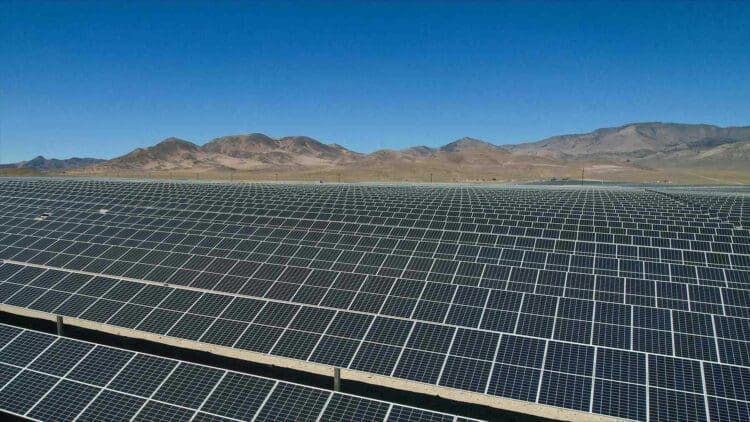
With each passing week, the United States announces another solar energy project as it works to strengthen its position as a global clean energy leader. The US is expanding efforts to ensure that every region has a diversified energy portfolio rather than relying on a single source. In line with this objective, Gordian Energy Systems has brought Maryland’s 13.7 MW Costen solar facility online following the completion of construction.
A landmark moment for Maryland’s transition to clean energy
Clean energy generation projects usually require several years of planning and construction before becoming operational. This is something that the general population is not always aware of. Maryland’s latest development, the Costen facility located just outside Baltimore, is designed to supply clean power under a long-term agreement aimed at helping local institutions reduce carbon emissions without high upfront costs.
The 13.7 MW project comes online at a time when federal and state policies are encouraging greater adoption of clean energy sources, ranging from rooftop solar installations to large-scale ground-mounted systems. Ultimately, these initiatives are intended to reduce greenhouse gas emissions and accelerate the transition to renewable energy.
As seen in most solar energy developments that have come out in 2026, the Costen solar farm will be controlled by a power purchase agreement (PPA) that makes renewable generation accessible to major energy consumers without upfront capital costs. The energy industry is filled with nations and companies taking notes from each other, so it is not a surprise to see an increased use of PPAs, as everyone has discovered how much more efficient they are.
How did the Costen solar facility come online? Delving deeper into the process
When a large-scale solar development comes online, the government deserves a massive amount of credit for not restricting it. However, there is often a leading entity, and in this case, it is Standard Solar and Gordian Energy Systems, which developed and owns the project. As briefly mentioned, PPAs are a huge part of contemporary solar developments because they transfer the financing and development risk to solar asset owners. In this particular facility, it is the healthcare system that will be the biggest beneficiary of reduced energy pricing and a smaller environmental impact.
What can people expect? Reviewing the general impacts of Maryland’s project
Firstly, and most importantly to the general public, reports suggest that the project will deliver roughly 19,700 megawatt-hours of Maryland-generated clean electricity in its first year of operation. To put this number into perspective, it is enough to crucially offset emissions for the healthcare system that agreed to source its power through the long-term contract.
Unpacking the Economic and Environmental impacts of Gordian Energy Systems’ development
Like most clean energy facilities, the development is expected to reduce carbon emissions and bring cleaner air to the region. At the moment, it is not fully functional, but when that does happen, the Costen Solar Farm is expected to offset an estimated 14.7 million pounds of CO₂ emissions each year. This has been met very positively because the region has been begging for something that would assist with cutting greenhouse gases.
Ultimately, the environmental impacts of the facility are the same as removing thousands of cars from Maryland’s roads or preventing the burning of coal for electricity generation. Economically, the project has already created jobs during the construction phase and given maintenance and technical opportunities that support the region’s economy.
Maryland’s newest facility has been established in such a manner that many other companies may learn from and proceed to develop their own facilities. This will be a massive victory for the entire world as it works towards eliminating carbon emissions in order to protect the planet for future generations.