A greener-than-green hydrogen has been discovered, and it may not be found in nature, but it is produced in nature.
The unexpected discovery of “eolic” hydrogen could reshape America’s energy and transportation sectors, among other things.
Multiple experts worldwide have debated which type of hydrogen is most effective in achieving climate goals.


For a long time, green and blue may have been all that, but it seems eolic is here to stay.
How hydrogen has risen to the occasion in the energy transition
These days, it is all doom and gloom when it comes to climate change, and for very good reason.
What could be scarier than global food and water shortages and ecosystem collapses?
The short answer: Not much. Fortunately, there is hope for the world.
Once upon a time, hydrogen was merely explored in the lab out of curiosity. Soon, curiosity gave way to desire, particularly for its key role as a niche fuel.
It rose to the occasion as an outstanding energy resource, making waves in the energy transition.
But then, people started adding color to this highly concentrated energy resource. Color changed the way the world perceived hydrogen.
Of all the man-made versions, the colors green and blue have always been the most sought-after.
It is not surprising, as those two colors have the smallest carbon footprints. They are also saviors to the hard-to-abate sectors.
Now, there is a new knight in shining armor, and it is called “eolic” hydrogen.
A greener-than-green knight in shining armor to save America
Of all the American heroes, hydrogen has always seemed the most unlikely. The most affordable version of this resource is the not-so-eco-friendly hydrogen colors.
Fortunately, the end goal of policy initiatives is to make the most sustainable forms the most affordable. Only then will it be truly competitive with fossil fuels such as oil.
America has always had an undeniable relationship with oil.
The nation’s energy and transportation sectors could not exist without it. That is why U.S. oil imports used to be very high.
However, the primary goal of hydrogen as an alternative fuel and energy resource will always be to cut carbon emissions.
A Norwegian company called Wind Catching Systems has created the ultimate design to generate greener-than-green eolic hydrogen.
The design itself could end up reshaping America’s energy sector, but in two surprising ways.
The design that produces eolic hydrogen
The most important question is, what on Earth is “eolic” hydrogen?
The concept itself is so simple that it almost sounds too good to be true.
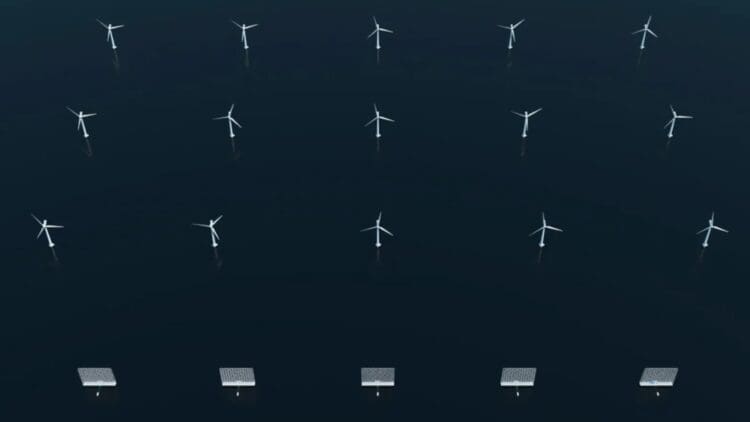
Offshore wind energy powers a process known as water electrolysis to create hydrogen. The end product is achieved with zero greenhouse gas emissions whatsoever.
Wind Catching Systems created a 40 MW offshore wind turbine design called the Windcatcher. It harnesses 2.5 times more wind per square meter.
Future designs will be scaled up to an annual output of 99 GWh, which can power nearly 20,000 homes.
U.S. large-scale offshore wind projects have been facing challenges lately. But the Windcatcher’s potential eolic capability is bound to change things up.
The design consists of clustered turbines that prevent turbulence. This means no energy loss occurs, and the excess energy is ideal for green hydrogen electrolysis.
Wind Catching Systems’ Windcatcher thus has the potential to reshape the wind and hydrogen sector. This, in turn, could finally decarbonize America’s transportation and industry.
Unfortunately, it could still be a while before this knight-in-shining-armor design saves the U.S. The first commercial unit is planned to launch in 2027.
Nonetheless, the potential implications are profound. As large-scale facilities continue to reach commercial service in the U.S., could eolic-hydrogen facilities be the future?