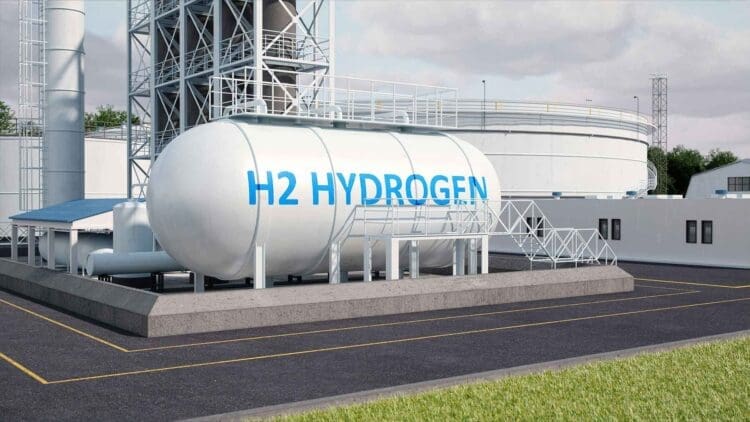

H2GLASS is the latest entity to advance industrial decarbonization with the deployment of a transportable electrolyzer unit. European countries have shown great solidarity and harmony in the hydrogen initiatives that they have pursued in 2026. Germany, the Netherlands, Poland, France, and Italy are the top hydrogen-producing countries in Europe, collectively holding 57% of the total capacity. As time passes, technological innovation is able to bring more ambitious projects to life, which developers would not have been able to develop in the past.
H2GLASS makes tremendous improvements to its hydrogen portfolio
H2GLASS is a major EU-funded Horizon Europe project launched in 2023 and aimed at accelerating the decarbonization of the energy-intensive glass and aluminum industries. The project seeks to replace fossil fuels with green hydrogen for industrial heat, targeting an 80% reduction in carbon emissions by 2050.
Scientific experts have played an integral role in directing hydrogen developers on the best strategies that they can utilize in order to maximize the production of the energy source. The European H2GLASS project has reached a pivotal milestone in its mission to decarbonize heavy industry with the deployment of a transportable electrolyzer unit.


The system is built to produce green hydrogen on-site. As industries are facing an increased amount of pressure to reduce emissions, hydrogen-based solutions are gaining greater momentum as a lucrative alternative. The emergence of this mobile technology displays a major shift from theory to real-world industrial application.
Gaining a deeper understanding of the mobile electrolyzer behind hydrogen production
Technological innovation and the sophistication of energy developments go hand in hand, meaning the more technology reaches greater heights, the higher the chances of hydrogen initiatives becoming monumental. At the heart of H2GLASS’s incredible breakthrough is a 2.5 MWe portable proton exchange membrane (PEM) electrolyzer, developed to travel between industrial sites across Europe.
Its ability to travel is a crucial feature that not only gives it the ability to be used in different nations but also displays the unity within the European clean energy generation landscape. In comparison to stagnant hydrogen systems, the transportable unit allows manufacturers to generate green hydrogen directly at their facilities.
This removes the need for external supply chains, which is something that hydrogen developers have been aiming to address.
The electrolyzer has started its first deployment in L’Ardoise, France, where it is being used in collaboration with Owens Corning to test hydrogen combustion in glass furnaces. This is a strategic move by the developers because it gives them a general idea of how the electrolyzer operates and how it might perform when used on an even greater scale.
A mission to decarbonize one of Europe’s most energy-intensive sectors
It is a well-known fact that glass manufacturing is among the most energy-intensive industrial processes. This is because it typically depends on natural gas to achieve the high temperatures needed for the melting process. The H2GLASS mission intends to replace these fossil fuels with hydrogen, which produces no direct carbon emissions when used as a combustion fuel.
The project is funded under the Horizon Europe program and unites 23 partners to develop a complete technological structure for hydrogen-based production. For instance, this consists of not just hydrogen supply through electrolysis but also new burner designs, furnace adaptations, and digital monitoring systems to ensure efficiency and safety.
These sophisticated technologies are expected to assist H2GLASS to achieve 100% hydrogen combustion in glass production facilities.
The importance of the H2GLASS hydrogen initiative to the European landscape
The European landscape consists of great activity at the moment, and H2GLASS is a huge reason for that. One of its most standout features is its ability to focus on real-world demonstrations of how these technologies would work under realistic circumstances.
The mobile electrolyzer will be deployed across multiple industrial sites, enabling researchers to collect critical data on performance, safety, and scalability.
H2GLASS deserves tremendous credit for assisting in closing the gap between research and commercialization. The U.S. and other parts of the world may learn from the European entity.