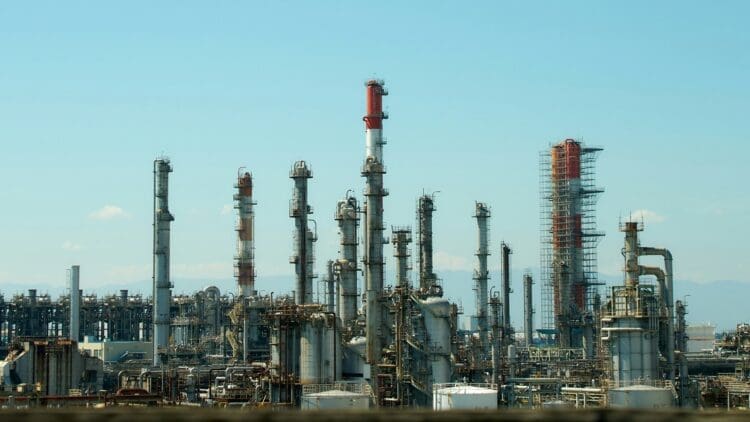

Amid a world consumed by the need to diversify energy assets, India has emerged as a major player in the global energy market, with substantial operations not just within its own borders, but further afield as well. India has one of the largest populations of people anywhere on the planet, and has been developing new energy projects to meet the expected increase in demand for energy over the coming years. The government has revealed significant progress on the Rajasthan Refinery, which will produce a range of petrochemical products this year.
India needs to diversify its energy products production chain
India, along with a litany of nations, has been developing its petrochemical infrastructure over the past few years as forecasts expect a dramatic increase in demand for petrochemicals, especially in Asia. Petrochemical production has become the latest trend to sweep across the international energy market as a wave of demand hits the sector.
While the vast majority of energy projects can be handled by a single company, some developments require the input of several companies and institutions to reach commissioning. Joint ventures are the easiest way to get a project to the final phases beyond planning. The HPCL Rajasthan Refinery Limited (HRRL) project is a joint venture between Hindustan Petroleum Corporation Limited (HPCL) and the Rajasthan Government.

Pachpadra will become the home of India’s latest refinery and petrochemical complex
Pachpadra will house the new refinery and petrochemical complex that is being developed by the joint venture. India’s Prime Minister, Narendra Modi, brought the project to reality when he laid the first foundation stone in 2018, and since then, the joint venture has been developing the necessary infrastructure that will bring the project to commissioning in the near future.
India’s diverse energy asset portfolio is set to be boosted by the new complex
India already boasts one of the most diverse energy asset portfolios anywhere in the world, and the new nine million metric tons per annum (MMTPA) facility will bring the future of petrochemical production to India through its astounding state-of-the-art technology designed for the petrochemical industry. The Hindustan Petroleum Corporation Limited company owns a 74% stake in the joint venture, while the government of Rajasthan owns the remainding 26%.
The new petrochemical complex will produce petrol, diesel and a wide range of other petrochemical products for domestic and international use. The complex will source its crude oil from two strategically selected locations, namely:
- The Mundra terminal in Gujarat, which is located about 495 km away, will supply approximately 7.5 MMTPA
- The Mangla crude terminal in Barmer, which is much closer at just 75 Km away, will supply the new complex with 1.5 MMTPA
The two sites were chosen to supply the complex with a continuous and stable supply of essential energy resources, which the plant will convert into petrochemical products. The joint venture has also considered the environmental and socio-economic impacts of the project and has been working with locals to construct a new school and hospital in the region. Additionally, India’s Nagrajuna refinery will also boost the nation’s petrochemical production.
Several energy-rich nations are developing petrochemical assets this year
India’s ambitions to increase petrochemical production reflect global sentiments, as several other nations are expressing similar plans for the petrochemical market, such as Brazil’s Petrobras, with its new major downstream investment program for Rio de Janeiro refining and petrochemical assets. The global energy market is in a constant state of evolution, depending on market trends, and now, the latest energy asset to get the attention of the international energy sector is the petrochemical market. Expectations are for Asia to lead the way in new petrochemical production this year.