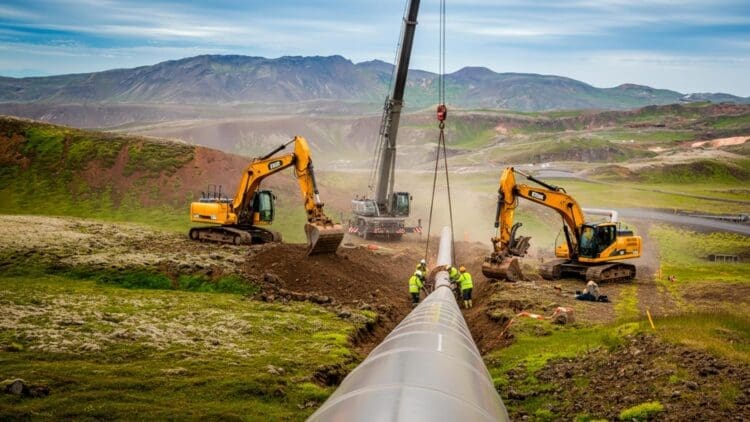
As the ongoing war in Ukraine has placed new sanctions on Russia and its energy resources, a new pipeline for Russian crude is being jointly developed by Hungary and Serbia, two of the central European nations that still do business with Moscow. The situation has been exacerbated by recent drone attacks by Ukrainian forces on a significant crude pipeline owned and operated by Russia. With the war showing no end in sight, Hungary and Serbia have accelerated the construction of the new pipeline.
Serbia and Hungary have provided a lifeline for Russian crude oil companies
Serbia’s state-owned energy company, Transnafta, recently announced a tender for the construction works on a new cross-border crude oil pipeline between Serbia and Hungary. The 62-mile pipeline will allow Serbia to receive Russian oil products through Hungary, utilizing the existing infrastructure of the former Soviet Druzhba oil pipeline.
The new pipeline system will boast a capacity of around 5.5 million tons of Russian crude oil annually, and provides some much-needed relief for the Russian oil sector as the vast majority of nations cut ties with Moscow.



According to information posted on the Serbian government’s Procurement Portal, bids to develop the pipeline will be accepted until February of this year. The tender applications cover the entire scope of both the construction process and the professional supervision for the new pipeline.
Serbia and Hungary are two of the only nations in Europe open to deals with Russia
While the tender bidding process is a step in the right direction for the project, the full value of the contract has not been specified by the government of Serbia. The government has noted that the project aligns with the state’s ambitions to increase energy security and output capacity of the central European nations of Serbia and Hungary.
Serbia and Hungary’s leaders discussed the new pipeline in December
Hungarian Prime Minister Viktor Orban and Serbian President Aleksandar Vucic discussed the new pipeline over the phone last year, incorporating it into a new strategy earmarked to increase upstream production in the region.
New attacks by Ukrainian forces on Russian oil-exporting infrastructure have forced the hand of the two leaders and paved the way for the project to be accelerated this year.
Hungarian Foreign Minister Peter Szijjarto said that continuous drone attacks by Ukraine have forced Hungary and Serbia to accelerate the commissioning timeline of the new pipeline from 2028 to sometime in 2027.
The minister has now revealed new plans to complete Hungary’s segment of the Druzhba pipeline system by the end of next year at the very latest, and called the move to accelerate the timeframe a direct response to drone attacks by Ukraine on Russian oil infrastructure.
The United States is attempting to force the hand of Hungary and Serbia
By implementing new sanctions on Serbia’s Russian-owned energy company NIS, the United States is aiming to force the hand of the two nations. The move to form new agreements to flow Russian oil comes as the United States and the EU have called on central European nations to cut ties with Moscow. This comes as the US experiences a new surge in midstream developments, bringing this year into focus for the global midstream market.
There are only a handful of nations still doing business with Russia
Along with Serbia and Hungary, Slovakia and Belarus are the only nations in Europe still open to doing business with Russian energy companies despite the calls to sever ties with Moscow by the vast majority of the world. The United States now leads the world in oil and gas production, and by implementing the new sanctions on Russian energy supplies, it is hoping for a new era of oil and gas development that will no longer be reliant on Russian resources.