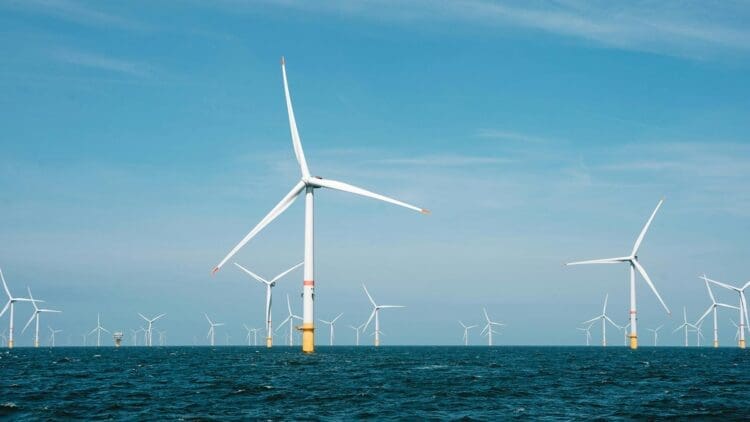

When the United States was going through its period of uncertainty in relation to wind energy initiatives, Canada was not heavily affected despite its affiliations with the U.S. Since then, the nation has kept its tremendous momentum going while discovering new innovative strategies of maximizing wind energy generation. Among the companies at the forefront of the activity in the Canadian wind energy landscape is Hydro-Québec, which is not slowing down despite the successful initiatives already executed in 2026. As of late, the firm has initiated an evaluation of offshore wind potential across Atlantic Canadian regions.
Hydro-Québec assumes the responsibility of leading Canada’s wind energy sector
Hydro-Québec is a Canadian Crown corporation and public utility that has already made a name for itself as one of the world’s largest hydropower producers. Its main focus is the generation, transmission, and distribution of electricity across the province of Québec.
The firm was established in 1944 and is headquartered in Montreal. According to reports, it serves over four million customers and exports massive amounts of energy to the north-eastern United States.

Building on the amount of success it has amassed over its multi-decade reign in the clean energy landscape, Hydro-Québec has taken a significant step toward expanding its renewable energy footprint beyond provincial borders by launching an evaluation of offshore wind potential in Atlantic Canada. The firm clearly recognizes Canada’s potential and is seeking to capitalize on it by establishing groundbreaking developments.
The initiative is based on a formal Request for Information (RFI) targeting offshore wind developments off the coast of Nova Scotia. This move demonstrates the growing regional collaboration in Canada’s transition to clean energy systems. It also highlights the strategic importance of offshore wind in meeting future electricity demand and decarbonization goals.
Delving deeper into Hydro-Québec’s offshore wind assessment in Canada
Hydro-Québec has been able to maintain relevance over the years because of its ability to assess and recognize the direction that the energy industry is heading before positioning itself to benefit when that time comes. The entity’s newly issued RFI aims to attain detailed insights into offshore wind projects located off Nova Scotia’s coastline.
Hydro-Québec is seeking information from developers on key factors such as technology options, project timelines, costs, and transmission solutions. The evaluation process focuses not only on energy generation but also on how electricity from offshore wind farms could be transported efficiently to Québec and other markets.
This includes examining infrastructure requirements like subsea cables and interprovincial transmission links. Importantly, Hydro-Québec reinforced that this process is only being done for exploration purposes at this point in time. There are no investment or procurement decisions that have been made at this stage, and the initiative will inform future strategic positioning in offshore wind development.
Unpacking the position occupied by Hydro-Québec in wind energy generation
Of course, there is no questioning Hydro-Québec’s reputation in the energy industry, considering the number of energy projects that it has successfully delivered to the general public.
There is a total of 16 interconnections linking it to neighboring jurisdictions, which makes it integral to regional power distribution and grid balancing. As such, Hydro-Québec complements or supports intermittent renewable sources like wind with its tremendous hydroelectric capacity.
The initiative is consistent with a broader vision of optimizing energy systems across provinces. Ultimately, collaboration between Québec and Atlantic Canada could reduce infrastructure costs, improve efficiency, and strengthen energy security across the region.
Nova Scotia is at the center of Canada’s wind energy sector, elevating
Not for the first time this year, Nova Scotia is set to benefit from the wind energy activity in Canada. It is still an upcoming key player in Canada’s offshore wind sector, with some of the strongest and most consistent wind resources in North America.
The province has already started its first offshore wind tendering process, showing preparedness for large-scale development.
Hydro-Québec deserves tremendous credit for pushing boundaries in Canada’s energy landscape. Additionally, it has also played a role in advancing the U.S landscape.