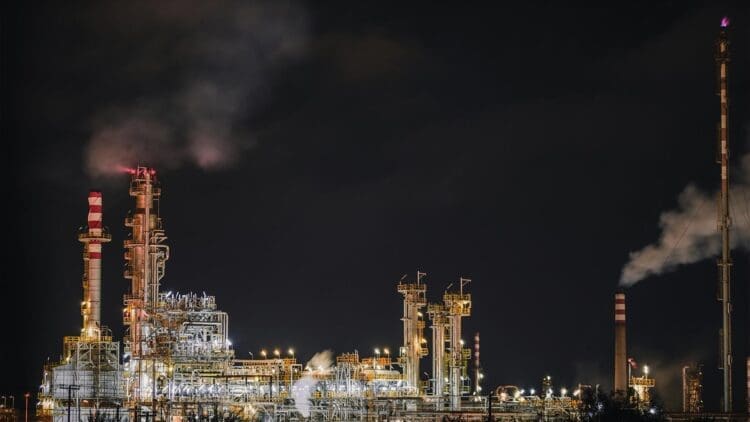

Large-scale industrial transformations can be subtle and take years to reveal. It is common for large-scale changes to occur over many years, gradually transforming systems long before a significant event (i.e., “the flip”) occurs. This has occurred with the modernization of the INA Rijeka Refinery. The culmination of this multi-year effort marks an important inflection point for the refinery and a major event that has generated a great deal of anticipation, debate, and observation among industry stakeholders during the final phases of the project.
A long transformation of the heart of Croatian petroleum infrastructure
For decades, the Rijeka Refinery has served as the backbone of Croatia’s petrochemical infrastructure, supplying refined products primarily to meet domestic demand. Additionally, it serves as a critical supply route for petroleum products throughout Southeastern Europe.
However, despite playing such a vital role, it has always had certain limitations. Due to older configurations, the refinery has historically limited yields of various refined products and has relied upon imported feedstocks, which have placed the refinery in a position where it is at the mercy of external markets and other geopolitical events that can impact those external markets.


The almost €700m modernization project that INA initiated several years ago aimed to transform that paradigm. This single largest project in INA’s history sought to enable Rijeka to process a wider variety of crude oils and to extract greater value from each barrel processed.
In essence, when viewed through this lens, the refinery modernization was not focused on increasing the size or volume of output; it was focused on establishing a sustainable and efficient framework under which the refinery could produce a wide array of petroleum products over the life of the project.
Measuring the scale, efficiency and energy security of the DCU
One aspect of the refinery modernization project that has received the greatest amount of visibility is the completion of the new Delayed Coking Unit (DCU). The DCU is considered to be a key element that transforms the refinery’s operating model. The addition of the unit significantly increases Rijeka’s processing capacity. When fully utilized, the refinery can process as much as four million tons of crude oil annually, including some heavier grades of crude that would have otherwise been difficult to refine.
While there are certainly impressive statistics associated with this aspect of the refinery modernization project, they pale in comparison to the potential benefits associated with these statistics. The diesel output from Rijeka is expected to increase by approximately 30%. Such an increase has significant implications for Croatia’s transportation sector and the peak summer tourist season, which drives demand for diesel fuels.
Additionally, due to the implementation of the modernized refinery configuration, Rijeka will no longer require the importation of vacuum gas oil. Therefore, this reduces Rijeka’s dependence on external suppliers, thereby enhancing both Croatia’s and neighboring countries’ energy security.
Transitioning from construction milestone to operational intent
Although construction activities have been concluded, the focus is beginning to turn from the costs associated with completing the modernization project to what capabilities will be enabled by the modernized refinery. To INA and MOL Group (its majority shareholder), the refinery modernization represents an enhanced commitment to refining as a competitive and forward-thinking business.
The refinery is expected to become increasingly efficient and productive
The refinery will continue to create high-value products; and it will be better able to withstand fluctuations in global markets without having to endure additional uncertainties in its supply chains.
Although a key component in the process of refinery modernization, INA signed an agreement on developing a green hydrogen plant adjacent to the Rijeka Refinery. The possible construction of that facility exemplifies how current processing plants are able to adapt to new environmental regulations and sustainability standards during the next decade. INA’s Rijeka Refinery modernization represents both the closing of one era and the opening of a new one.