
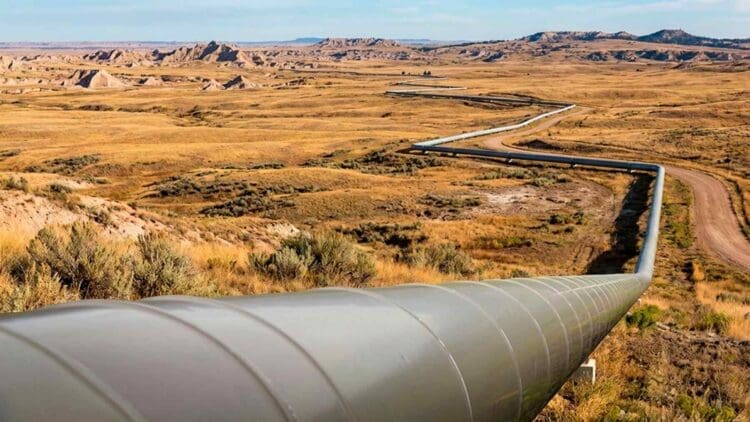
The news of Intensity Infrastructure and Rainbow Energy is not as sensational as other news, but it has changed the face of the energy industry in North Dakota. The news will create a new way of thinking in North Dakota for the future of its energy industry. Recently, Intensity Infrastructure announced Phase I of a proposed 36-inch diameter natural gas pipeline through North Dakota. This is one phase of a multi-phased expansion to support the firm’s long-term transportation commitments that have been included in agreements.
A project built on firm footing
It would be easy to see the move forward as simply a process step; however, the larger context makes the significance of the event apparent. This pipeline will create a scalable “hub” connecting Bakken production to increasing regional demand for natural gas; specifically, power generation, industrial growth, and increasing demands from emerging data centers. In a region characterized by variable output and gaps in the needed infrastructure, the assurance of a consistent, expandable system has created a sense of anticipation.
However, many questions remain:



- How large can this system ultimately become?
- What will it ultimately connect?
As the next phase of this project begins, there are many questions surrounding how large this system will ultimately become and what it will connect.
An expansion that exposes the scale beneath the surface
Phase I alone is expected to deliver approximately 1,100,000 Dth/d of natural gas, which clearly indicates long-term confidence in North Dakota’s trajectory of energy demand.
Beyond the size of the Phase I delivery, the overall structure of the pipeline will further reinforce the sense of growth and expansion. The pipeline will provide a source of gas from multiple receipt points: the Northern Border Pipeline, WBI Energy’s network, and direct connections to six Bakken natural gas processing plants.
Therefore, this is not merely a transportation line. Rather, it is a strategically developed platform to meet the future needs of the State of North Dakota. Additionally, the pipeline will operate without compression fuel surcharge costs—a relatively unique and streamlined operation that decreases the operational complexity and increases transparency for all users.
Collectively, the elements of this project raise it from a simple midstream build to one that is indicative of the fact that the underlying infrastructure is being developed not solely for the current market conditions, but for the potential future industries that are beginning to develop.
Why this moment is important for North Dakota
This project, as well as the approval of Phase I, provides a better understanding of the reasons behind both Intensity Infrastructure and Rainbow Energy’s positioning of North Dakota as a reliable, dispatchable energy hub for both modernized power production and for industrial relocation. Therefore, uncommitted capacity in the pipeline was intentionally designed so it can be used by future gas-fired plants, which may include all of the locations along the route of the pipeline and the Coal Creek Station operated by Rainbow.
Furthermore, the timing of this project (early 2029 for in-service) illustrates that the partnership is developing the infrastructure not only for the long-term demand for gas, but for the backbone for accelerated growth that may occur sooner than anticipated.
For over two decades, flaring, transmission constraints, and increasingly high power demand have driven North Dakota’s energy policy agenda. Therefore, this project, and others like it, signal much more than mere construction; they suggest movement toward creating a resilient, reliable, and locally-driven model for the development of North Dakota’s energy resources.
Like other aspects of the State’s energy economy, this pipeline expansion does not announce itself as a major headline. However, it represents a transition toward building out the infrastructure that grows with North Dakota’s evolving energy economy. As additional projects begin to converge around the rapidly increasing demand for data center services and diversifying power generation, the State may soon experience a new turning point.

