
Kelt Exploration posts record Q2 2026 production of 50,388 BOE per day as revenue nearly doubles year over year
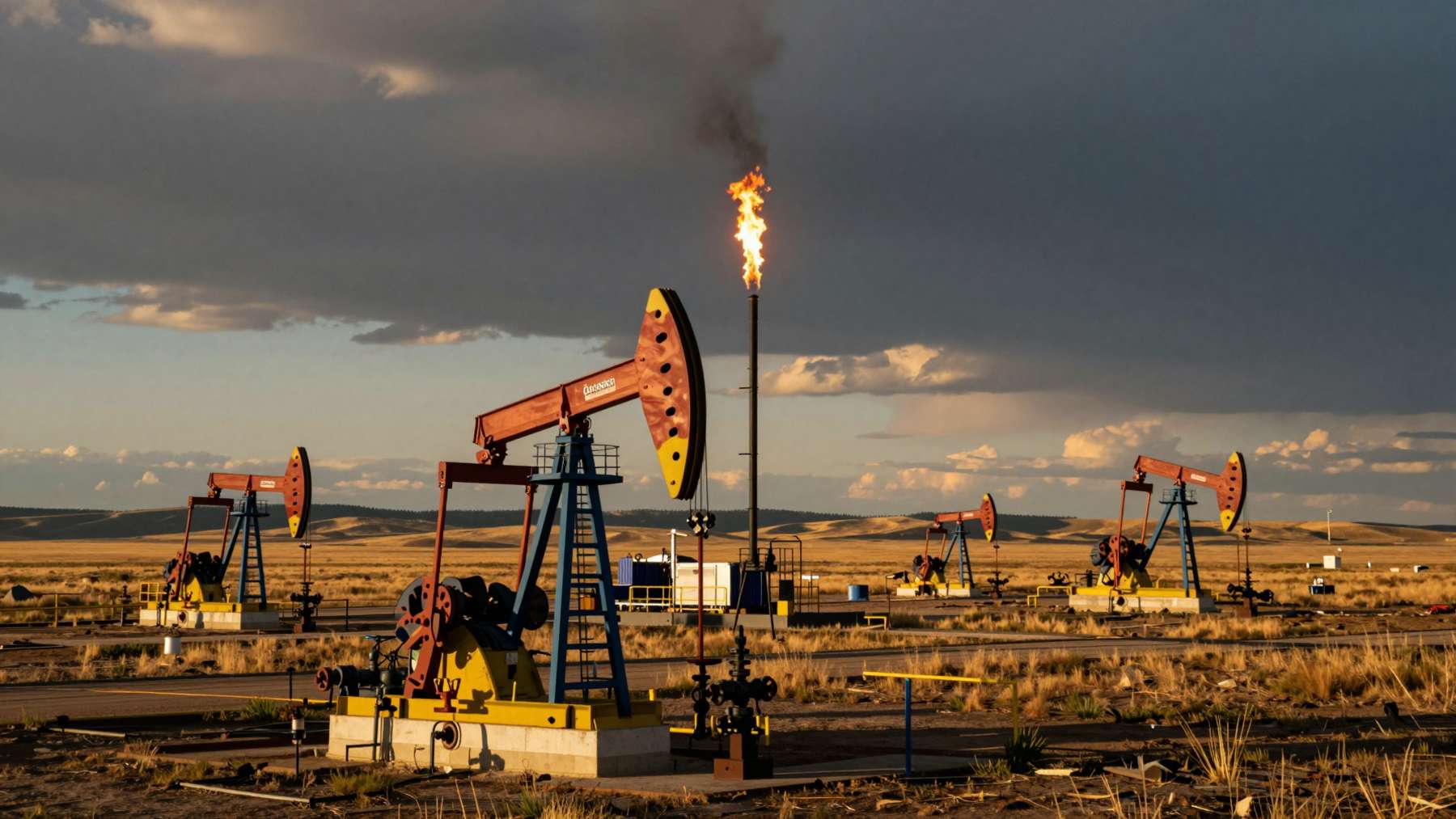 Image generated with artificial intelligence
Kelt Exploration Ltd. (TSX: KEL) just broke its own record. In Q2 2026, the Calgary-based producer averaged 50,388 barrels of oil equivalent per day—a 30% jump from the same quarter a year ago. Petroleum and natural gas sales hit CA$222.2 million, nearly double the CA$116.4 million posted in Q2 2025. That’s not a modest beat. That’s a company operating at a different level than it was twelve months ago.
Record production and revenue in Q2 2026
The 50,388 BOE per day figure is the highest quarterly production average in Kelt’s history. Oil output climbed 39% year over year to 11,812 barrels per day, NGLs rose 43% to 7,669 barrels per day, and natural gas grew 24% to 185,444 Mcf per day. The production mix landed at 39% oil and NGLs, and 61% gas.
More volume meant more revenue. Petroleum and natural gas sales reached CA$222.2 million, up 91% from Q2 2025. Adjusted funds from operations came in at CA$108.7 million—CA$0.53 per diluted share, a 76% year-over-year increase. Net income for the quarter was CA$44.7 million, compared to CA$32.5 million a year earlier.
Q2 2026 came together for Kelt through record production, strong oil and NGL pricing, and well completions that cleared internal forecasts by a significant margin.
Higher commodity prices and optimized drilling drove the gains
Kelt didn’t just produce more barrels—it got more money for each one. The realized oil price jumped 60% year over year to CA$131.65 per barrel, equivalent to 102% of the Canadian dollar WTI daily average index price. Realized NGL prices climbed 57% to CA$57.75 per barrel. Natural gas was the soft spot, with realized prices slipping 8% to CA$2.14 per Mcf, though that still ran 31% above the AECO daily average index.
Drilling results cleared the bar by a wide margin in several cases. At the Wembley 6-9 pad, four wells averaged 1,046 BOE per day at IP30, coming in 30% above prior engineering estimates. The 11-34 pad was more striking: four wells averaged 1,043 BOE per day at IP30, beating estimates by 91%. Kelt credited optimized fracture completion designs—higher proppant and water intensities and tighter cluster spacing—for the outperformance.
Sulfur added another meaningful revenue line. Kelt sold an average of 110 long tons per day at CA$919.44 per long ton during Q2 2026, contributing CA$9.2 million to funds from operations. Global sulfur supply shortages kept prices trending upward into early Q3 2026.
Capital spending increases as net debt rises modestly
Kelt spent heavily to get there. Net capital expenditures in Q2 2026 were CA$137.9 million, up 52% from CA$91.0 million in Q2 2025. The bulk of that—79%, or CA$109.1 million—went to drill-and-complete operations, with facilities, pipelines, and equipment accounting for most of the remainder.
Net debt rose, but not dramatically. At June 30, 2026, it stood at CA$242.1 million, up from CA$178.2 million a year earlier. That’s just 0.6 times the company’s forecasted full-year adjusted funds from operations of CA$410.0 million—a leverage ratio that sits in comfortable territory. Shareholders’ equity grew 7% year over year to CA$1.198 billion.
Full-year 2026 guidance revised upward; drilling activity continues
Kelt raised its full-year 2026 adjusted funds from operations forecast by 3% to CA$410.0 million. The revision reflects stronger well performance and a higher assumed WTI oil price—now US$79.50 per barrel, up from US$77.50. Full-year production guidance stays unchanged at 50,000–52,000 BOE per day, even with three planned gas plant turnarounds and an unplanned outage at the Albright Gas Plant creating some near-term drag.
The CA$375.0 million capital budget holds for now, though management flagged the possibility of increasing spending if commodity prices and cash flow cooperate—with an eye toward getting ahead of production growth into 2027. Year-end 2026 net debt is projected at CA$153.0 million, roughly 0.4 times forecasted adjusted funds from operations, putting the balance sheet on track to improve further by December.
Background: Kelt’s Montney-focused growth strategy
Kelt is a Calgary-based exploration and production company focused on Montney formation assets across three operating divisions: Wembley/Pipestone and Pouce Coupe/Progress in Alberta and Oak/Flatrock spanning Alberta and British Columbia. Total land holdings reached approximately 803,000 gross acres by mid-2026, up 2% from a year earlier.
Through Q2 2026, Kelt drilled and completed 12 Montney wells in the Wembley/Pipestone Division across three pads. Five additional wells were being completed as of the report date, with production expected to begin in late August 2026, and more drilling is planned at two additional pads before year-end.
On the personnel side, Patrick Miles—Vice President of Exploration since Kelt Exploration‘s founding in 2013—will retire effective August 12, 2026. David White, currently Manager of Exploration and lead geologist for the Wembley/Pipestone Division, has been appointed to succeed him.
Completions that cleared internal forecasts
Q2 2026 came together for Kelt through record production, strong oil and NGL pricing, and well completions that cleared internal forecasts by a significant margin. Revenue nearly doubled year over year. Adjusted funds from operations rose 76%, while the company kept its leverage ratio manageable despite a 52% increase in capital spending. Full-year production guidance of 50,000–52,000 BOE per day stays in place, backed by a drilling program that keeps delivering above expectations. If market conditions hold, Kelt may spend more in the second half of 2026 to set up an earlier run at growth in 2027.
Kelly is an experienced writer with 15 years of experience exploring the big stories that shape our world, from tech breakthroughs and space exploration to climate, energy, and the fascinating quirks of science. She has a talent for turning complex ideas into sharp, memorable insights that stay with readers long after they’ve finished reading.
