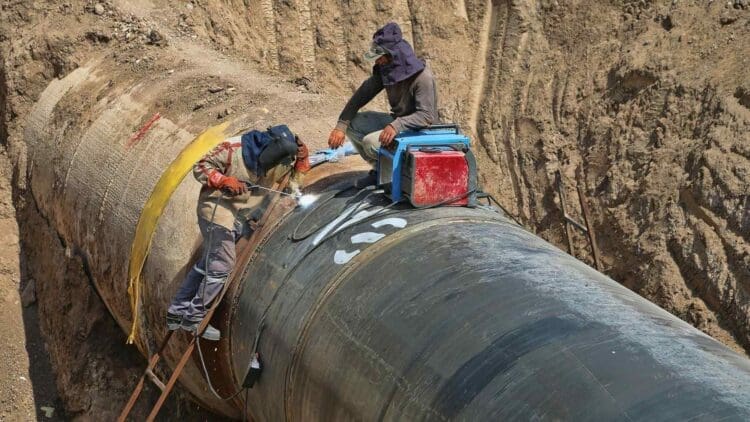

As Kinder Morgan launches a second open season for the Western Gateway Pipeline, along with Phillips 66, and with plans for a planned reversal of one of its SFPP lines, and with this, we see more than a technical adjustment; we see a reconfiguration of how refined products may be delivered across the Southwest and Pacific markets.
A network slowly stretching beyond its original shape
The open season itself is a non-binding invitation to shipper companies to indicate their interest in using the pipeline, and thus, it is the first opportunity for shippers to indicate their preferences regarding potential origins and destinations for their deliveries. However, the real significance of the second open season lies not so much in whether or not shippers elect to use the pipeline (a decision that will be made later), but rather in the fact that the pipeline’s flexibility is being tested by the very process of the open season.
The open season is the moment when shippers can determine the final configurations of the pipeline
The open season allows shippers to decide which potential delivery points they would prefer, and in doing so, shippers are helping to define the ultimate configuration of the pipeline. As such, the second open season represents the moment when shippers have the greatest amount of control over the final configuration of the pipeline.



In order to better understand the importance of the second open season, it is helpful to consider what is likely to happen during the open season. During the open season, each shipper will evaluate the various configurations of the pipeline in terms of which configurations provide the most attractive combinations of price, service reliability, and cost of transportation.
Where expansion meets growing regional pressure
The most attractive configurations will then be selected by the shippers and used in subsequent negotiations with Kinder Morgan to establish firm transportation commitments.
Once the open season is closed, Kinder Morgan will evaluate the overall level of interest expressed by all the shippers in the available configurations of the pipeline, and will subsequently determine which configurations to pursue further based upon those evaluations.
It is at this point that Kinder Morgan will have to make decisions about which configurations to pursue and which to abandon. Those decisions will have significant implications for the development of the pipeline. Shippers who express strong interest in certain configurations of the pipeline will help to establish demand for those configurations, while shippers who show little interest in certain configurations will help to reduce demand for those configurations.
What Kinder Morgan’s additions ultimately reveal
In addition to providing a mechanism for Kinder Morgan to efficiently allocate resources toward the development of configurations of the pipeline that are likely to attract high levels of interest among shippers, the open season also provides a means through which shippers can express their interests in the development of the pipeline.
Ultimately, the open season will allow Kinder Morgan to assess which configurations of the pipeline are likely to attract sufficient interest among shippers to justify investment, and which configurations are unlikely to attract sufficient interest to justify investment. In this way, the open season provides a mechanism for Kinder Morgan to efficiently allocate resources toward the development of configurations of the pipeline that are likely to attract high levels of interest among shippers, and away from configurations that are likely to attract low levels of interest.
Through the open season, shippers can express their support for certain configurations of the pipeline by indicating their interest in those configurations, and conversely, they can express their opposition to other configurations by failing to express an interest in those configurations. As such, the open season provides a forum for shippers to participate in the planning process for the pipeline and to have a direct impact on the ultimate configuration of the pipeline.