
Kinder Morgan approves two major natural gas pipelines totaling over $7 billion in investment
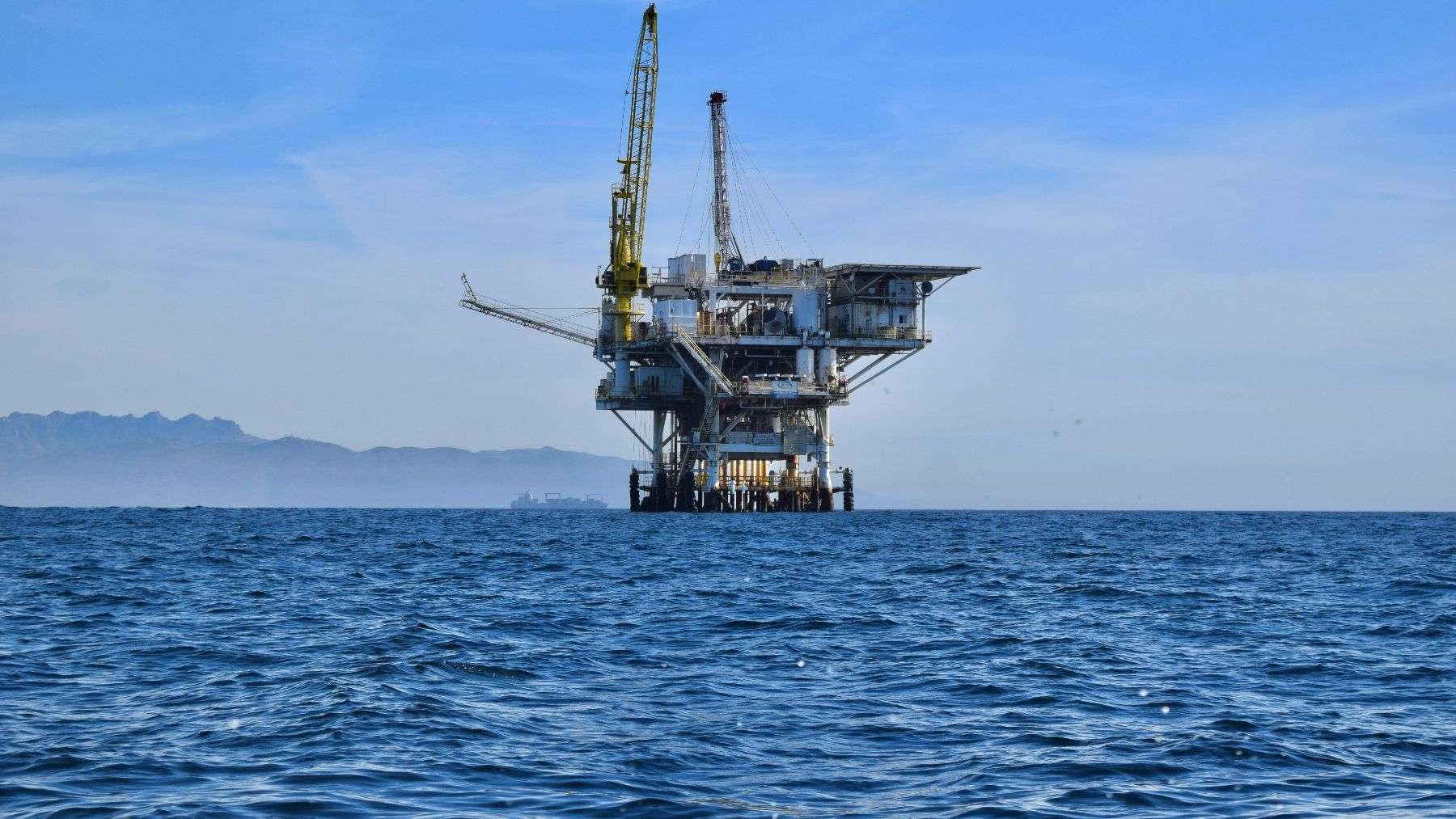
Kinder Morgan just greenlit two of its biggest natural gas pipeline projects ever. During its third-quarter 2026 earnings call, the company announced final investment decisions on the Southeast Connector and Permian Link pipelines — representing a combined $4.7 billion in direct investment for Kinder Morgan, as part of projects totaling more than $7 billion in total scope.
Kinder Morgan greenlights Southeast Connector and Permian Link pipelines
The Southeast Connector is a Southern Natural Gas (SNG) project — a KMI subsidiary — built to move up to 2.6 billion cubic feet per day (bcfd) through roughly 470 miles of new pipeline. The $3.1-billion project cleared its FID after SNG locked in enough long-term, take-or-pay transportation agreements with shippers. Service is expected to begin in phases starting in Q4 2030, pending permits and approvals, and KMI has left the door open to expand it if demand calls for it.
The Permian Link, sanctioned through another KMI subsidiary — Natural Gas Pipeline Co. of America (NGPL) — is even larger. At 434 miles and 2.8 bcfd of capacity, it carries a total estimated cost of $4.2 billion, though KMI’s direct share is around $1.6 billion. Like the Southeast Connector, it’s backed by long-term, take-or-pay agreements. NGPL is targeting a Q3 2030 in-service date, subject to permits and approvals.
The company sees potential to push Creekside beyond 2 bcfd if demand keeps growing, with service expected in phases from Q4 2026 through Q4 2027, subject to permits.
Both projects represent a serious bet on sustained natural gas demand — especially from the power sector.
Power demand growth and hyperscaler contracts drive pipeline investment
The timing isn’t random. KMI CEO Kimberly Dang pointed directly to surging electricity demand as the catalyst, noting on the earnings call that large-load interconnection requests across the Southeast now exceed 200 gigawatts. If all of that capacity came online running on gas-fired generation, Dang said it could represent roughly 8 bcfd of natural gas demand.
The Permian Link makes that connection explicit — it’s specifically contracted to serve new power generation for an A-rated hyperscaler customer, the kind of large-scale data center operator pushing electricity demand higher across the country. There’s a direct line between the growth of artificial intelligence infrastructure and new natural gas pipeline construction.
That same dynamic is playing out in central Texas. KMI sanctioned phases two and three of its Creekside Lateral project following additional long-term agreements with data center and industrial customers. The system has a design capacity of 1.3 bcfd, and KMI has now contracted 750 MMcfd of that. The company sees potential to push Creekside beyond 2 bcfd if demand keeps growing, with service expected in phases from Q4 2026 through Q4 2027, subject to permits.
Additional infrastructure projects sanctioned alongside pipeline FIDs
The two headline pipeline decisions weren’t the only moves KMI announced. SNG and Tennessee Gas Pipeline (TGP) also took FID on the Bear Creek Storage Expansion — a 10-billion-cubic-foot underground storage project backed by long-term binding agreements. The expansion is expected to enter service in April 2029, pending permits and approvals.
On the refined products side, KMI is advancing permitting and right-of-way acquisition for two dedicated pipelines connecting its Pasadena Terminal with a nearby major refinery. The $139-million project is backed by a long-term storage and volume commitment with a major national oil company, with an expected in-service date of Q3 2027.
The company is also expanding its Kinder Morgan Export Terminal on the Houston Ship Channel — a $30-million project supported by a long-term storage commitment with a major international trading company, expected online in Q1 2027. Taken together, these additions made for a notably busy quarter of capital deployment.
KMI reports record Houston Ship Channel throughput and strong quarterly earnings
Beyond the project announcements, KMI’s Houston Ship Channel refined products hub set an all-time throughput record in Q3 2026, moving 427,000 barrels per day across its 11 docks — a 39% increase compared to Q3 2025. The company attributed the record to worldwide refined product supply shortages and the price dislocations that followed.
In-tank blending enhancements for butane and other gasoline components are also being advanced at the site — improvements that could support continued throughput growth. On the earnings side, KMI reported Q3 2026 net income attributable to the company of $764 million, up nearly 22% from the same quarter a year earlier. All the project announcements were disclosed as part of this earnings report.
What Kinder Morgan’s $7 billion pipeline push means in practice
Put it all together, the Southeast Connector ($3.1 billion KMI share) and Permian Link ($1.6 billion KMI share out of a $4.2 billion total project cost) represent $4.7 billion in direct investment for Kinder Morgan, with total infrastructure costs exceeding $7 billion. Both pipelines are underpinned by long-term, take-or-pay contracts — which limits revenue risk, but also signals that shippers, including at least one major hyperscaler, are making equally long-term bets on natural gas.
The additional projects — Bear Creek storage, Creekside Lateral, the Pasadena Terminal pipelines, and the Export Terminal expansion — add further depth to KMI’s growth portfolio. Record throughput at the Houston Ship Channel and strong quarterly earnings round out a picture of a company heading into the back half of the decade with significant capital committed and a clear thesis: natural gas demand, particularly from power generation, isn’t slowing down anytime soon.
Kelly is an experienced writer with 15 years of experience exploring the big stories that shape our world, from tech breakthroughs and space exploration to climate, energy, and the fascinating quirks of science. She has a talent for turning complex ideas into sharp, memorable insights that stay with readers long after they’ve finished reading.
