
Alaska’s Kotzebue wind farm uses underground thermosiphons to keep permafrost frozen beneath turbine foundations
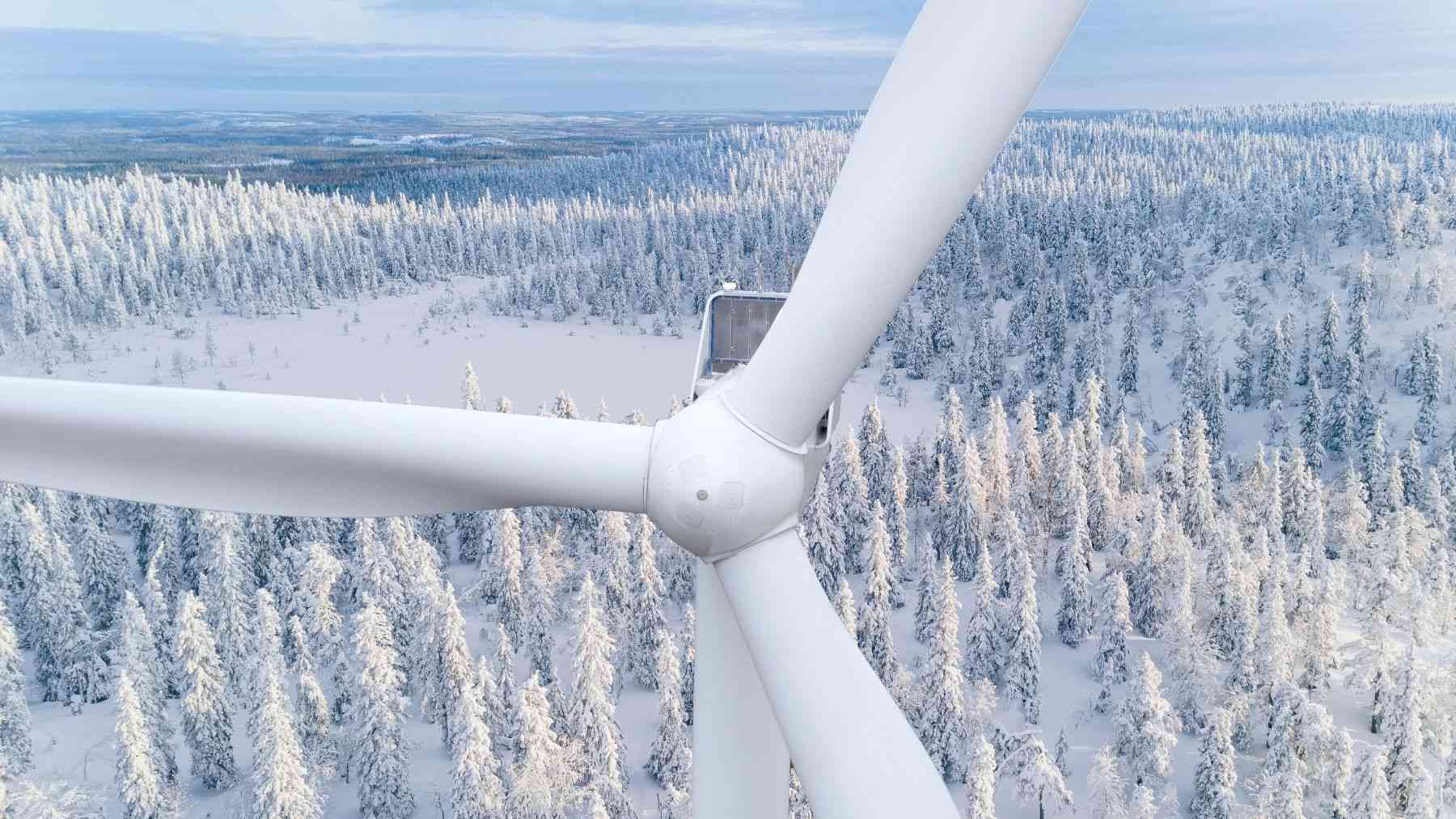
An Alaskan wind farm demonstrates how Arctic regions can overcome modern engineering limitations.
Renewable energy generation helps mitigate the effects of climate change by replacing fossil fuels.
In remote, harsh regions, this green shift is especially vital due to a longstanding reliance on carbon-intensive power sources.
The University of Alaska Fairbanks has documented and tested cold-climate grid integration and foundation engineering innovations to address these issues.
But as global warming accelerates, traditional turbine construction faces more physical bottlenecks in places like the Arctic.
What innovative solutions helped developers work in harmony with extreme cold?
How fossil fuels continue to reign in the Arctic
Far beyond continental transmission grids, several isolated Arctic settlements lie across vast, roadless expanses.
These tiny, remote populations could be connected via high-voltage power lines, but this method is highly uneconomical.
As a result, Arctic communities must produce electricity locally.
Diesel became the historical standard due to easy transportation by cargo ship, ice road, or barge during brief summer windows.
Furthermore, it can be stored in bulk tanks for winter use.
Despite major advancements in clean energy technology, diesel reliance in the Arctic remains high to this day.
This is because importing and maintaining green energy systems in sub-zero climates introduces significant hurdles.
Local utilities also often lack the specialized workforce on-site to service modern wind or solar installations.
This has locked remote communities into high per-capita carbon footprints.
The combustion of millions of gallons of imported diesel releases heavy greenhouse gas emissions.
As a result, vulnerable high-latitude ecosystems experience more rapid warming.
Climate conflicts and decarbonization efforts
Accelerated warming across the Arctic has triggered strict climate regulations mandating rapid decarbonization.
Policymakers and local utilities now face mounting pressure to reduce greenhouse gas emissions and replace imported diesel.
This drives major efforts to fast-track the deployment of resilient renewable energy technologies.
Wind power has become a strategic solution due to powerful, steady annual winds blowing across coastal Arctic regions.
During winter, the demand for heating and electricity peaks.
Turbines then generate high energy yields to meet this increased consumption.
However, scaling up wind energy across the fragile tundra faces severe permafrost engineering challenges.
Warmer temperatures soften the frozen ground, while heavy turbine loads or concrete foundations generate heat that thaws the ice underneath.
The University of Alaska Fairbanks has documented and tested cold-climate grid integration and foundation engineering innovations to address these issues.
Pioneers like Kotzebue have stabilized vulnerable tundra, making wind power viable.
The Rocky Mountain Institute highlighted how energy independence was achieved.
Underground innovation at Kotzebue Wind Farm
As temperatures continue to increase to record highs, Kotzebue Electric Association (KEA) decided to implement a unique cooling system.
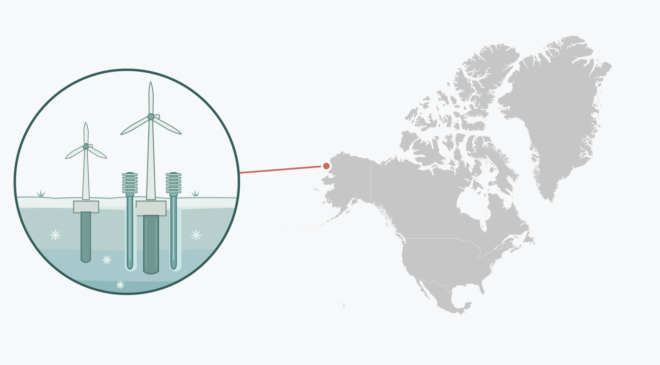
KEA’s wind farm near Kotzebue, Alaska, 33 miles north of the Arctic Circle, received the innovation.
The core innovation is a passive permafrost stabilization foundation.
It combines steel freeze-back piling with two-phase closed thermosiphons.
These thermosiphons act as natural underground refrigerators that remove subterranean heat without needing electricity.
This keeps the ground frozen solid beneath heavy turbine towers.
The engineering specs of the natural refrigerator
Sealed steel tubes filled with pressurized carbon dioxide or ammonia were installed alongside the foundation pilings.
Radiator fins extend above the snow into the air.
During winter, cold air cools the exposed top section, condensing the gas into a liquid that sinks downward.
The liquid absorbs heat, vaporizes, and rises back to the top, releasing the heat into the air.
This passive convection loop super-cools the permafrost much colder than natural temperatures.
While the original late-1990s small turbines may have been retired, two 900 kW EWT turbines from 2012 remain active.
Today, it is a hybrid microgrid, consisting of wind, solar, and a battery system.
It now generates up to 75% of Kotzebue’s electricity demand during peak winds. Ultimately, this unique solution helped secure clean energy independence in the extreme cold.

Anke Maree is a writer with a clear and engaging editorial style. Her work focuses on making complex topics accessible, informative, and relevant for readers across different areas of interest.
