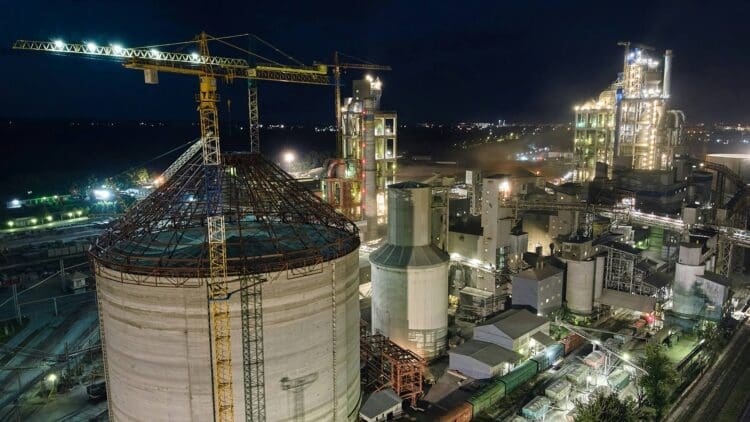
Cameroon has become the latest African nation to develop a more domestically focused oil production market as the Kribi refinery is set to begin with limited operations in early 2026. It is the nation’s first major new refinery in decades and enables Cameroon to drastically reduce reliance on fuel imports, strengthening energy security and independence while increasing the potential revenue for the government from the new and exciting boom in oil production.
Can Cameroon effectively end the decades-long reliance on fuel imports?
For far too long, nations such as Cameroon have languished in the darkness of the foreign importing of essential fuels and energy resources. At the moment, Cameroon is heavily reliant on imports of refined fuel products from nations like Equatorial Guinea, Gabon, France, Nigeria, and, on the odd occasion, from the Middle East and Asia.
By enabling Cameroon to process more domestic crude locally, the Kribi refinery could potentially reduce Cameroon’s exposure to international supply disruptions and the increasing volatility of the market.



Following the shutdown of the nation’s only other refinery in 2019, the new Kribi refinery has been fast-tracked and is expected to begin with limited production sometime in the first quarter of this year.
Rarely do refinery projects come online ahead of schedule and within budget
It has become exceedingly rare for such huge refinery projects to be completed ahead of time and within the allocated and expected budget. However, following the government’s acceleration of the approval process, the Kribi refinery is nearly complete, almost two years ahead of its initial 2028 completion date.
“We must now come together to break the deadly interaction between poverty and unsustainable energy systems. There is surely no better starting point than universal access to affordable low-carbon energy.” — Kofi Annan Foundation
The Kribi Refinery: A new era of domestic oil production for Cameroon
The required preparatory works began last year, and the government expects full-scale construction of the Kribi Refinery to kick off early this year. The refinery project is being backed by SNH, Tradex SA, Cstar Petroleum, and Ariana Energy, and expectations are for the initial phase of production to come in at approximately 10,000 barrels per day, or one-third of the total capacity.
With a total investment of $622 million, the project is expected to generate $250 million in marine and petrochemical exports every year once fully operational. The international input for Cameroon has come from a litany of energy majors, including Dubai-based SPV CSTAR Refinery Project Management.
BGFI Cameroon has been tasked with the insurmountable task of raising roughly $215 million for the project, while the construction efforts are being managed by a consortium of companies, including:
- RCG Turnkey Solutions
- Global Process Systems
- China’s Norinco International
The project is set to provide the local workforce with a new set of essential skills, as over 7,000 direct and indirect jobs will be created. Building on that is the expectation that the new Kribi refinery could save Cameroon roughly $680 million annually on fuel imports.
As other energy-rich nations in Africa develop astonishing projects, such as Nigeria and its Dangote refinery, which has become the latest African energy hub, Cameroon is aiming to ring in the new year with a new wave of energy production at the new Kribi Refinery.
Can Africa lead the new era of domestic energy resources production?
Putting the new Kribi refinery project in Cameroon aside, the Africa Energy Chamber has forecasted a significant uptick in energy production on the continent this year. Cameroon is working diligently to advance the project into realization this year, with the initial limited phase of production set to begin early in the year. Africa overall needs a more domestically focused energy industry that is not reliant on imports and the geopolitical power that comes with them.