
London court rules Nord Stream insurers exempt from $662 million payout under war exclusion clause
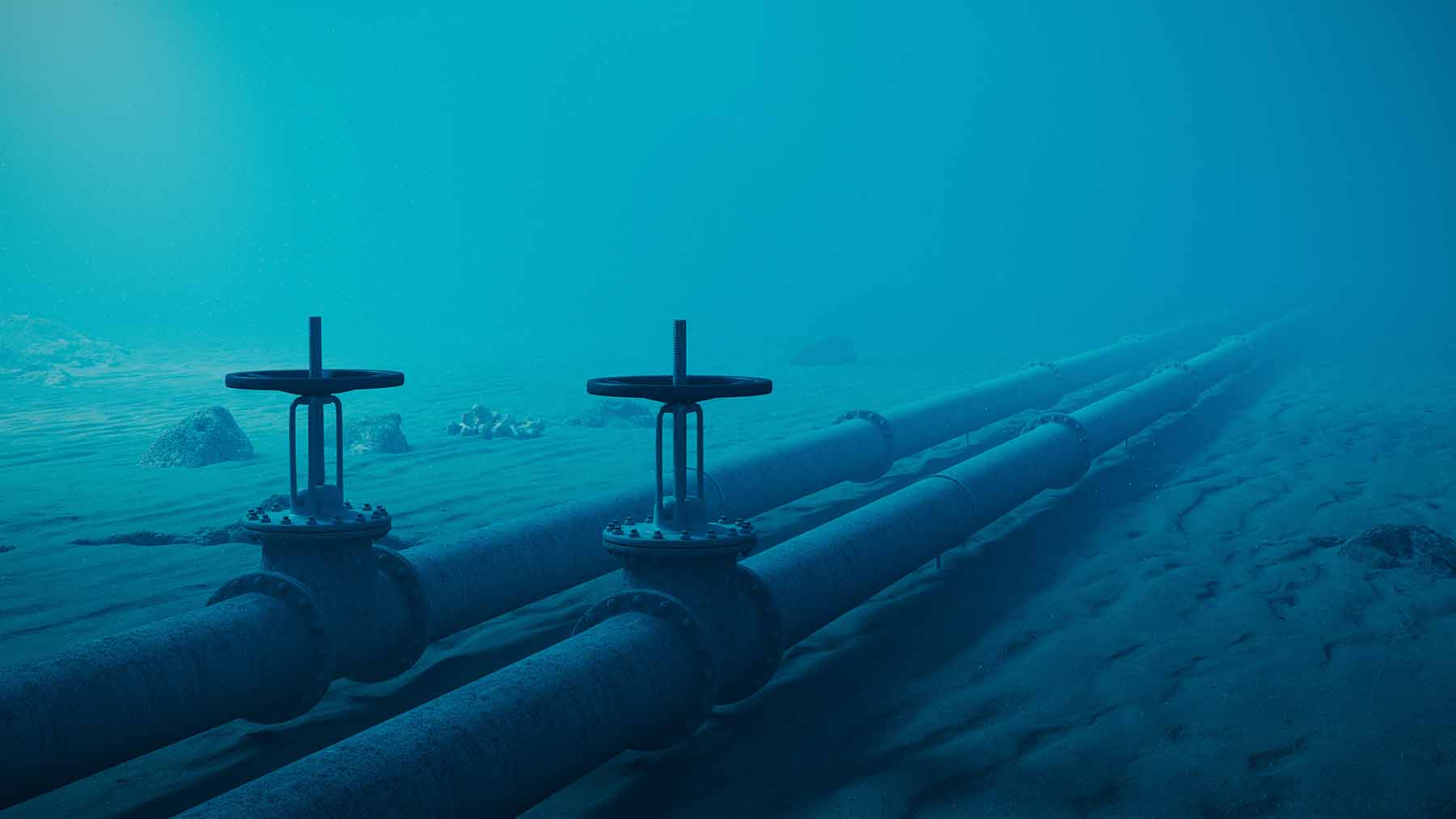 AI-made
A London judge ruled Monday that insurers Lloyd’s Insurance Company SA and Arch Insurance (EU) DAC don’t have to pay €580 million ($662 million) to Nord Stream AG for the September 2022 pipeline explosions that severed three Baltic Sea gas lines and dented a fourth.
The ruling found that the damage was a direct consequence of the war in Ukraine—placing it squarely within the war exclusion clauses of the policies and leaving the pipeline’s owner without compensation for one of the most dramatic acts of infrastructure sabotage in recent history.
Judge rules war exclusion clause applies to pipeline damage
Judge Clare Moulder handed down her ruling Monday, siding with Lloyd’s Insurance Company SA and Arch Insurance (EU) DAC. Nord Stream AG had brought the case to London seeking €580 million — roughly $662 million — in compensation for the destruction of its Baltic Sea infrastructure.
Experts also raised the possibility that Russia or the United States could’ve been involved—theories the court heard in evidence without endorsing any of them.
Moulder’s ruling was direct. She found that the pipeline damage was “directly or indirectly occasioned by, happening through, or in consequence of war.” That language maps exactly onto Exclusion 2.i of the insurance policies, which voids coverage when damage is war-related. The claim fell apart entirely on that basis.
It’s a significant win for the insurers—and it sets a precedent for how war exclusion clauses may be interpreted in cases involving infrastructure damage during active conflicts, even when no formal declaration of war exists.
Insurers argued sabotage was war-related or government-directed
The insurers’ legal team built their case on two parallel arguments: either the pipeline explosions were part of the broader war in Ukraine, or they were carried out under the orders of a government. Either way, they argued, the war exclusion clause would apply under the policy wording.
To support that position, the insurers called expert witnesses with specialized backgrounds—a former US Navy special operations officer and an explosives consultant, both of whom testified about the nature of the attack and what executing it would have required.
Judge Moulder didn’t need to pin down a specific perpetrator to apply the exclusion. Her reasoning was broader: whatever actor carried out the sabotage, their motive was significantly tied to the war. That made the identity question legally secondary to causation.
Perpetrator identity debated but left unresolved by the court
Who actually blew up the Nord Stream pipelines remains one of the more contested open questions in recent geopolitical history. The London trial surfaced several possibilities, but the court deliberately stopped short of settling it.
A German criminal investigation concluded that the most plausible explanation was sabotage carried out by a group of Ukrainian divers. That finding shaped much of the trial’s discussion, with both the pipeline owner and the insurers treating Ukraine as a likely potential perpetrator. Experts also raised the possibility that Russia or the United States could’ve been involved—theories the court heard in evidence without endorsing any of them.
Moulder was explicit about why she left the question open. “It is unnecessary in order to determine whether the war exclusion applies to the ‘more likely’ perpetrator of the sabotage,” she wrote. Her conclusion: if any of the plausible actors carried out the attack, the war would’ve been a significant cause of their actions. That was enough to trigger the exclusion — no attribution required.
Background: Nord Stream pipelines and their role in European energy
To understand the scale of what was lost, it helps to know what the Nord Stream system actually was. Nord Stream AG is a Swiss-registered company whose ultimate owner is Gazprom PJSC, the Russian state-backed energy giant. The pipelines were a direct physical link between Russian gas fields and Western European consumers.
Nord Stream 1 came online in 2011, running from Vyborg in northwestern Russia to Lubmin on Germany’s Baltic coast. For years it served as a major artery for Russian gas into Europe, carrying real commercial and political weight for both sides. Nord Stream 2 was completed in 2021 but never carried a single cubic meter of gas commercially — Germany suspended its certification as Russia’s military buildup near Ukraine escalated, and the full-scale invasion in February 2022 killed any remaining prospect of it entering service.
Then came September 2022. Explosions ruptured three of the four pipelines and dented a fourth, severe enough to end any realistic future for the infrastructure. Nord Stream AG turned to its insurers—and Monday’s ruling means it won’t recover those losses through that route.
War exclusion clauses can result in infrastructure damage
The core outcome is clear: insurers aren’t liable for the €580 million ($662 million) in claimed damages. Judge Moulder found that Exclusion 2.i applied because the pipeline damage was a consequence of war, regardless of which specific actor carried out the attack.
The ruling doesn’t resolve who sabotaged the pipelines. That question stays open, with German investigators pointing toward a Ukrainian group while theories involving Russia and the US were also considered at trial. For the energy and insurance industries, the case illustrates how war exclusion clauses can reach infrastructure damage in conflict-adjacent scenarios — even when the asset isn’t located in a war zone and no perpetrator has been formally identified.
Kelly is an experienced writer with 15 years of experience exploring the big stories that shape our world, from tech breakthroughs and space exploration to climate, energy, and the fascinating quirks of science. She has a talent for turning complex ideas into sharp, memorable insights that stay with readers long after they’ve finished reading.
