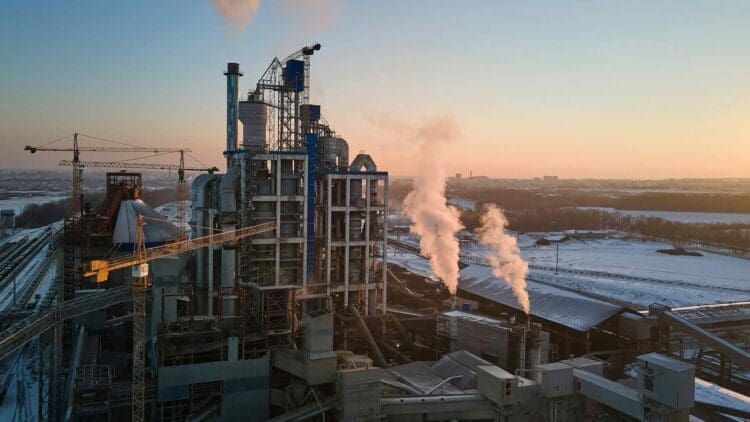

While many renewable fuel updates go unnoticed, the recent activity from Marathon Petroleum may indicate a different story. Marathon Petroleum continues to develop and grow its renewable fuels business, and though the news releases are typical of those announcing the launch of a new renewable fuels facility, the size and coordination of the projects being developed suggest a larger picture.
Marathon’s renewable fuels operations: The full scope of what is being created
Though Marathon’s renewable fuels operations are comprised of a series of large-scale facilities, which represent a substantial commitment to lower-carbon production, the overall portfolio appears typical until one considers the full scope of what is being created.
About the Dickinson Renewable Diesel Facility
Located in North Dakota, the facility produces approximately 184 million gallons of renewable diesel each year and is considered one of the United States’ largest renewable diesel-producing facilities since it reached full operational capacity in 2021.
The largest renewable fuels facility owned or operated by Marathon Petroleum, Martinez Renewables—a 50/50 joint venture with Neste located in California—has reached full capacity by the end of 2024 with 730 million gallons of renewable diesel and other renewable fuels produced each year. In itself, the Martinez Renewables facility indicates the extent of Marathon’s production growth over the last few years.
Supporting the growing production of renewable fuels
Further evaluation of Marathon Petroleum’s growth reveals an expansion of infrastructure to support their growing production of renewable fuels, as well as a network of feedstock facilities that provide the necessary raw materials to produce their products.
In addition to the Cincinnati Aggregation Facility, which was opened in 2022 to supply agricultural feedstocks, the company has developed the Beatrice Pretreatment Facility in Nebraska, which provides an additional 85 million gallons per year of pretreated feedstock.
Marathon Petroleum has partnered with ADM to develop the Green Bison Soy Processing Facility in North Dakota, which came online in 2023 and can process up to 600 million pounds of soybean oil annually, providing sufficient feedstock to produce up to 75 million gallons of renewable diesel each year.
In addition to the development of renewable diesel, the company is also developing a renewable natural gas (RNG) business through its ownership position in LF Bioenergy and is partnering with various dairy farmers to create a dairy-based RNG portfolio projected to exceed 6,500 MMBtu per day by 2026.
What Marathon’s buildout signals for its longer‑term strategy
The development of both renewable diesel and RNG by Marathon Petroleum indicates that the company is planning to be involved in the development of all types of next-generation fuels, including renewable natural gas, and not just limited to the production of renewable diesel.
While individually, each of Marathon Petroleum’s investments in renewable fuels appears to be a targeted effort to invest in a specific area of the renewable fuels market, collectively, they appear to be part of a coordinated plan to transition the company away from traditional refining activities and to integrate renewable fuels throughout all aspects of its value chain — from the sourcing of raw materials (feedstocks) to the production of renewable fuels and into emerging technologies.
Collectively, the investments made by the company appear to signal that the company is preparing for a future in which renewable fuels will have a significant presence in the U.S. transportation market and will meet the increasing demand for lower-carbon fuels to satisfy the growing number of corporate sustainability commitments. Therefore, the continued expansion of Marathon Petroleum’s renewable fuels portfolio represents more than the incremental growth of its renewable fuels business.
As the current slate of new renewable fuels facilities continues to reach maturity and the company’s feedstock networks continue to expand, the company’s changing investment profile creates an opportunity to ask new questions regarding how Marathon Petroleum will compete in the increasingly complex and competitive energy landscape.