

From skies of blue and clouds of white, a massive discovery will make the future of energy security bright.
It was found deep under the seafloor and is categorized as blue.
Millions of barrels could be filled, promising more than quick and cost-effective extraction, but is it only a distraction?


Not everyone will be ecstatic because, in the end, how much good does this massive oil discovery really do?
How the world is struggling to let go of fossil fuels
Fossil fuels have truly become the world’s kryptonite. Not only does it weaken it, but it will actually destroy it.
So why is the world struggling to let it go?
It seems the world is caught between a rock and a hard place.
It can bid farewell to fossil fuels for good and risk failing power grids while trying to upgrade infrastructure. Or, it can seek “energy independence” by slapping a new label on fossil fuel production.
Some sectors have actually succeeded in rebranding fossil fuel production methods as “greener” than others.
This actually buys hard-to-abate sectors some time, as they are maintaining eco-friendly measures to some extent.
In the end, are there really true sustainable energy forms, or have they all just been “greenwashed?”
There is a line, but it is a fine one at best.
The fine line between greenwashing and true sustainability
In the last few years, renewable energy has reached significant new heights in installed capacity. Solar and wind energy have been topping the charts, and other renewables are also gaining traction.
Some nations even want to push their wind and solar capacity to 3,600 GW in revised climate plans.
It seems like the sky is the limit for renewables. Yet, some sectors are taking baby steps toward transitioning away from fossil fuels.
Airlines worldwide are facing pressure from the aviation industry to implement sustainable fuel. This is most likely why Moeve proceeded with the La Rábida renewable diesel and aviation fuel complex.
Critics believe some of these baby steps are merely “greenwashing.”
Why? Because in the end, carbon is still emitted into the atmosphere, so it is not really eco-friendly.
The same can be said of the “blue” discovery that was announced in the official press release from Equinor.
The discovery of blue oil under the seafloor
Equinor, along with its partners, has discovered commercial blue oil in the North Sea’s Snorre region.
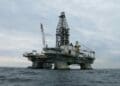
The blue oil was found 1,250 feet deep thanks to routine drilling by the Deepsea Atlantic. Initial estimates predict that the well could fill between 25 and 89 million barrels,
Now, this is where the real question confusion comes in. What on Earth is “blue” oil? “Blue” refers to that produced with significantly lower operational emissions.
The oil was discovered near existing infrastructure, namely the Snorre A platform. This means existing facilities can be exploited to cut costs and repurpose devalued infrastructure.
The color is used as a label, as this oil has a smaller carbon footprint per barrel.
The discovery in Omega South Alfa is exceptionally meaningful to Equinor. The company is committed to cutting its carbon intensity by half by 2050.
Equinor’s senior vice president for Project Development, Trond Bokn, believes:
“By using existing infrastructure, both costs and environmental footprint are reduced, while the resources on the Norwegian shelf are utilised efficiently.”
Equinor’s approach to drilling for blue oil may have a lower carbon footprint. Nonetheless, the oil is still burned, and carbon dioxide is still released in the end.
Is greenwashing fossil fuels, such as oil, truly worth the world getting to keep its kryptonite?
Climate targets deadlines are nearing, so it is time to consider truly eco-friendly alternatives. A California startup is already making aviation greener, so why not focus on other sectors as well?