
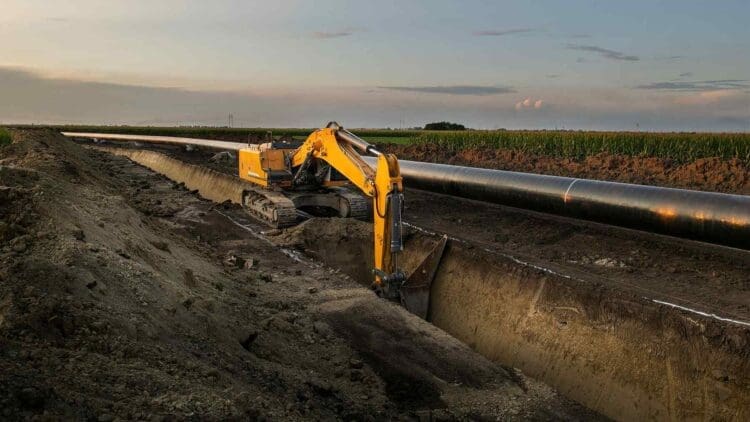

Even though natural gas pipelines are established along similar paths, even the tiniest of strategic changes will alter how oil producers deliver their products to consumers. In the Permian Basin, the only question that has ever been asked of operators was not “Will we face bottlenecks?” — but “How fast?” Matador Resources’ most recent move marks the beginning of a new round of competition for access to the best markets — one in which having firm pipeline capacity will be the key to success.
A strategic response to tightening Permian bottlenecks
For several years, Permian producers have watched the tightness of takeaway constraints continue to rise — forcing gas prices produced in West Texas (especially at the Waha Hub) to remain significantly lower than national averages.
Matador’s newest natural gas transportation and marketing agreements were made with the goal of changing how the company delivers gas, and the agreements represent a tactical re-positioning rather than a typical midstream update.



At the heart of this tactical re-positioning is Matador’s agreement to acquire firm transportation rights on the Hugh Brinson Pipeline (operated by Energy Transfer), including 500,000 MMBtu/day of firm transportation. The intrastate pipeline will run from West Texas to Maypearl, Texas; it will be operational by the fourth quarter of 2026, and it will provide Matador with access to East Texas and the Gulf Coast via the Maypearl hub.
Guaranteed access to better markets and exposure to LNG prices
In order to understand what access to these markets will mean for Matador, it helps to look at historical pricing trends. Since 2024, natural gas priced in East Texas and the Gulf Coast markets has averaged more than $2/MMBtu over Waha — a difference large enough to make a significant impact on the revenues of high-volume gas producers.
Since the Hugh Brinson Pipeline will allow Matador to ship its gas directly to the Maypearl hub, and ultimately to Henry Hub (the pricing hub used by NYMEX) and to LNG export markets (markets that have historically had very little if any exposure to the volatility and low prices that have affected Permian gas from time to time); it allows Matador to gain direct exposure to these two segments of the gas market.
Future projects place these markets at the forefront
In addition to being less volatile and offering better prices, both of these markets are at the center of long-term demand growth due to planned LNG expansion projects, new industrial projects, and the increasing number of power loads from data centers.
As takeaway constraints become increasingly apparent, Matador’s leadership views these firm transportation rights as a necessity for long-term planning. According to Matador, each dollar ($1) increase in realized natural gas price increases annual revenue by about $180 million, placing Matador among the highest margin operators in the Delaware Basin.
Why this new capacity matters now
The Hugh Brinson system represents more than just a logistical change — it represents a structural change in the optionality of the markets in which Matador can sell its gas. By providing direct access to Henry Hub and LNG export markets, Matador anticipates fewer exposures to Waha Hub pricing, improved netbacks, and increased free cash flow.
This also represents part of a broader effort by Matador to expand its options for transporting gas into the Southern California market — another region that has historically provided premium pricing compared to Texas and Louisiana.
Taken together, the agreements clearly illustrate a strategic direction: securing firm, flexible pathways that protect Matador’s production from regional price distortions while allowing the company to capitalize on LNG-driven demand growth. Matador’s firm capacity commitment on the Hugh Brinson Pipeline is more than simply an infrastructure commitment. The commitment is a forward-looking bid to change Matador’s pricing future.


