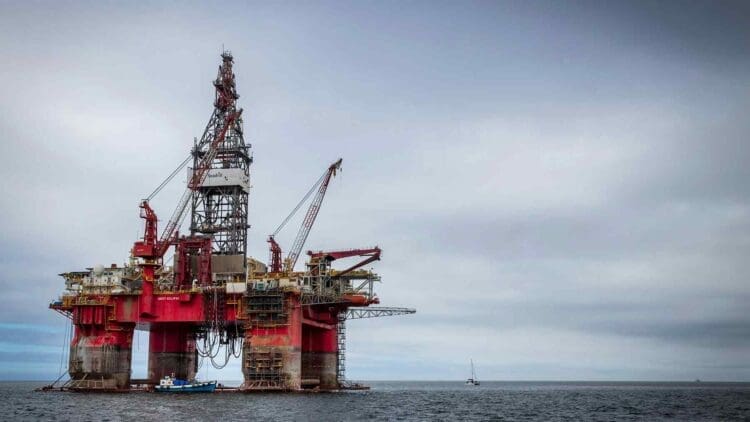
Brazil’s energy industry has been given a significant boost through one of the largest energy majors on the planet. Royal Dutch Shell, through its Brazilian subsidiary, Shell Brasil Petróleo, has begun production at the floating production storage and offloading facility (FPSO) Alexandre de Gusmão in offshore Brazil. This marks a significant milestone in advancing the development to reach first oil for the Libra Consortium, a new partnership aiming to increase Brazil’s upstream output capacity.
Brazil: an exemplar of the global energy transition away from fossil fuel dependency
As the regional upstream market grows, the South American energy industry is awash in crude oil from several nations. While Shell is focused on its Alexandre de Gusmão development in the Mero field in the Santos Basin, the overall sentiment for conventional energy production has taken a dive in recent years in Brazil.
Brazil has become an exemplar of the international energy transition as the nation now produces the vast majority of the energy needed for everyday life from the renewable energy sector, in particular, the hydropower market. The solar and wind energy sectors have also been making significant strides in Brazil’s energy mix in recent years.


As of 2024, more than 60% of the nation’s energy came from the renewable energy sector, which aligns with the government’s targets of net-zero emissions by 2050 and a 50% reduction in carbon emissions by 2030.
Shell has doubled down on its upstream production capacity in Brazil
The Mero-4 development has taken more than a decade to reach this critical point of first oil production. Following Shell and its partners taking a positive Final Investment Decision on the project in 2021, the Mero field is now part of the Libra Production Sharing Contract, which was signed in 2013.
The project has since made significant progress, and Shell can now report that first oil has been reached from the floating production storage and offloading facility (FPSO) Alexandre de Gusmão.
“Mero-4 is the latest example of how we are working with our partners to unlock value from world-class reservoirs, sustaining material liquids production and providing for the world’s current energy needs,” – Peter Costello, Shell’s Upstream President
How will the Mero field affect Brazil’s output of essential energy resources?
As part of the project, the FPSO will be connected to 12 wells boasting an operational capacity of roughly 12 million cubic meters of gas compression per day, as well as 180,000 barrels of oil production.
The newly connected FPSO can be located approximately 111 miles off the coast of Rio de Janeiro in water depths of roughly 2,000 meters. As Shell outlines its plans for the Mero-4 development, another international energy major recently made its largest oil and gas discovery in Brazil in over two decades.
As with most projects that have emerged over the past few years, the Libra Consortium has a plethora of partners all dedicated to enhancing Brazil’s upstream output capacity, including:
- Shell Brasil (19.3%)
- TotalEnergies (19.3%)
- CNPC (9.65%)
- CNOOC (9.65%)
- Pré-Sal Petróleo S.A. (PPSA) (3.5%)
“Our Brazil portfolio features long-life assets with high flow rates, resulting in some of our most competitive barrels on both operating cost and carbon footprint.” – Peter Costello, Shell’s Upstream President
Brazil recently launched a landmark facility as part of the nation’s clean energy ambitions
While Shell and other energy majors outline their upstream plans for Brazil, the nation has taken a major step in advancing the renewable energy sector through the newly commissioned Riograndense refining complex, which now features a new biorefinery. As with the vast majority of nations around the world, Brazil is currently embroiled in the necessary energy transition, and the government needs to contemplate the next decade and decide whether to invest more in the renewable energy sector or stick to its guns and align with Shell to advance the upstream market.