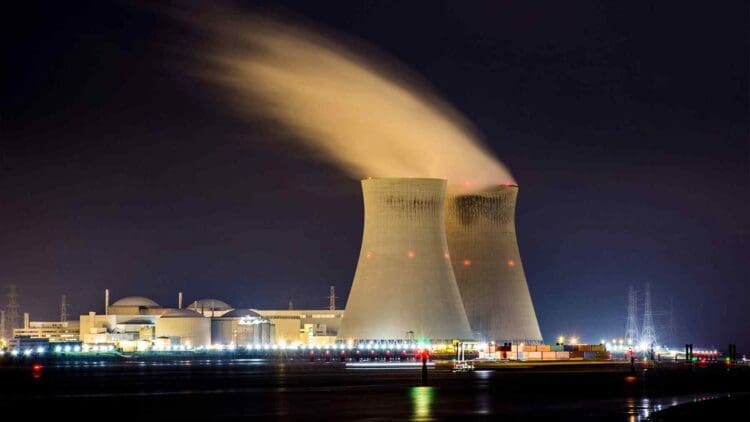

As the United States continues to justify its position as the leading nuclear energy-producing nation in the world, there is a clear interest from many companies to be part of large-scale initiatives. This is why there have been many collaborations, as entities cannot afford to take the risk on their own. In the latest nuclear initiative to come out of the US, Meta decided to partner with TerraPower to deploy eight Natrium advanced nuclear reactors.
Capturing the spotlight: Meta enters the nuclear energy-generating industry
When a company with the magnitude and possessing the name value as well as notoriety that Meta does decides to venture into an unfamiliar name, it tends to grab all the headlines automatically. Meta Platforms, formerly known as Facebook, is one of the ‘Big Five’ American information technology companies along with Google, Amazon, Apple, and Microsoft.
The company rebranded to Meta in 2021 as a way to display its focus on building the metaverse. As a veteran firm, it has now mastered the art of captivating the general public and creating shock waves in whatever direction it decides to go.


This fact was reiterated after Meta partnered with TerraPower to develop a fleet of advanced nuclear reactors in the United States. In a nutshell, the agreement focuses on deploying up to eight reactors using TerraPower’s Natrium technology. This marks yet another large-scale initiative that TerraPower is involved in as of 2026.
Unpacking the importance of TerraPower’s collaboration with Meta
As projects are coming along with greater frequency, it is essential to understand how each one is significant to America’s national energy objectives. The Natrium technology is designed to deliver large volumes of stable electricity. The reactors aim to power energy-intensive digital infrastructure such as AI and data centers.
All in all, the eight reactors are expected to deliver roughly 2.8 gigawatts of carbon-free baseload power. Additionally, they will possess integrated energy storage systems capable of boosting the total output to about 4 gigawatts during peak demand.
Meta will be particularly pleased with what this initiative is able to achieve, considering that it has been exploring ways of generating reliable electricity. With its reputation, it is only fitting that the company paired up with another powerhouse in TerraPower, which has a brilliant reputation as well.
Eight Natrium reactors: Understanding how the two companies will complement each other
Despite the prior success of the two companies, it is incumbent on both of them to effectively support one another and fulfill certain roles that will allow the initiative to materialize. As per the agreement, there is funding from Meta to support the development of the first two Natrium units, which together could generate up to 690 megawatts of electricity.
In terms of when the public can expect to see the development come to life, they will have to remain patient until 2032. The agreement also allows Meta access to electricity from six additional units, which could end up providing up to 2.1 gigawatts of power by 2035.
Briefly put, Chris Levesque, who is the TerraPower president and CEO, stated:
“This agreement with Meta is designed to support the rapid deployment of our Natrium technology that provides the reliable, flexible, and carbon-free power our country needs.”
What is Natrium reactor technology, and why is it important to the modern landscape?
As each year goes by, there is a growing display of technological innovation influencing the energy landscape. TerraPower’s Natrium design is an advanced nuclear system that differs significantly from traditional nuclear power plants.
Conventional reactors rely on water cooling, whereas Natrium reactors use liquid sodium as a coolant. This means they are capable of operating at lower pressures and potentially improve safety and efficiency.
One of the most interesting aspects about the technology is that each Natrium unit typically produces around 345 megawatts of baseload electricity. However, it can store up to roughly 500 megawatts. This project is among the most unique ones in 2026.