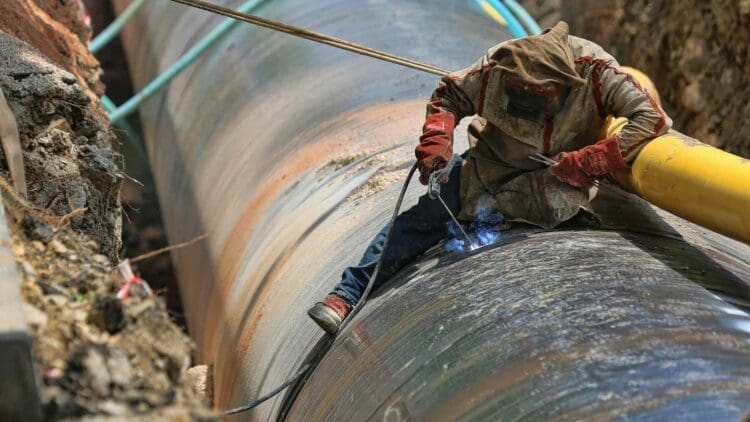

Mexico has long been overshadowed by its more energy-rich producing neighbors to the North, and more recently to the South as well. To increase the country’s production capacity of essential energy resources, the Centro Nacional de Control del Gas Natural (CENAGAS) has committed to a MXN 32 billion investment to attempt to transform the nation’s energy industry and subsequently its fortunes. Mexico’s energy sector has, for the most part, been dominated by the fossil fuel sector, but has languished due to a lack of significant investments, no more, apparently.
Mexico: an energy-rich nation relying on conventional resources
As the South American energy market transforms to reflect new oil and gas developments, Mexico has finally taken the initiative and has committed to investing in its pipeline and natural gas systems.
Despite recent geopolitical issues between the United States and Mexico, the Gulf of Mexico has seen a multitude of new developments come online in recent years, exemplifying the potential that the region has in advancing energy production developments that play a key role in the international market.


Recent government policies have prioritized energy production led by state-owned companies, while the renewable energy sector has felt the brunt of a lack of investment. To be fair, there is a positive sentiment on the ground for green hydrogen production, but for the most part, Mexico’s energy sector is dominated by the natural gas industry.
Mexico’s reliance on imports has become a thorn in the side of the government and locals
Increasing electricity demand has become the norm, not just in Mexico but around the world as well. With market data revealing that Mexico still relies heavily on the natural gas sector to produce the vast majority of its electricity, higher import volumes of natural gas have become an all too common trend in Mexico.
The increased electricity demand has meant that, as the nation struggles to develop its natural gas market, it needs to rely on imports of the essential energy resource to produce sufficient electricity for the populace.
Can CENAGAS develop Mexico’s gas and pipeline network over the coming years?
CENAGAS has recently noted that due to the increased demand for electricity, a new investment was needed to develop the nation’s natural gas and pipeline network. As part of Mexico’s multiannual strategy to ensure a safe, continuous, and reliable supply of natural gas, CENAGAS has earmarked a substantial investment of approximately 32 billion MXN over the next five years.
The investment has become necessary to develop Mexico’s natural gas infrastructure, as well as to provide the funds needed for a long-term maintenance program to keep the nation’s aging pipelines in an acceptable condition to handle higher volumes of natural gas.
Mexico’s proximity to Texas processing facilities and export terminals has enabled the nation to develop somewhat of a positive working relationship with the United States energy market.
Last year, CENAGAS invested around 3 billion MXN, which was the first step in an exceedingly long process to improve the nation’s processing power of natural gas, as well as improving the state of the litany of gas pipelines that Mexico has developed over the years.
Will Mexico develop its energy infrastructure to compete with the United States?
While the likelihood of Mexico developing its energy production infrastructure to compete with the United States is certainly low, the reality is that Mexico has no interest in competition and is merely trying to secure an energy future that does not rely on imports or outside influence. The remarkable expansion of the US market has seen some companies reshaping leadership to advance certain initiatives and developments over the coming years. Perhaps Mexico should learn a thing or two from the US and follow suit?