
Michigan Supreme Court orders regulators to reconsider permit for Enbridge Line 5 tunnel under the Straits of Mackinac
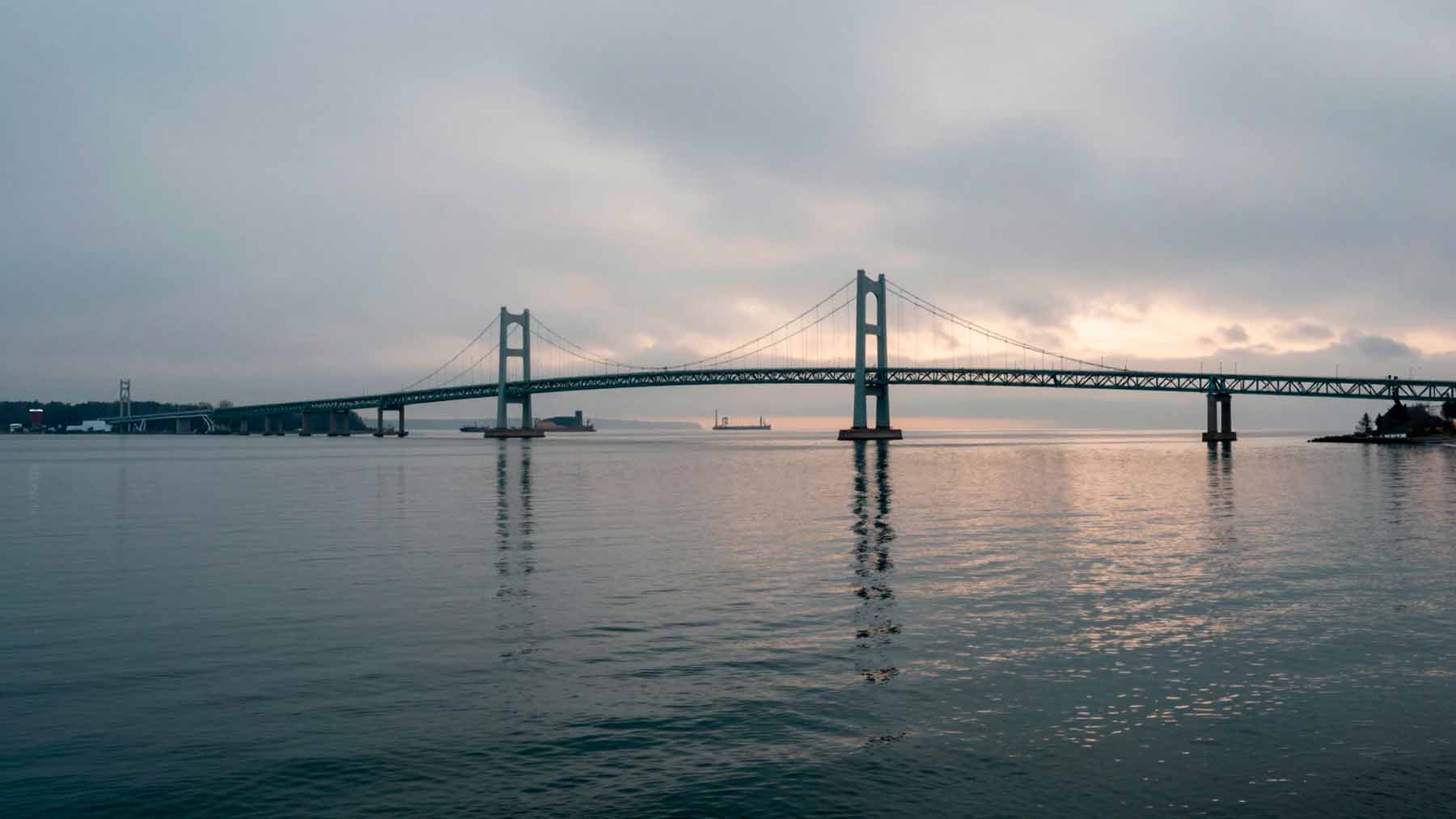 Image generated with artificial intelligence
In a 6-1 decision, the Michigan Supreme Court has ordered state regulators to reconsider the permit they granted in 2023 for a proposed tunnel to carry Enbridge’s Line 5 oil pipeline under the Straits of Mackinac, where Lakes Huron and Michigan meet.
The ruling adds new uncertainty to a project that’s already faced nearly a decade of legal and regulatory challenges—one that has pitted Enbridge against tribal nations, environmental groups, and state officials over the future of a 73-year-old pipeline running four miles along the bottom of the Great Lakes.
Court orders permit review for Line 5 tunnel project
The Michigan Supreme Court’s order sends the case back to the Michigan Public Service Commission—the state body that approved the tunnel permit in 2023. That approval was supposed to clear a major hurdle for Enbridge’s plan to bury Line 5 inside a tunnel beneath the Straits of Mackinac. Now, regulators have to go back and do the work the court says they skipped.
That incident made clear how vulnerable the existing structure is—sitting exposed on the lakebed, subject to the same risks as any other underwater infrastructure.
Line 5 has carried petroleum from Superior, Wisconsin, to Sarnia, Ontario, for 73 years. The four-mile stretch at the center of this dispute runs along the lakebed where Lakes Huron and Michigan connect—one of the most ecologically sensitive waterways in North America.
The tunnel proposal has been under regulatory scrutiny for nearly a decade. This ruling doesn’t kill the project outright, but it signals that the commission’s original review fell well short of what the law requires—and piles more uncertainty onto an already complicated process.
Why the court found the permit approval insufficient
The court’s core criticism was pretty straightforward: regulators didn’t ask the right questions before saying yes. The justices found that the Public Service Commission failed to consider whether encasing Line 5 in a tunnel would effectively extend the pipeline’s operational lifespan—and whether that extension would cause more long-term environmental harm than the current setup.
That’s a significant gap. If a tunnel keeps Line 5 running for decades longer than it otherwise would, the environmental calculus changes considerably. Regulators needed to weigh that possibility before issuing a permit, and they didn’t.
The ruling also flagged inconsistency in how the commission evaluated alternatives. When comparing the tunnel to other options—like moving oil by truck or train—regulators didn’t apply the same standards across the board. That kind of uneven analysis wasn’t acceptable, the court said. A third problem: the commission didn’t adequately examine how tunnel construction might affect fishing, boating, and other public trust rights on the Great Lakes. Four Michigan tribal nations and several environmental groups originally filed suit over these concerns, and the court agreed those concerns deserved a fuller answer.
Reactions from Enbridge, tribal nations, and environmental groups
Enbridge didn’t hide its frustration. Spokesman Ryan Duffy said the company is disappointed by what amounts to yet another delay on a project it argues would “enhance environmental protection of the Great Lakes while maintaining critical energy reliability for the region.” The company said it’s reviewing its legal options.
From Enbridge’s perspective, the tunnel is the solution—a way to dramatically cut the risk of an oil spill while keeping a critical energy corridor open. That case has been made for years, and the company shows no sign of backing down.
Opponents see it differently. David Gover, an attorney with the Native American Rights Fund, put it plainly: “Whether Line 5 is suspended in the water or encased in a tunnel, it is simply a terrible idea to pump more than half a million barrels of oil every day through the middle of the Great Lakes.”
For the Anishinaabe tribes, this goes beyond engineering. The Straits of Mackinac are a sacred site, and the tunneling method Enbridge is proposing has never been used anywhere else in the world—meaning years of construction activity, noise, vibrations, and heavy equipment at a place that holds deep cultural and spiritual significance.
Background: A decade of legal and regulatory disputes over Line 5
Enbridge first proposed the tunnel roughly a decade ago, around the time a ship anchor struck and dented part of the pipeline. That incident made clear how vulnerable the existing structure is—sitting exposed on the lakebed, subject to the same risks as any other underwater infrastructure.
The company’s argument has always been that a tunnel eliminates that vulnerability. Bury the pipeline in concrete beneath the lakebed, and the threat of a rupture from anchors, currents, or equipment failure drops sharply. Enbridge has leaned on that logic throughout years of regulatory proceedings.
Environmentalists push back on two fronts. They argue that tunnel construction itself would cause real, lasting damage—noise and vibrations during drilling, plus permanent changes to the lakebed. They also question whether reducing spill risk justifies extending the life of a pipeline they believe shouldn’t exist at all.
Michigan Gov. Gretchen Whitmer has taken the harder line. Since 2020, she and other state officials have pursued separate legal actions aimed at shutting down the pipeline’s crossing under the straits entirely—not rerouting it, not tunneling it, but ending it. The stakes are high for a simple reason: a major spill at the Straits of Mackinac would threaten the Great Lakes, which together hold roughly 20 percent of the world’s surface freshwater.
Enbridge is weighing its legal options
The case now returns to the Michigan Public Service Commission for a more thorough review. Regulators will need to address the areas the court identified: the tunnel’s potential to extend Line 5’s operational life, the consistency of the alternatives analysis, and the impact on public trust rights in the Great Lakes.
Enbridge is also weighing its legal options, which could mean further appeals or parallel proceedings. Gov. Whitmer’s separate effort to shut down the pipeline’s straits crossing continues on its own track.
The tunnel project isn’t dead, but it’s not moving forward either. A permit that took years to obtain has been sent back for revision, and the communities, tribes, and regulators involved are facing another round of proceedings with no clear endpoint in sight.
Kelly is an experienced writer with 15 years of experience exploring the big stories that shape our world, from tech breakthroughs and space exploration to climate, energy, and the fascinating quirks of science. She has a talent for turning complex ideas into sharp, memorable insights that stay with readers long after they’ve finished reading.
