
Millions of gizzard shad packed a nuclear plant’s 500-megawatt warm water plume on Lake Huron, and the footage that looked like abundance turned out to carry a warning no engineer had written into the design
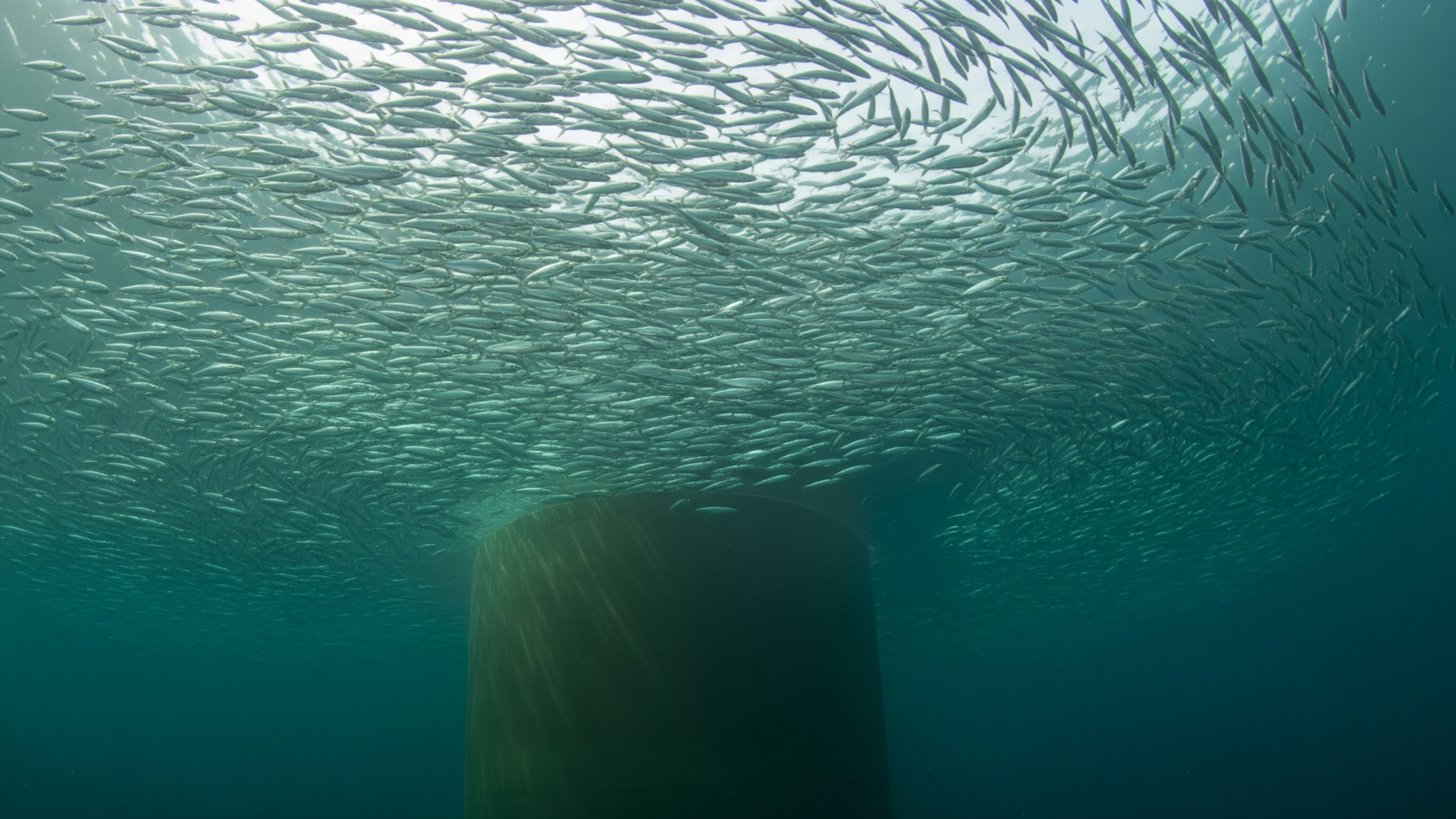
One winter morning a drone lifted off over the eastern shore of Lake Huron and found something that looked, from the air, like a lake bursting with life. Millions of small fish were packed so tightly below the surface they moved as a single dark cloud. A documentary crew pointed a 4K underwater camera at them and reached for the most obvious word: city. Then spring arrived and the bodies began washing ashore.
A warm patch that rewrote the shoreline
Bruce Nuclear Generating Station is North America’s largest nuclear plant and releases water as part of its reactor cooling system that is warmer than the surrounding Lake Huron. The plant sits near Tiverton, Ontario, on the Canadian shore, and that warm outflow settles into a persistent plume, a few degrees above ambient lake temperature, that any cold-blooded animal within range can feel. Locals have known about it for decades, though they mostly experienced it through fishing rods rather than cameras.
The rare images, captured in cinematic 4K by documentary filmmakers Zach Melnick and Yvonne Drebert of Inspired Planet, show scenes reminiscent of the ocean: millions of silver-bodied gizzard shad flashing in sunlight, alongside at least a dozen other species including bigmouth buffalo, walleye, bowfin, salmon, trout, catfish and carp. Scientists say the footage is genuinely stunning and also not quite what it appears to be.
What the management of nuclear infrastructure’s environmental footprint ultimately requires, this story illustrates, is exactly that kind of partnership.
What drew them there in the first place
Gizzard shad are not a Great Lakes native success story. They cannot handle prolonged cold, and Lake Huron turns brutally cold in winter. In a warming climate, more of the species have pushed north into waters they could not historically survive, and the plant’s plume offers exactly the thermal refuge they need. Right up until it doesn’t.
While some see millions of fish congregating in warm water as a sign of abundance, scientists say it may reflect an ecosystem that has fundamentally changed. “The fact they’re concentrating at thermal plumes because there’s a lack of food in the main lake, is an unhealthy sign of what the mussels have done.” The researcher means zebra and quagga mussels, two invasive species from Europe that have multiplied into the billions across the Great Lakes and stripped the water column of the plankton shad need to survive. The plume is not a feast. It is a fallback, the last warm corner in a lake that has been quietly hollowed out.
The moment the footage became something else
The livestream, branded by Bruce Power as “Nuclear Fish City,” shows dense concentrations of fish in the plant’s warm water discharge area. The company promoted it as a rare look at underwater life thriving in the Great Lakes, and for Earth Day 2026 it was broadcast live to a large audience. The reaction from shore was not uniformly warm.
When a reactor slows or the flow shifts, the warm blanket can vanish and stunned fish are hit with sudden lethal cold. Several lake sturgeon, a species at risk considered culturally important in Anishnaabe teachings, became stranded in a forebay pond. One was rescued in November by Bruce Power and the Saugeen Ojibway Nation while three remained. The intake structures sit deep offshore and operate at low velocity by design, but the density of fish that gather makes that margin very tight.
Five million dead fish and a dispute over what to call the footage
The Saugeen Ojibway Nation is challenging the narrative directly, saying the site functions as a “fish trap” rather than a refuge. The First Nation points to the deaths of up to five million gizzard shad in 2025, a tally recorded by the Department of Fisheries and Oceans in a Canadian Nuclear Safety Commission regulatory report, with carcasses piling along beaches from the Sauble River south toward Goderich.
Ryan Lauzon, a biologist with the Nation, put the concern plainly: “The problem,” he told reporters, was that the footage showed no discussion of “why all these fish were actually congregating, and actually the risk that those fish can have by all congregating right at the nuclear plant.” Following what it called the “unprecedented fish event,” Bruce Power implemented additional protective measures including nets, deterrent systems, and enhanced monitoring. The pending application to run reactors at higher output gives the debate an urgency that goes well beyond imagery.
What the shad are actually telling the lake
The deeper lesson the footage carries is not really about a nuclear plant. It is about a Great Lakes ecosystem under pressure from multiple directions: invasive mussels stripping the food web, a warming climate pushing southern species north, and industrial infrastructure creating thermal anomalies that act like magnets for stressed animals. The shad did not choose the plume because it was ideal. They chose it because the alternatives had run out.
Bruce Power has committed to expanding its lake research, and the involvement of the Saugeen Ojibway Nation in monitoring adds a layer of ecological accountability that would not otherwise exist. What the management of nuclear infrastructure’s environmental footprint ultimately requires, this story illustrates, is exactly that kind of partnership. Local knowledge, independent science, and a willingness to look honestly at what the camera reveals are what the moment demands. For a parallel case in how nuclear operators navigate regulatory scrutiny over ecological impact, the Holtec Oyster Creek license termination offers instructive reading. The shad are still gathering, and the question now is who is watching and what they plan to do about what they see.
Hugo is an engineer with strong technical expertise. Multilingual from an early age, his writing combines technical clarity with a strong interest in science and energy.
