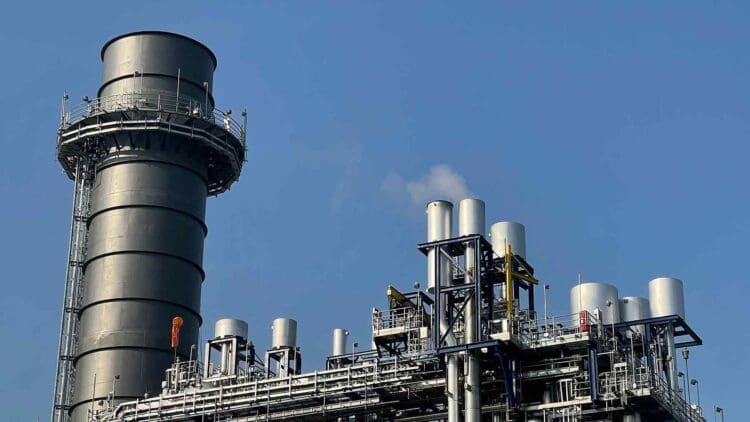
Downstream was the most significant contributor to MOL’s fiscal year (FY) 2025 profitability, with FY 2025 earnings improving year-over-year and accounting for all FY 2025 earnings. However, upstream performance declined in 2025 due to a very challenging external environment. Production continued to be at approximately 100 million barrels of oil per day equivalent of upstream production.
A year defined by downstream strength amid upstream volatility
Refining margins were significantly better in 2025 than in 2024 and more than compensated for reduced crude oil throughput by the refineries owned by MOL.
Favorable external conditions allowed the downstream business to exceed forecasts despite operational limitations imposed by a refinery fire in Q4 and repeated Druzhba pipeline shutdowns, which have historically limited crude supplies to the region.
Consumer Services contributed a significant amount to MOL’s FY 2025 financial performance through organic growth and one-off items, while MOL’s Circular Economy segment experienced growth due to seasonal factors, market trends, and internal operating efficiencies, indicating that the diversification of MOL’s revenue base helps to provide a level of operating stability throughout the year.
Factors contributing to the success of MOL’s downstream in the fourth quarter
Several supporting factors enabled the strong downstream performance in Q4 2025. Robust refining margins provided a favorable price environment that absorbed the decline in refined products produced and sold by MOL. The favorable margin structure resulting from the integration of MOL’s refineries, petrochemical plants, and fuel retail activities provides a means for MOL to transfer profitability among the various business segments based upon changes in market conditions.
In addition, MOL implemented strategic upgrades and operating efficiency enhancements that improved both cost control and the stability of its output. These initiatives included those related to circular economy activities, where MOL improved its efficiency internally and achieved increased yields in the last part of the year. Furthermore, MOL transitioned to a holding structure and expanded its renewable energy activity in Hungary to emphasize the long-term strategic flexibility of its integrated business model.
Regional energy security challenges
It is important to note that MOL has achieved its downstream performance in a challenging regional energy environment. A fire at the Danube Refinery and multiple Druzhba pipeline shutdowns resulted in supply chain constraints that would normally constrain downstream production. Despite these constraints, MOL successfully maintained its downstream production and ensured regional energy security, illustrating the resilience of MOL’s downstream assets.
The strategy behind the results
Looking at MOL’s FY 2025 financial results, a larger strategic pattern begins to emerge. MOL’s net profit declined by 11% from $1.46 billion in FY 2024 to $1.32 billion in FY 2025; however, MOL has issued FY 2026 net profit guidance of approximately $1.49 billion. Chairman & CEO Zsolt Hernádi stated that despite geopolitical turmoil and supply chain disruptions, MOL’s integrated business model has proven resilient.
The strategic steps taken by MOL in the latter part of 2025 — transitioning to a holding structure, increasing its renewable energy footprint, and implementing additional crude diversification programs — are indicative of a strategic framework that is focused on maintaining regional energy independence and preserving operational options. Therefore, the strong performance of MOL’s downstream operations in FY 2025 is not merely a function of a successful quarterly performance but evidence of a systematic approach to absorb negative impacts and take advantage of positive margin cycles.
MOL Group’s strong downstream performance in FY 2025, driven by high refining margins, effective operation, and diversified service offerings, was able to counterbalance the challenges faced by MOL’s upstream in a volatile global energy environment. The resilience of MOL’s integrated model enables the company to be positioned to achieve a stronger FY 2026. MOL Group will be continuing to pursue the implementation of strategic flexibility and structural enhancements to expand its role within the region’s evolving energy system.