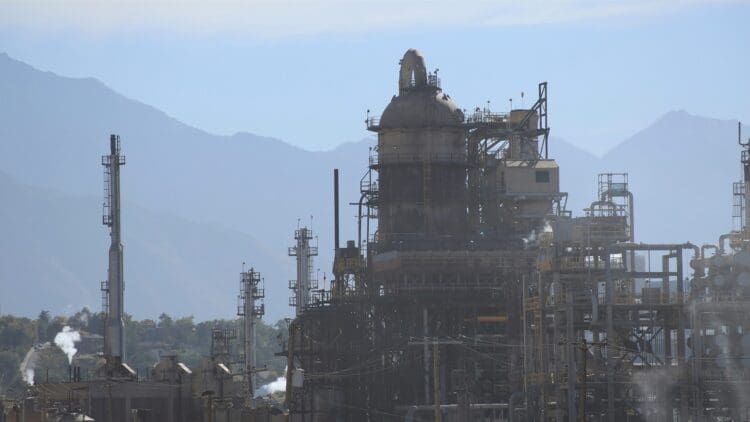

Cooperation between nations has become a necessity for energy projects to reach their full potential. Mongolia is a nation that is sandwiched between China and Russia, and has, for generations, relied on imports of energy resources to meet demand. Now, the country is developing its first-ever national refinery through some substantial assistance from India. The Mongol Refinery will become a landmark achievement for the nation that even Genghis Khan would be proud of, probably.
India is reporting significant progress in the development of the Mongol refinery
The first-ever national refinery in Mongolia was mostly financed by India’s largest-ever line of credit to an outside nation, $1.7 billion to be exact. Mongolia is a landlocked nation that requires access to either China’s or Russia’s ports to receive the necessary components to complete the billion-dollar refinery in the new year, but expectations are that progress will accelerate following delays due to the COVID pandemic and Mongolia’s harsh weather conditions.
Mongolia’s President, Ukhnaagiin Khurelsukh, recently paid a visit to India to discuss the Mongol refinery with India’s Secretary (East) P Kumaran. In the meeting, Kumaran noted that the progress is on track, and that India expects construction work to be completed by 2026 at the very latest and full-scale operations to kick off in 2028.

“The refinery is coming up very well. Almost all the civil work is over. Refinery equipment is being manufactured in India and will soon be shipped to Mongolia. We expect that by 2028, the refinery should be in operation. The Mongolian government attaches great importance to this project as it will help them achieve energy independence by refining their own crude oil rather than exporting it.” – Periasamy Kumaran, Secretary (East) in the Ministry of External Affairs of India
Mongolia is aiming to build its energy security and independence from imports
The Mongol refinery is located in the city of Altanshiree and will become a glowing beacon of energy security for a nation that has mostly relied on imports of refined energy resources. India has noted that it is evaluating the accessibility to Mongolia through either China’s Tianjin port or Russia’s Vladivostok port. The decision will be influenced by economic viability.
Russia seems to be offering a discounted rate to use its Vladivostok port and Trans-Siberian Railway, no doubt due to the fact that Mongolia and India are two of the few remaining countries still willing to do business with Moscow. The Mongol refinery will have the capacity to handle 1,5 million metric tonnes of crude oil per year, or 30,000 barrels a day.
While China expresses its intentions to construct a new refinery that will boost the nation’s petrochemical output capacity, Mongolia is aiming to launch its first-ever refinery over the coming years, if all goes according to plan. After the project was delayed multiple times due to the pandemic and Mongolia’s harsh weather conditions, expectations are for the project to reach its full potential in the new year.
“Currently, most of Mongolia’s crude is exported to China and refined products are imported from Russia. To ensure the refinery’s long-term sustainability, the Mongolian side wants to explore more domestic oil reserves. India has expressed interest in participating in these exploration and prospecting activities.” – Periasamy Kumaran, Secretary (East) in the Ministry of External Affairs of India
India’s energy ambitions have led the country into a new era of capacity output
India is most certainly hoping to increase its standing in the international energy sector over the coming years. The eye-watering line of credit it provided the Mongol Refinery project exemplifies the nation’s expertise in identifying projects that will not only provide substantial energy output but also strengthen the Indian presence on the global energy stage. That has not stopped India from developing a new petrochemical complex that will boost the nation’s chemical capacity as well.