
Moray’s hilltops generate £11 million a year for one estate owner, and the 23-to-1 ratio buried in a court case reveals who wind energy’s real beneficiary has always been
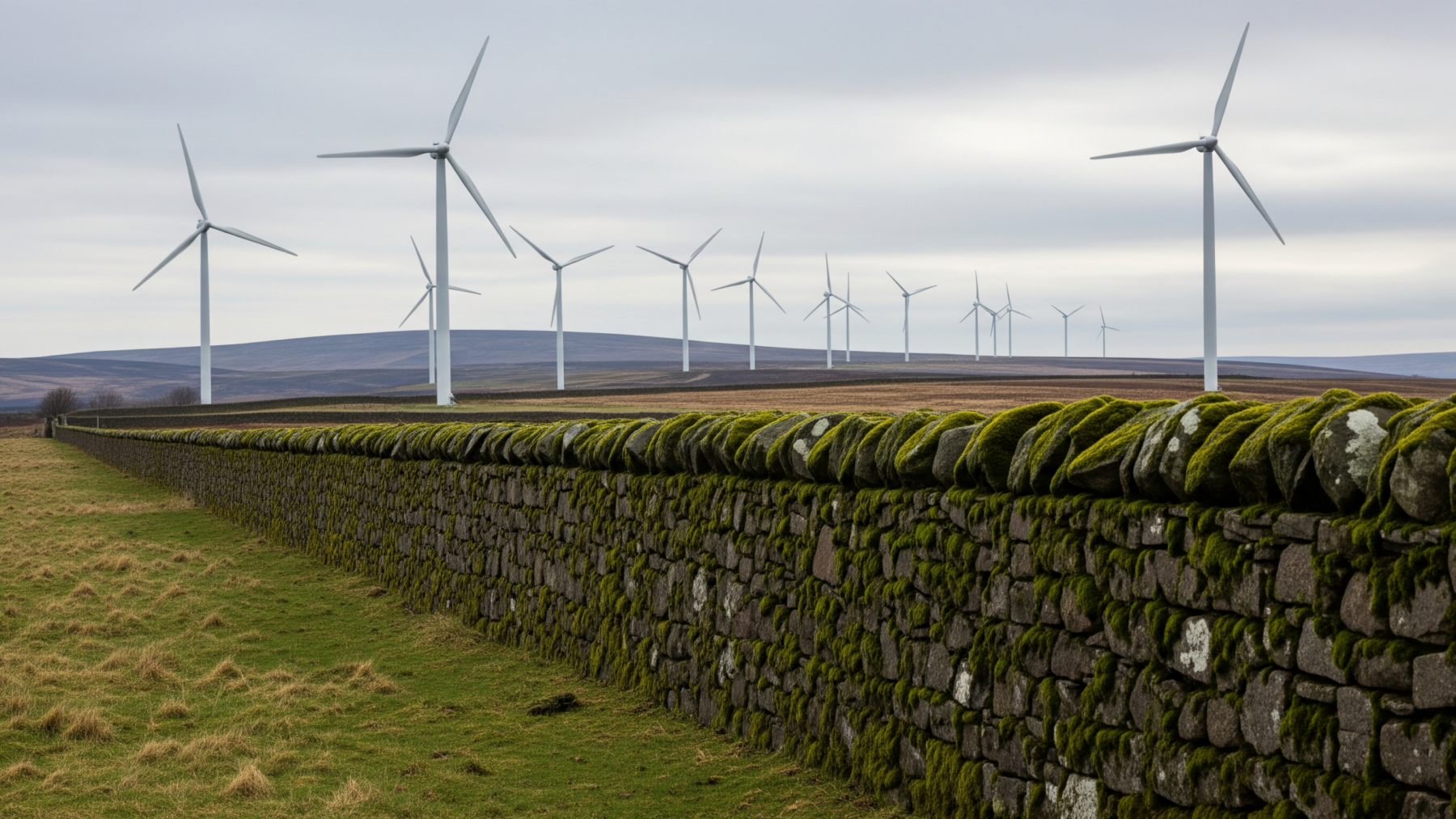
The turbines on the Glenfiddich hills do not look exceptional from the valley road below. They are large, as Scottish wind turbines tend to be, and there are 59 of them, turning through the low Moray cloud. What the road does not reveal is the flow of money they generate, or where the bulk of it ends up.
The numbers are staggering once you find them.
And finding them took a court case.
The commercial intention, as the court later made plain, was that every income stream the developer touched would feed back into the landlord’s calculation.
A windy estate and a very large promise
The Dorenell Wind Farm sits on the Glenfiddich Estate in Moray, in the northeast of Scotland, a landscape of grouse moor, whisky distilleries and ancient stone walls. The 177-megawatt project spans 59 turbines and has been the greatest beneficiary of the government’s Contracts for Difference scheme among Scottish onshore wind sites. That scheme guarantees operators a fixed price for their electricity, funded through consumer energy bills.
The lease covering the site at Scaut Hill, Glenfiddich, was signed in November 2015, and the wind farm became operational in March 2019. It became one of the most commercially successful projects on Scotland’s electricity grid, quietly productive in a way that its planning documents never quite communicated to the nearby towns.
What the lease was actually worth
The land agreement, struck between the estate’s vehicle Glenfiddich Wind Ltd and the operating company Dorenell Windfarm Ltd, stipulated a minimum annual rent of £6 million, index-linked, with an additional rent calculated on the tenant’s annual gross income from operating the wind farm. The commercial intention, as the court later made plain, was that every income stream the developer touched would feed back into the landlord’s calculation.
The actual rent paid is calculated as a percentage of various income streams, including government support payments, electricity sales, and income received for turning off the wind farm when the grid is congested and cannot handle the electricity it generates. That last category, known as constraint payments, became the heart of the legal dispute. The landlord’s lawyers argued that because those benefits were not included when calculating the rent payable, the estate had been underpaid in 2022, 2023 and 2024.
Meanwhile, down in the villages
The towns nearest to Dorenell’s turbines are small and rural: Dufftown, Cabrach, Glenrinnes, Glenlivet. They exist in the shadow of the blades in the practical sense that the machines are visible from almost every road and field, and in the financial sense that most residents had no idea how large the lease payments were until investigators dug through court records.
Under Scottish Government guidelines, Dorenell’s 177-megawatt capacity would generate a community benefit payment of £885,000 per year, but during the year to March 2025 the Dorenell Wind Farm Community Benefit Fund paid out just £397,252. An EDF spokesperson defended the rate, stating that the figure of £2,525 per megawatt had been agreed before the Scottish Government’s £5,000 target came into force. That explanation does not appear to have satisfied the communities living beneath the blades.
The 23-to-1 ratio that changes the story
Here is the number that reframes everything. The total received annually by the estate owner grew from roughly £8.5 million in 2023 to £11 million in 2025, and the land rents paid to the estate represent 23 times the £464,625 paid to communities in 2025, which is already below the level that the Scottish Government says projects should pay. The turbines sit on private land because nearly all Scottish land is private, concentrated in the hands of a small number of owners. When wind developers negotiate a site, they negotiate with whoever owns the ground, not with whoever lives nearby.
Josh Doble of Community Land Scotland put the structural argument plainly: “If the community is going to have long-term stability and resiliency, they need to own the land.” Similar imbalances appear where floating turbines off Portugal raised early questions about who benefits from new offshore infrastructure, and the gap between landlord returns and community returns is only now entering mainstream policy debate.
A benchmark nobody enforces
The £5,000-per-megawatt benchmark for community benefit payments was introduced by the Scottish Government in 2014 and was never a legal requirement. EDF’s donations to the Dorenell community fund began in April 2019 when the wind farm was commissioned, at approximately £447,000 in the first year, equivalent to £2,525 per megawatt of installed capacity. Developers who locked in lower rates during planning have faced no penalty for keeping them there, and that contractual inertia is the central policy problem the Dorenell figures have made visible.
In 2022, EDF received planning permission for an even larger wind farm named Clash Gour on the same estate, though an EDF spokesperson said community ownership of Dorenell itself could not be explored as it is already operational, while adding that community ownership had been offered in the case of Clash Gour. Scotland is planning a large expansion of onshore wind to meet its climate targets, and the Dorenell figures have arrived at a pointed moment. Norway’s approval reforms show how quickly the policy landscape can shift when political will arrives. The communities that will live beneath the next generation of turbines are watching to see whether payment structures are reformed before the contracts are signed, and in Cabrach the consternation remains very much alive.
Hugo is an engineer with strong technical expertise. Multilingual from an early age, his writing combines technical clarity with a strong interest in science and energy.
