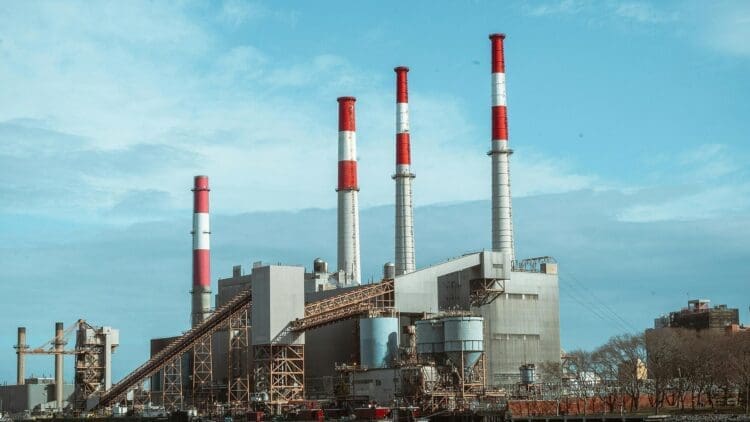

For decades, the thought of building a completely new oil refinery in the United States of America seemed like something out of science fiction. Environmental issues and enormous capital costs — along with changing energy trends — quietly made these types of projects unrealistic. So when the news came out that the first “greenfield” refinery (a new-build refinery) since before many of us were born is now under construction, it naturally raises the question of what changed.
A long pause in investing in new oil refineries
When the last oil refinery was built from scratch in the U.S., gasoline prices were less than $1/gallon, and the U.S. energy picture looked vastly different than today. Ever since then, U.S. refining capacity has been expanded or upgraded – not entirely new. And while U.S. shale production skyrocketed, there is a growing disconnect between what the U.S. produces and what its aging refineries are capable of producing.
This difference between the two has created some tangible results. Many millions of barrels of light shale crude are being exported simply because many of our existing facilities are still optimized to handle much heavier foreign crudes. Over time, this quiet reality created a structural weakness in the U.S. energy infrastructure system – and it began to be harder to ignore as we continued to export large quantities of crude and continue to import large amounts of petroleum products.


That’s why America First Refining’s announcement represents a response to limitations that developed over decades, not a response to recent policy changes.
Going from announcement to breaking ground
America First Refining plans to break ground next year on a new oil refinery at the port of Brownsville, Texas, representing the first such project in the United States in almost 50 years. The facility is designed specifically to refine American light shale oil and will have approximately 60 million barrels per year in capacity – helping fill the significant gap between domestic production and domestic refining capability.
The size of the project cannot be ignored. The project has received support for a 20-year take-or-pay contract to buy 1.2 billion barrels of U.S. crude and produce 50 billion gallons of refined fuels — clearly illustrating why the developer views this as more than just a local investment. It is anticipated that the groundbreaking will occur during the second quarter of 2026 and transition the project from an aspiration into actual construction.
There is more to the project than just volume metrics — location is critical
The port of Brownsville provides direct access to deep water, as well as rail connectivity and foreign trade zone designation — enabling the refinery to serve both as a domestic provider of petroleum products and as an export-capable hub.
What makes this project different than others?
While this project may represent “the same old thing” for some observers, the fact that it represents the first new refinery to be constructed in nearly five decades in the U.S. makes it unique among new refineries. More importantly, unlike most existing refineries, this project will be specifically designed to process only light shale crude — which will reduce dependence on foreign crude imports and improve overall efficiency.
Additionally, America First has included hydrogen-based technologies within their design to help minimize emissions — indicating they understand why new refineries have been so few and far between for so long.
Taken altogether, this all makes sense. We didn’t wake up yesterday morning and say let’s start building new refineries again. Rather, one project connected sufficient capital, appropriate infrastructure, suitable crude type(s), and adequate logistics to overcome each of the previous roadblocks that kept refineries from being built. Thus, as construction commences, the America First Refining project signals a subtle transformation in how U.S. energy infrastructure responds to the realities of domestic production.