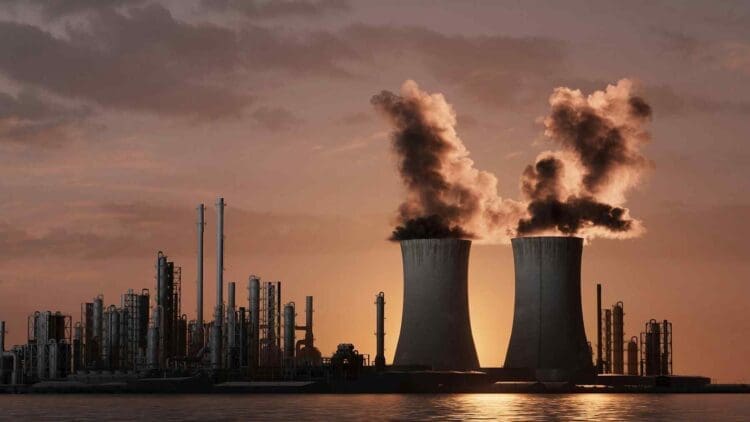

Hydrogen-producing companies are receiving contracts at a higher frequency, which demonstrates the increased confidence that governments have. As the energy industry is becoming more saturated with new companies, hydrogen entities are particularly concerned with positioning themselves to benefit when the inevitable rise in demand for hydrogen comes. One notable factor is the harmonious relationships between countries’ Energy Departments and the companies. On that note, Next Hydrogen has won an incredible $3.75 million in contracts to supply electrolyzers for a nuclear-integrated project.
Next Hydrogen maintains momentum in strengthening the hydrogen landscape
Despite the company’s role in elevating the United States’ clean energy landscape, Next Hydrogen is an entity founded in Canada in 2007 and headquartered in Mississauga. Its main focus is designing and manufacturing advanced water electrolyzers to produce green hydrogen.
One of the key reasons for its growing significance in the United States is that its technology offers a unique patented cell architecture that integrates with intermittent renewable sources.

Because of its reputation and upward trajectory at the moment, it is not surprising that Next Hydrogen Solutions Inc. has secured $3.75 million in new contracts to supply advanced electrolyzer systems for a nuclear-integrated hydrogen project. Not only does the firm have an opportunity to become part of a massive evolution in clean hydrogen production, but it will also be recognized for becoming part of a unique initiative.
As per the terms of the agreement, the company will deploy its technology in a highly specialized nuclear application. One of the most notable parts of the initiatives is how it relies on the growing intersection between nuclear energy and hydrogen production.
Unpacking how hydrogen production will be advanced through nuclear integration
When news broke that Next Hydrogen had been awarded such massive monetary contracts, many people were desperate to learn what it entailed. The contracts will involve the delivery of a customized electrolyzer system designed to function within nuclear environments.
Compared to traditional renewable-powered hydrogen systems, nuclear-integrated projects rely on consistent baseload energy. This means they enable electrolyzers to operate without restriction and ultimately enhance efficiency. From the known information, the scientific experts reached the conclusion that nuclear is an appropriate partner for hydrogen production, especially in areas where renewable intermittency is an issue.
In this particular initiative, Next Hydrogen’s system will be designed to meet the high-performance and reliability standards unique to nuclear facilities. For instance, this includes high safety standards and stable functioning capabilities over extended periods. Ultimately, combining hydrogen production with nuclear energy is something that can effectively stabilize output while reducing emissions in sectors that are hard to electrify
Unpacking the technological innovation at the heart of the $3.75 million contracts
Next Hydrogen has unveiled that the project is indicative of the versatility of its technology in some of the most technically demanding energy applications. Its ability to operate to a high standard in a nuclear environment could create opportunities for future large-scale deployments of initiatives that pair nuclear and hydrogen.
When the energy industry opened the door for technology innovation, both nuclear and hydrogen were among the clean energy sources that benefited the most. The contracts secured by the corporation are projected to generate approximately $3.75 million in near-term revenue.
Demonstration initiatives of this nature are essential for scaling hydrogen technologies because they bring a real-world stamp of approval, which in turn encourages extra investments.
Looking ahead: Could Next Hydrogen encourage more contracts to be awarded?
There will be many observers of the company’s initiatives who will be eager to learn how the projects pan out. There can be no doubt that Next Hydrogen’s win occurred at a period when the global hydrogen sector is enduring rapid growth and increasing competition. Electrolyzer manufacturers all over the world are committed to scaling production at any cost.
The United States once again has an opportunity to establish a blueprint for future nuclear and hydrogen initiatives. The nation is clearly determined to elevate in 2026.