
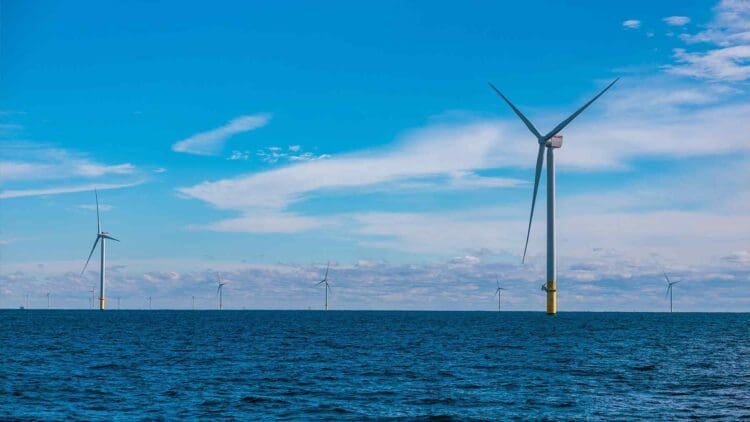

European nations are not slowing down in the number of wind energy projects that companies are pursuing. The possible reason for this is that they are all recognizing each other’s success and applying similar blueprints to develop groundbreaking facilities that will reduce carbon emissions. Another positive aspect is that there are a variety of companies, rather than a singular one, that are pursuing initiatives. For instance, Nordseecluster offshore wind development is preparing substations for deployment in the German North Sea.
Nordseecluster offshore wind development: A brief overview
Germany is receiving yet another large-scale facility that will provide reliable energy for its population. Renewable energy sources like wind and solar are fascinating because they are not in anyone’s control; sunlight or wind will emerge at a certain time.
As such, developers are cautious about the amount of money they invest and the strategy they follow when executing such projects.
At the heart of this particular one is RWE and its partner Norges Bank Investment Management. They are already expected to be essential in the implementation of Phase A of the 1.6-gigawatt wind cluster in the German North Sea. The substations were made official when various leaders met in Saint-Nazaire, France, as the developers gear up for the eight-day voyage to their North Sea installation site.
Examining the substations that are ready for deployment in the North Sea
Wind energy enthusiasts have learnt a lot from the approaches followed by different companies as they aim to generate electricity. The United States has grabbed all the headlines because of the number of initiatives canceled or suspended since the Trump administration returned to power.
Critics of the president’s decision were quick to point out that his concerns are not sufficient for the suspension of major facilities, considering that other countries like Germany are able to build groundbreaking developments without affecting national security.
The two offshore electrical substations were built and integrated at the Chantiers de l’Atlantique shipyard in Saint-Nazaire, France. Each topside is around 40 meters in length and 22 meters in height. One unit weighs roughly 1,800 tons, and the other about 2,500 tons. The developers have given the general public a deeper insight into the details that they are not always aware of.
Breaking down the purpose of the substations in Nordseecluster’s offshore wind development
If there is one thing that 2026 has revealed, it is that the energy industry is becoming more accommodating of newer energy generation strategies, giving companies the freedom to plan their facilities appropriately. Nordseecluster has elected to utilize substations, which some people might wonder what their purpose is.
The substations are specifically designed to collect and amplify the electricity generated by wind turbines at Nordseecluster before they then transfer that power to shore. They will also be crucial in arranging systems for remote monitoring and operational control. In turn, this will permit efficient data exchange between the offshore site and operator systems on land.
Gaining a deeper insight into the Nordseecluster’s offshore wind development
Every project begins with a single critical goal in mind, which developers prioritize in the decisions that they make. The Nordseecluster development aims to build one of the largest offshore wind clusters in the German North Sea.
The project is split into two phases: Nordseecluster A and Nordseecluster B. Phase A consists of 660 megawatts and is scheduled for operation in early 2027, while Phase B, with 900 megawatts, is projected to become operational in 2029.
Ultimately, Phases A and B total a 1.6 gigawatt cluster, which is enough to provide clean electricity for approximately 1.6 million homes.
Other nations should be taking notes of the way that Germany is implementing an intelligent strategy to bring an extraordinary facility into operation. From a European landscape, this is positive, but from a U.S perspective, the nation has some catching up to do.


