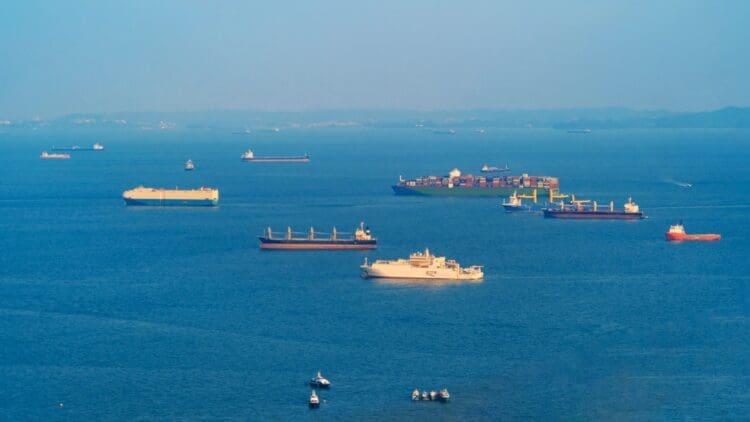

The nation of Norway has announced that its state-owned green funding agency, Enova, has given the shipping sector a massive boost as it aims to retrofit its vessels with engines that run on either hydrogen or ammonia, underscoring the European ambitions of completely removing fossil fuels from the energy sector. Enova stated that it has revised its requirements to open funding for ammonia- and hydrogen-propulsion retrofit projects. The maritime industry is crucial to the global economy as 90% of the world’s goods are transported by sea.
The Viking nation has plans to completely revolutionize the maritime industry
The maritime sector plays an integral role in the global supply chain. Nearly every sector in the world relies on the vast shipping industry to transport goods to every corner of the planet.
Taking that into account, the large shipping vessels that transport our goods use massive amounts of fuel, and as such, produce vast amounts of harmful greenhouse gases. So it became evidently clear that something had to be done to shift the maritime industry towards the growing renewable energy sector.


Norwegian state-owned Enova has delivered a potential solution to the problem. It recently announced that, from next year, existing vessels scheduled for retrofits with ammonia or hydrogen-capable primary propulsion will be eligible for funding. Even those who do not operate the fuel continuously will be eligible for financial support.
“The changes give more people the opportunity to seek support, Even vessels with a shorter lifespan can help cut emissions and build experience,” – Norwegian state-owned company, Enova
Enova has awarded approximately $75.5 million to projects developing hydrogen and ammonia-powered vessels
The move underscores the importance of transitioning the maritime sector to renewable energy usage. The reports coming out of Norway state that four companies that intend to construct hydrogen-powered ships will receive a total of $50.5 million, while the remaining $25 million is reserved for the construction of two ammonia-powered ships.
As part of the revision of the scheme, the greenhouse gas emission reduction quota required for new technology projects has been lowered from 100% to 55%. Additionally, Enova also stated that it has extended the application deadline for funding to build ammonia bunkering infrastructure along the Norwegian coast. In order to qualify, projects must include ammonia storage and refuelling facilities.
“The purpose of the program is to ensure that the bunkering facilities are realised in time for the first vessels to enter the water, probably during 2027,” – Enova
As the cooperative nature of the hydrogen sector fosters new and amazing alliances that have the potential to completely change the landscape of the renewable energy sector in Europe, the move by Enova has been welcomed by industry insiders.
“The technology is still new. Now we will support the industry in building experience. If we are going to succeed in cutting emissions from ocean transportation, we need to go for solutions that can grow in scale towards 2050.” – Nils Kristian Nakstad, Managing Director of Enova
Norway could become a global leader in the renewable energy sector if the plans are successful
The plan for Norway would seem to be fostering a new approach to the maritime sector that enables companies to take advantage of substantial financial incentives from the government. Reports of a hydrogen hub in NEOM have reached the 80% completion mark, representing the new approach to the energy sector that the world is implementing. The maritime industry is reaping the benefits of the transition taking place in the energy sector, a vast amount of the emissions caused by the global supply chain comes from the sea ferrying ships that transport goods around the world, and Norway has taken a significant step in changing that.