

The United States does not want to lose its position as the biggest nuclear energy-producing country in the world, hence it is continuously pursuing new initiatives. Other nations are also working on nuclear projects, but they are not investing as much as the U.S. As such, they are unable to announce projects with the regularity that America does. In a representation of this, NRC recently awarded TRISO-X an inaugural Part 70 license for HALEU fuel manufacturing.
NRC awards TRISO-X: A brief overview of the U.S. nuclear landscape
Governments are showing a willingness more than ever before to invest in costly energy projects as long as they will guarantee that carbon emissions are eliminated and there is less reliance on fossil fuels. According to reports, the U.S. has 94 reactors that provide 20% of the country’s electricity and 48% of its carbon-free power.
With every new project that companies pursue, these statistics become even higher. Lately, the U.S. Nuclear Regulatory Commission (NRC) granted a commercial license to TRISO-X, a subsidiary of X-energy.
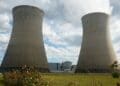


This groundbreaking development was announced in February 2026, adding yet another company to the list of those that have gotten off to a rapid start in the new year. The approval permits TRISO-X to produce high-assay, low-enriched uranium (HALEU) fuel at facilities now under construction in Oak Ridge, Tennessee.
One of the many reasons why this news received great publicity is that it reflects the first new fuel fabrication license issued by the Commission in approximately half a century. There are many different ways to interpret this fact, but one thing that the United States can agree on is that it is a representation of just how exciting the energy industry is at the moment.
Delving deeper into the ramifications of the Part 70 license for HALEU fuel manufacturing
When the news was first made public, many people wondered what the license permits the company to do and not to do, especially considering that it is the first one awarded in over 50 years. The Part 70 Special Nuclear Material license covers the manufacture and use of HALEU at two planned facilities known as TX-1 and TX-2 for over an initial 40-year period, with a possibility to extend.
These plants are specifically intended to support advanced reactors that could play a pivotal role in future clean energy systems. Why is now the appropriate time to award the license? The United States has, for a long time, lacked a reliable domestic supply chain for next-generation reactor fuels.
As such, some people might feel that the awarding of the license might be long overdue. It could be the case that the United States was becoming complacent, considering how dominant it is in nuclear production, so much so that it was not overly desperate to advance nuclear production.
The United States enters a brand-new chapter of nuclear energy generation
The NRC’s approval of TRISO-X’s Part 70 license essentially permits the possession and use of special nuclear material to manufacture HALEU. HALEU is basically still uranium, but it is enriched to higher levels than traditional reactor fuel to make it suitable for commercial use.
Energy enthusiasts believe there is an ongoing revival of the nuclear landscape, and a decision like this only adds fuel to that fire. Because of the license, TRISO-X can produce fuel for advanced reactors, including X-energy’s Xe-100 small modular reactor.
TRISO-X at the heart of the nuclear industry’s revival
TRISO-X will forever be remembered as one of the companies that transformed the contemporary landscape of the energy industry. For instance, the entity will be able to rely on a rare technology that uses tristructural isotropic (TRISO) fuel pellets, which are small, resilient spheres designed for higher temperatures.
The energy industry consists of companies that gain inspiration from each other, so it will be interesting to see who seeks to gain access to the license next. For the U.S., this is yet another major milestone in nuclear production.