
Researchers flipped a 1.5 MW turbine backwards to measure something no one had captured at full scale before
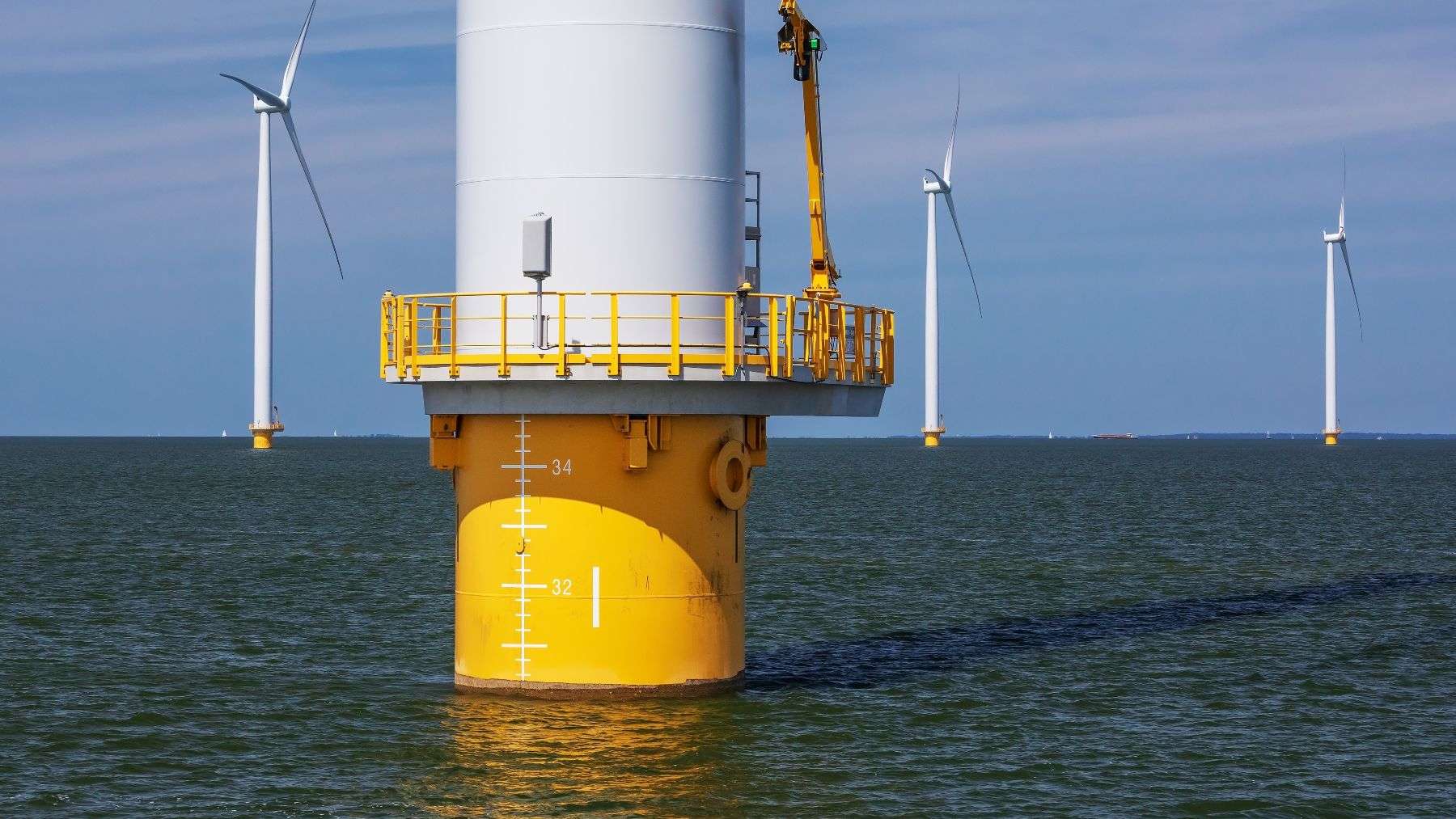
In the spring of 2024, engineers at the National Renewable Energy Laboratory did something deliberately counterintuitive: they took a commercial 1.5 MW wind turbine, pitched all three blades 180°, swung the nacelle around, and let the rotor spin downwind of its own tower. Every rotation, each blade swept through the shadow the tower cast in the wind — producing pressure pulses that have unsettled wind energy engineers since the 1970s. Nobody had ever instrumented a full-scale downwind turbine at this level of detail.
Why the wind industry abandoned downwind turbines — and why it’s reconsidering them
The downwind turbine isn’t a new idea. In the late 1970s and early 1980s, engineers in the United States and Sweden tested megawatt-scale downwind prototypes. The 2 MW MOD-1 turbine generated disruptive low-frequency noise traced to blades passing through the tower’s wake. Sweden’s 3 MW Maglarp turbine ran into similar problems, and blade fatigue from impulsive loading made things worse. By the late 1980s, the upwind rotor had become the undisputed standard.
Decades later, the calculus is shifting. A 2019 numerical study comparing 10 MW upwind and downwind rotors found that downwind designs could achieve a slightly lower cost of energy — mainly because relaxed blade-tower clearance allows lighter, more flexible blades. Downwind rotors also suit floating offshore platforms and hilly terrain, and flexible blades are far easier to transport by rail — a genuine logistical constraint for next-generation machines. Even so, impulsive loading and low-frequency noise remained poorly understood at full scale.
On the blade itself the loading was larger — 200–500 N m⁻¹ — and the entire pressure disturbance cycle on the tower unfolded within approximately 0.34 seconds.
Turning a turbine around: how NREL ran the experiment
Converting an upwind turbine to downwind operation meant pitching all three blades 180° and yawing the nacelle 180° on a commercial 1.5 MW GE SLE machine, so each blade swept directly through the tower’s wake deficit on every rotation. The instrumentation was the real technical achievement. A pressure belt system — developed at the Technical University of Denmark over seven years — wrapped around two blade sections and the tower itself, with 32 pressure taps per belt connected to miniature scanners. Two five-hole probes mounted on flyboards measured local inflow velocity.
Two measurement campaigns ran in April 2024. Ice, rain, and high winds complicated the work; tower belt installation was delayed by nearly a week. Researchers still collected roughly five hours of blade data on April 22 and about one hour of combined blade-and-tower data on April 29.
The challenge of reading pressure through 32-foot-tubes
On the blade sections, tubes ran about 4.9 feet. On the tower, the longest channel stretched to approximately 35 feet — and that distance introduced a serious measurement problem. Long, narrow tubing distorts pressure signals: viscous friction and acoustic wave propagation cause attenuation, resonance, and phase delays that grow with frequency.
The team developed a dynamic calibration procedure after the field campaign. Each channel was characterized individually using a device that generated a sharp pressure pulse at the belt inlet, and a Wiener-filter reconstruction method then recovered the true surface pressure, restoring amplitude and timing across the relevant frequency range. Without correction, the longest channels showed significant timing errors and underestimated pressure drops.
What the data revealed: pressure spikes, blade loads, and tower response
The measurements put hard numbers on phenomena that had only ever been estimated. During each blade passage, impulsive forces on the tower reached 100–150 N m⁻¹. On the blade itself the loading was larger — 200–500 N m⁻¹ — and the entire pressure disturbance cycle on the tower unfolded within approximately 0.34 seconds.
The direction of the tower force spike depended on wind speed, increasing during blade passage at low wind speeds and decreasing at higher ones. Pressure on the tower’s upwind face dropped sharply to around −50 Pa during blade passage, while between passages it held near 50 Pa. The downwind side, expected to show the strongest variation, was comparatively stable.
How simulations compared — and where they fell short
The team ran OpenFAST aeroelastic simulations using the standard Powles tower shadow model. It overpredicted the amplitude of the blade load disturbance during tower passage. Switching to the Eames wake model or adjusting the tower drag coefficient produced no meaningful improvement. The blade-tower clearance was unusually small — roughly one tower diameter — because the turbine was originally designed as an upwind machine. At such close proximity, the standard assumption of one-way decoupled interaction may not hold, and neither shadow model accounts for that.
What this means for the future of large, flexible wind turbines
The downwind configuration is a leading candidate for the next generation of very large turbines, where blade flexibility and transport constraints make upwind designs increasingly impractical. This dataset begins to fill a long-standing gap in noise and fatigue modeling. Researchers also identify the tower as an understudied acoustic source — pressure fluctuations during blade passage contribute meaningfully to total low-frequency noise, and the 0.34-second pressure cycle captured here matches the timescale associated with that generation.
Future experiments could extend measurements to the blade root and tip. With benchmark data now in hand, the field can start to assess whether the downwind turbine’s drawbacks are fundamental limits or engineering problems waiting to be solved.
You can learn more through the full study: Madsen, H. A., Bortolotti, P., Barlas, T., Nikoueeyan, P., Kelley, C., Pedersen, C. B. M., Hansen, P., Fischer, A., Ivanov, C., Roadman, J., Naughton, J., Brown, K., Iverson, M., and Thao, S.: Detailed experimental investigation of the aerodynamics and blade/tower interaction of a 1.5 MW wind turbine in a downwind configuration, Wind Energ. Sci., 11, 3337–3357, https://doi.org/10.5194/wes-11-3337-2026, 2026.
Daniel García is an Editor-in-Chief with strong expertise in structural work and engineering principles. He combines this technical foundation with deep knowledge of energy, spatial design, and emerging technologies, bringing a forward-thinking and analytical approach to editorial leadership.
