
India inaugurates nuclear-assisted hydrogen production facility at Kalpakkam research center
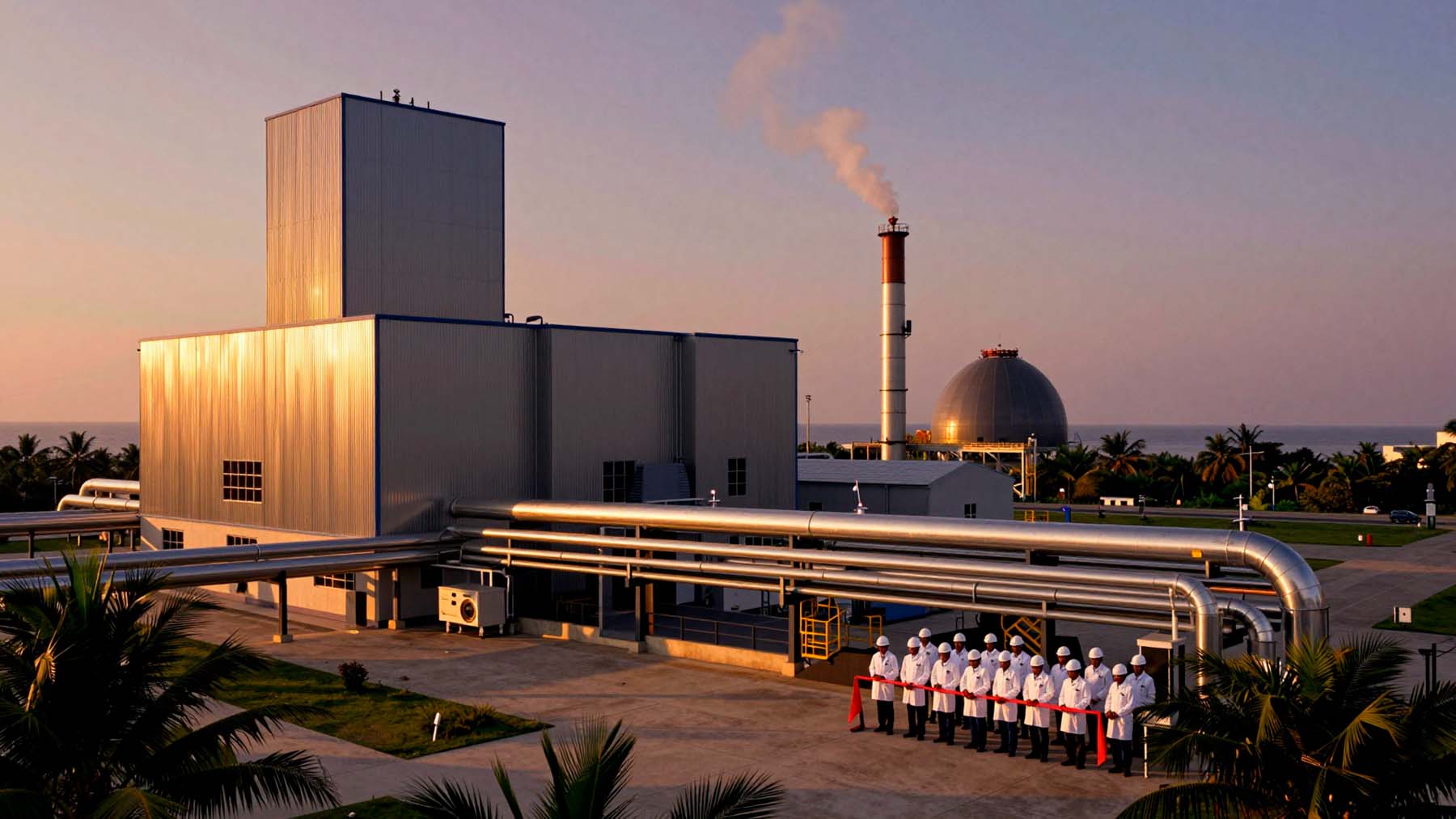 AI-made
India just did something you don’t see every day: used a nuclear reactor to make hydrogen. The Department of Atomic Energy has inaugurated a hydrogen production facility at the Indira Gandhi Centre for Atomic Research in Kalpakkam, where heat from the fast breeder test reactor drives a copper-chlorine thermochemical cycle to produce the fuel—no combustion required.
India opens nuclear hydrogen facility at Kalpakkam
India’s Department of Atomic Energy officially opened the facility at IGCAR, marking a concrete step forward in the country’s nuclear research program. Kalpakkam sits on India’s southeastern coast in Tamil Nadu and already hosts some of the country’s most advanced nuclear infrastructure. Adding hydrogen production to that mix is a deliberate move to expand what nuclear energy can deliver beyond just electricity.
The facility runs on the copper-chlorine thermochemical cycle—a process that pulls hydrogen out of water using heat, not electricity or fossil fuels. Nuclear process heat from the fast breeder test reactor supplies that thermal energy. Nothing needs to burn to get it started.
The direct coupling between the reactor and chemical production is what makes this facility technically interesting and relatively uncommon at an operational scale.
For India’s DAE, this is a meaningful milestone. The department has spent decades building expertise in advanced reactor technology, and this facility puts that expertise to work on one of the most discussed clean fuel challenges of our time.
How the copper-chlorine thermochemical cycle works
The copper-chlorine cycle splits water into hydrogen and oxygen through a sequence of chemical reactions involving copper and chlorine compounds. Each reaction feeds into the next until hydrogen gas emerges as the output. The copper and chlorine compounds get regenerated within the cycle—not consumed, but acting more like facilitators than fuel.
What makes this approach distinctive is its temperature range. The Cu-Cl cycle operates below 1,022°F (550°C), which puts it within reach of nuclear heat sources that can supply steady thermal energy at those levels without the extreme conditions some other thermochemical cycles demand.
No combustion happens at any stage. That’s a key difference from hydrogen production methods that reform natural gas, which releases carbon dioxide as a byproduct. Standard electrolysis splits water using electricity, but its carbon footprint depends entirely on where that electricity comes from. The Cu-Cl cycle, driven by nuclear heat, sidesteps both problems. The direct coupling between the reactor and chemical production is what makes this facility technically interesting and relatively uncommon at an operational scale.
Implications for India’s hydrogen and clean energy goals
India has set national targets for clean and green hydrogen production as part of its broader energy transition strategy. The country sees hydrogen as a potential tool for decarbonizing industries that are hard to electrify directly — steel manufacturing, heavy transport, and similar sectors. Getting there requires scaling up production methods that don’t rely on fossil fuels.
Nuclear-assisted hydrogen production offers one possible pathway. Reactors run continuously and don’t depend on weather, so they can supply a steady source of thermal energy that solar and wind-based hydrogen production can struggle to match without significant energy storage.
The Kalpakkam facility demonstrates that coupling a nuclear reactor to a thermochemical hydrogen cycle is technically feasible at a working scale. That proof of concept matters. If the facility performs as intended, it could serve as a model for integrating hydrogen production with future nuclear projects across India — or for retrofitting existing reactor sites where process heat is currently going to waste. The low-carbon profile of the Cu-Cl cycle, when driven by nuclear heat, also fits within the broader definition of clean hydrogen that India and other countries are working to develop and certify, which could carry significant weight in future policy frameworks and international energy partnerships.
Background: IGCAR, the FBTR, and India’s nuclear research program
IGCAR has been India’s primary institution for fast reactor technology research since its establishment in 1971. The center’s work has focused on building the scientific and engineering foundations for India’s three-stage nuclear power program, which aims to eventually use thorium as a fuel source. Fast breeder reactors are central to that long-term plan.
The fast breeder test reactor at Kalpakkam has been operational since 1985. Over four decades, it’s served as a research and development platform for testing fuels, materials, and reactor systems relevant to India’s nuclear ambitions—and its continued operation makes it a practical heat source for experimental programs like the new hydrogen facility.
The copper-chlorine thermochemical cycle itself isn’t a new idea; researchers internationally have studied it as a candidate for nuclear hydrogen production for several decades. What’s new here is its implementation at an operational facility connected to an actual reactor, moving the concept from lab study to real-world application.
A working demonstration of nuclear-hydrogen coupling
India’s DAE has inaugurated a nuclear-assisted hydrogen production facility at IGCAR in Kalpakkam, using the copper-chlorine thermochemical cycle powered by heat from the fast breeder test reactor. The Cu-Cl cycle produces hydrogen from water through a series of chemical reactions at intermediate temperatures, with no combustion and no direct electrolysis involved. The facility is a working demonstration of nuclear-hydrogen coupling, with direct relevance to India’s clean hydrogen targets and future nuclear energy planning. IGCAR and the FBTR—both long-established pillars of India’s nuclear research program—provide the institutional and technical foundation that makes this new application possible.

Kelly is an experienced writer with 15 years of experience exploring the big stories that shape our world, from tech breakthroughs and space exploration to climate, energy, and the fascinating quirks of science. She has a talent for turning complex ideas into sharp, memorable insights that stay with readers long after they’ve finished reading.
