
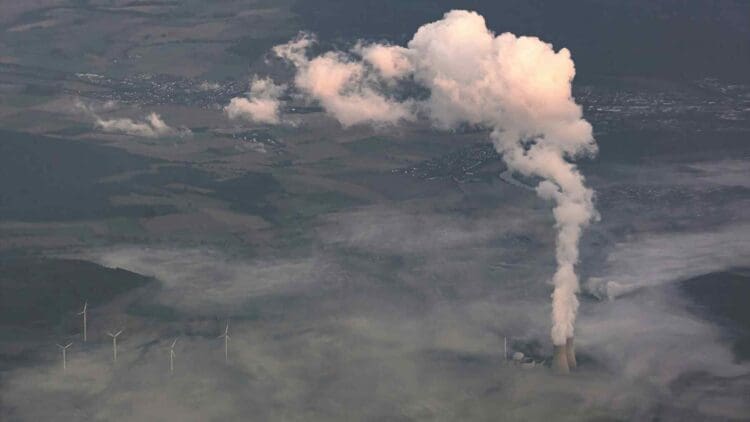
From being a white elephant to playing a key role in climate change goals.
A facility that was once deemed an economic liability has been fast-tracked to full operational status. The first step in changing its role was receiving fuel.
It has taken 50 years to realize the facility’s importance in lowering carbon emissions; it is good to see things back on track.

But will more facilities be getting a second chance?
How climate change goals are achieved: A global mission
It is no secret that Earth’s temperatures are rising, on land and in the ocean.
Awareness of global warming and its effects on the planet has spread virally over the past few years. As a result, commitments have been made, and goals have been set.
Worldwide, nations have outlined plans to keep to these commitments and achieve these goals.
Our very existence depends on these climate change goals and plans, as without any change, the effects are devastating. Altered, unpredictable weather patterns and extreme conditions, food insecurity, freshwater scarcity, decreased health and safety – the list goes on.
However, despite this knowledge and goals to lower carbon emissions, rising energy demands must also be met.
Maintaining the balance between rising energy demands and the clean energy transition is thus key. However, maintaining the balance is easier said than done.
Is there truly an answer to achieving it all?
Rising demands necessitate substantial baseload power
Two resources that have always played a vital role in meeting the rising global energy demands are oil and gas.
While renewable energy sources are fundamental to meeting climate change goals, these two resources are not going anywhere soon. In 2023, oil and gas, along with coal, accounted for nearly 82% of the global energy mix.
The reason for this global dominance is attributed to their stable and reliable energy supply. With the rise of artificial intelligence (AI) and data centers, substantial baseload power is needed now more than ever.
Renewable energy sources, despite being highly advanced, still face intermittency and storage challenges. Infrastructure upgrades are also costly.
This is why facilities that have become white elephants, such as the one in Covert, Michigan, are now being reopened.
These facilities can help meet demands while keeping emissions low.
From full closure to fueling it for full operation
Michigan’s nuclear power plant, the Palisades Nuclear Generating Station, is set to begin operations. Palisades operated for over 50 years since 1971, but was forced to shut down in 2022.
Holtec International purchased Palisades from Entergy for decommissioning purposes. However, nuclear power plants are now facing growth for global energy security.
Michigan Governor Gretchen Whitmer backed a proposal to bring the facility out of retirement. In 2024, the Nuclear Regulatory Commission approved, and in late 2025, the facility obtained “operational” status.
There is, however, a long way to go before it becomes fully operational again.
According to Holtec International:
“Procuring new fuel was among the earliest long-lead activities in the project, requiring months of technical preparation and regulatory coordination.”
Nuclear fuel is available and it’s sitting in storage
The plant received 68 new nuclear fuel assemblies, and each contains uranium dioxide pellets.
After passing inspection, the fuel was stored in the “spent fuel storage pool building.” A trusted manufacturer that had supplied Palisades and others in the industry in the past produced the fuel.
The Palisades Nuclear Generating Station was licensed to operate until 2031 before decommissioning.
Holtec International plans on applying for a successive license renewal in the first quarter of this year. If the Nuclear Regulatory Commission approves, Palisades should be set to operate until 2051. Beyond Michigan, several other states plan to revive the nuclear power sector.
Will these facilities finally help meet rising global demands, or has it become a moot point?

