

The United States has come so far in nuclear production that it’s inevitable that the next steps will experimentation and entering uncharted territory. This explains why there have been a lot of outlandish ideas from different companies as they all hope to push the boundaries in nuclear initiatives. On this note, NuScale Power partnered with Oak Ridge National Laboratory to develop AI-driven nuclear fuel management systems.
The development of AI-driven nuclear fuel management systems
The world is continuously being put on notice that technology will soon replace most of the roles that are either currently fulfilled by human beings or are being executed in a traditional manner. Now more than ever, technology has reached the highest level of advancement, and the scariest aspect about this is that there are few limits to the industries it can enter.
Energy developers cannot say that they did not see AI systems coming from a mile away, as they are now perfectly positioned to drive the next generation of energy production. The nuclear industry is entering a new phase where artificial intelligence is starting to transform how reactors are designed and operated.
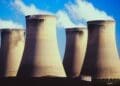

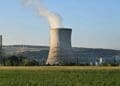
One of the latest representations of this transition is NuScale Power, which has announced a collaboration with Oak Ridge National Laboratory (ORNL) to explore AI-driven nuclear fuel management systems. The partnership is one that aims to elevate the efficiency of nuclear fuel use through various elements. These include a combination of advanced computing, machine learning, and nuclear engineering expertise.
Putting the industry on notice: Reviewing NuScale Power’s decision to incorporate AI systems
With the funding and resources available in the United States, it is no surprise that the county often leads the charge in relation to AI developments.
At the heart of the upcoming nuclear initiative is NuScale and ORNL, which will develop an AI-enabled design framework capable of analyzing and optimizing fuel usage across a multi-reactor nuclear power plant. The obvious question on people’s minds is, how was this procedure completed before the emergence of AI?
The conventional way of managing includes allowing nuclear fuel management strategies to focus on individual reactors rather than multiple reactors simultaneously. The emergence of the new strategy conveys that nuclear development is heading in a positive direction.
What prompted the two companies to collaboratively bring AI to energy development?
The energy industry is very good at reacting to what is required most at a specific moment in time. As such, one can safely believe that the latest initiative conveys that nuclear developers were in need of AI. Modern nuclear technologies, particularly small modular reactors (SMRs), demand more intricate operational capabilities that may be completed through advanced computational tools.
As such, the AI management system is relevant because NuScale has designed it in such a way that it allows up to twelve modular units to operate together at a single site. The AI systems are able to process the massive datasets and simulation models more quickly than traditional methods. This is something that engineers value because it assists in discovering the most efficient configurations.
Looking ahead: What does the inclusion of AI mean for the energy industry?
Although AI has been incorporated into some projects, this particular one has taken things to an even higher level. One of the key reasons for the project is the unique architecture of NuScale’s small modular reactor plants.
With multiple reactors connected to a shared fuel pool, there is a greater possibility of redistributing fuel between modules and optimizing burn cycles across the whole plant instead of treating each reactor singularly.
NuScale and ORNL deserve a tremendous amount of credit because they are creating a blueprint for many companies as they aim to generate nuclear power efficiently. Through the application of machine learning to these intricate configurations, the partnership aims to develop smarter approaches to fuel management.