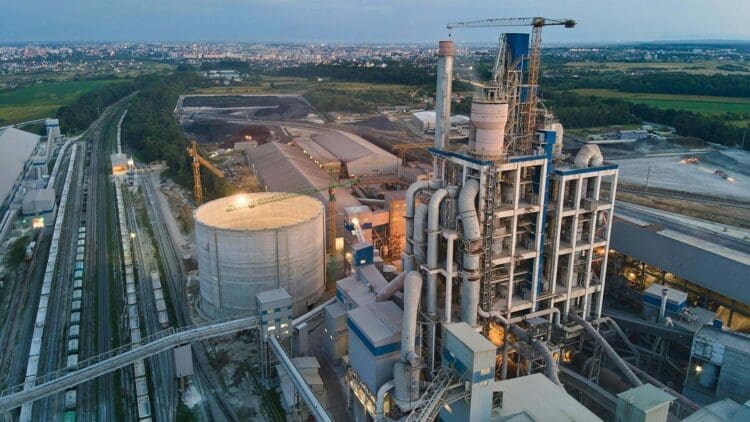

The Middle East has become the international backbone of the energy industry through the rapid expansion of its industrial processing power over the past few decades. For an exceedingly long time, most of the Middle East was an arid desert with little to no life; however, in recent years, the region has transformed into the undisputed king of the energy industry with a diversified output capacity. The Sultanate of Oman is the latest nation in the region to commit to increasing downstream energy production this year through several new agreements.
Expanding downstream capacity: Oman’s ambition for 2026 is clear as day
The Sultanate of Oman has been working diligently over the past few decades to transform the nation into a major player on the global energy stage. The nation has recently announced that the OQ Group has committed $598 million to expand its downstream industrial base through two new agreements with international operators.
The two new agreements come at a pivotal point for the international energy industry, as the recent events in Venezuela have flooded the market with an expected surge in heavy crude oil production. The Sultanate saw its economy grow steadily last year, with data revealing that the economy grew by 2.3% when compared to the same period in 2024.

Deal number one: a new petrochemical plant in the Sohar Freezone
The first deal signed in Oman was with the international company MAK, a German developer in the petrochemical sector. The new agreement calls for MAK to develop a plant designated to produce Purified Terephthalic Acid (PTA) and Polyethylene Terephthalate (PET) in the iconic Sohar Freezone.
The new plant will boast a production capacity of approximately 700,000 tons annually and aims to increase the quantities of polymer products in the Middle East nation through the use of “para-xylene” supplied by OQ.
Can the Sultanate of Oman become a major regional and international energy hub?
The government has noted that the new agreements aim to transform the Sultanate into a major energy hub, not only in the Middle East, but on the international stage as well.
To support the rollout of these two new projects, the Sohar Port and Freezone signed significant lease and sub-usufruct deals with Sohar International Urea and Chemical Industries Company, as well as new agreements with Sohar Petrochemicals Company.
Deal number two: a new facility in the Salalah Freezone
The second agreement signed was with the Indian company Deepak, which will see the company supplying ammonia to the OQ Group on a ten-year contract. This will enable the creation of a new plant in the Salalah Freezone, which will produce sodium nitrate.
This new plant will target the specialized fertilizer and pharmaceutical industries through its substantial production capacity of approximately 70,000 tons per year. With the vast majority of the world enthralled with the prospect of a wave of new heavy crude from Venezuela, Oman is instead focusing on diversification of its energy industry through the new and strategic deals signed with MAK and Deepak.
“The petrochemical sector… plays a vital role in the nation’s economic diversification, transforming our rich hydrocarbon resources into high-value products… [it is] a cornerstone of Oman Vision 2040.” – Invest Oman
A new opportunity may be on the cards for the litany of Middle Eastern nations
As the Sultanate of Oman commits over half a billion dollars as part of its diversification efforts, other Middle Eastern nations have established new joint ventures to advance refining capacity. Bahrain has recently seen TotalEnergies and Bapco establish the all-new BxT Trading to advance Bahrain’s Sitra refinery. The Middle East is relying on the myriad of nations’ ambitions to diversify energy output capacity in the near future to decarbonize energy resource production.