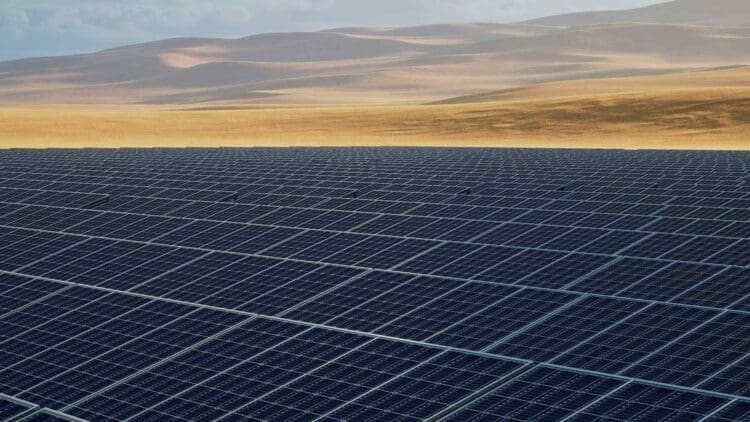

The United States solar energy industry is experiencing a strong amount of momentum, which has been made possible by the Department of Energy and developers willing to invest a lot of money. Ever since experts uncovered that some clean energy source facilities complement each other perfectly, many countries, and especially the United States, are more inclined to maximize the full potential of their resources. Among the companies pushing boundaries is Origis Energy, which has brought the 210 MW Wheatland solar project in Indiana into commercial operation.
Indiana set to receive the 210 MW Wheatland solar project
There has been a noticeable trend in the United States’ initiatives, which all point toward the nation’s intent to diversify the energy portfolio of each state and ensure that there is a great amount of reliable power everywhere. As of early 2026, coal remains the most used energy source in Indiana, providing over 40% of the state’s power. However, just like all the other states, Indiana is transitioning toward clean energy generation.
The region received a great boost after Origis Energy officially placed the Wheatland Solar project in Indiana into commercial operation. The 210 MWdc utility-scale facility enhances the Midwest’s transition toward cleaner power generation. The project is located in Knox County and is built to supply reliable electricity to thousands of homes.

Previously, Indiana would have dedicated such massive amounts of money to a coal-centered initiative. Still, there is a clear urgency in the entire U.S. to move toward clean energy sources quickly.
Delving deeper into the details of the Wheatland solar project’s arrival in the U.S.
The United States’ strategy in relation to solar energy initiatives has worked out without many obstacles so far. The only single challenge connected to solar projects is that there is no way to guarantee or ensure that sunlight is available on a consistent basis.
As Origis Energy confirmed, the Wheatland Solar project reached commercial operation on February 27, 2026, after several months of construction. The increased amount of financial backing in the United States shows the massive amount of confidence that the governmental institutions have in clean energy initiatives.
The upcoming facility has a capacity of 210 MWdc (150 MWac), and it has the ability to deliver clean electricity under a long-term agreement with CenterPoint Energy. As such, customers based in southwestern Indiana will receive a stable and reliable amount of electricity.
While the main purpose of the facility is to diversify the region’s energy array, it also plays a key role in improving grid resiliency. For the local economy, the project has played a fundamental role as construction has opened up hundreds of jobs.
Reviewing the financial packaging behind the Wheatland solar facility
As seen in most of the United States’ 2026 projects, PPAs assist in accelerating the deployment of facilities. In this instance, a 20-year Power Purchase Agreement (PPA) with CenterPoint Energy shows the high financial expectations surrounding the facility.
The reason for the growing relevance of such agreements is that they provide predictable streams of revenue, which is important for investors. The Wheatland Solar project benefited from a strong financing structure consisting of major financial institutions such as J.P. Morgan and MUFG.
Origis Energy’s capability to secure tax equity and debt financing proves how advanced the U.S. renewable energy market is. Interestingly, the initiative was part of a broader portfolio costing over $530 million.
Assessing the importance of the Wheatland solar project to Origis Energy
In the contemporary landscape, reputation is an important aspect of a company’s ability to secure future initiatives. This explains why the officials involved in this project reinforced that bringing Wheatland online in a timely manner shows the company’s execution capabilities.
The project is consistent with Origis Energy’s strategy of delivering cost-competitive and reliable clean energy solutions across the United States.
The solar industry worldwide is active at the moment, with newer companies emerging regularly. As such, the U.S. intends to maintain its leading position in generation.