
Energy portfolio shifts are rare and rarely occur with the level of strategic clarity and precision shown in the North Sea. A recent development has caused a European company to take a larger foothold in a rich area of history and potential. The shift raises questions regarding why Orlen made this strategic choice to significantly increase its Norwegian presence.
Stepping into a land with a rich past
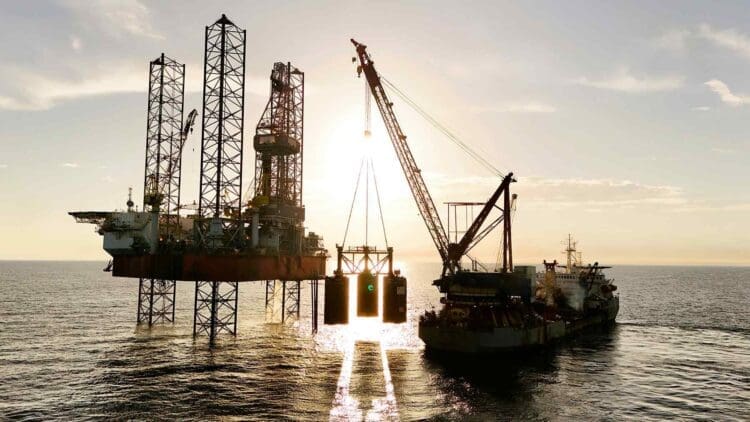
For decades, the Ekofisk area has been associated with the origins of Norway’s offshore identity — the beginning of modern European petroleum production. This historical background adds significance to Orlen’s purchase of a 7.6% interest in both the Albuskjell and Vest Ekofisk fields, which was finalized at the close of 2025, after agreements were signed in November.
These two fields are part of the “Previously Produced Fields” (PPF) project, a collection of assets being revived. When combined with the Tommeliten Gamma field — where Orlen increased its percentage earlier in the year — the total additional reserves will be approximately 8 million barrels of oil equivalent for the company.
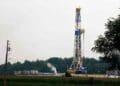
While the North Sea may have a well-defined geography, it remains an open book to those willing to explore the existing infrastructure with innovative strategies. Orlen’s steady progression throughout this area indicates more to their strategy than just increasing volume.
Why are these areas more important than they appear at first glance?
At first, it appears that the addition of new assets is going to have a slight effect on the business. Once you review the data about the Albuskjell, Vest Ekofisk, and Tommeliten Gamma fields, you will clearly see the importance of adding these reserves to Orlen’s reserves.
The reserves in this area have been estimated to be approximately 25 million barrels of oil equivalent and over 3 billion cubic meters of natural gas. Once the PPF field begins producing, the potential for extracting product from those reservoirs will increase the annual gas production of Orlen by 420 million cubic meters.
More importantly than just the numbers, however, is the direct correlation to Orlen’s stated goal of establishing a diversified and stable upstream base outside of Poland. The decades-long investment in the Ekofisk zone’s infrastructure has created a lower-risk environment and reduced the time required to develop new wells. In today’s volatile market environment, for a company seeking consistent returns, having a stable source of returns is equally as emotionally valuable as financially logical.
Illustrating the broader problems that face the entire industry
As an area of oil heritage, the Ekofisk area is also illustrative of the need for Europe to strike a balance between its old ways of operating and new requirements going forward. In deciding to position itself at the forefront of this change, Orlen is stating its belief that there will be sufficient development in the transition to justify investment.
When the strategy is fully defined
There is no complex geological theory that explains “why” Orlen made these purchases. The “why” is based on synergy. With interests in all three PPF fields, Orlen can consolidate costs, streamline operations, and maximize the effectiveness of each development phase.
The first gas production is expected to begin in late 2028, and the estimated peak annual production is 3.4 million barrels of oil equivalent. The acquisition of these interests clearly demonstrates Orlen’s intent to further develop — rather than merely diversify — their Norwegian strategy.
Orlen’s enlarged presence in the Ekofisk area suggests that the company believes that the future of the industry will be characterized by more steady-state developments. These developments will replace bold announcements, and the foundation upon which these steady-state developments will be built is through prudent accumulation. This will be the new basis for consistency in an evolving European energy landscape.